Product Description
STEERING, BRAKE AND SUSPENDED SYSTEM EXPERIMENTAL PLATFORM
Description:
Teaching Function:
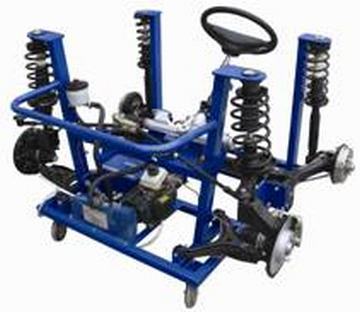
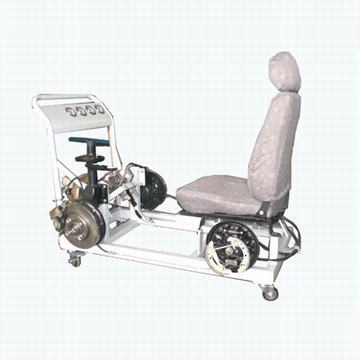
It can show components, working principle and structure of front and back suspended system, steering and brake system; the components and structure of manual transmission.
Standard Configuration:
Adopt original plant front suspended system, brake system, motor steering system, manual transmission, rear axle and shock absorber.
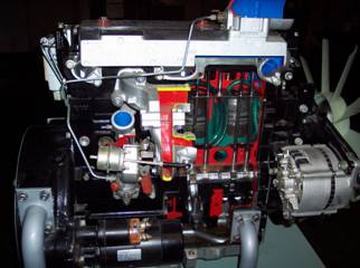
The relative components of each system are partly anatomized and colored, showing the detail structures.
|
Comprehensive Automotive Training SolutionExperience hands-on learning with this pre-assembled platform, engineered for detailed demonstration and practice of automotive steering, brake, and suspension systems. Its life-sized components and transparent models allow students to observe, operate, and analyze essential vehicle mechanisms safely.
Dual Suspension DemonstrationsDemonstrate both double wishbone and MacPherson strut suspension types on a single system. This dual setup gives learners the opportunity to compare structures and functionalities in real-time, enhancing understanding of modern vehicle designs.
Real-Time Fault Simulation and DiagnosticsThe system's integrated instrument panel features operational indicators and fault simulation switches, allowing for realistic fault diagnosis, troubleshooting, and repair exercises-preparing students for real workshop challenges.
FAQ's of STEERING, BRAKE AND SUSPENDED SYSTEM EXPERIMENTAL PLATFORM:
Q: How can students safely interact with the experimental platform during hands-on practice?
A: Students can safely use the platform thanks to protective shielding around moving parts, over-current protection, and clearly marked operational indicators. The modular layout ensures easy access and visibility while maintaining a safe hands-on environment.
Q: What types of suspension systems can be demonstrated on this platform?
A: The equipment features both double wishbone and MacPherson strut suspension demonstration sections, enabling a direct comparison between these two common automotive suspension types.
Q: When should the platform be utilized in an educational setting?
A: The platform is ideal for use during class demonstrations, automotive systems practical sessions, and diagnostic exercises. It supports group work and interactive lessons throughout the academic year.
Q: Where is the experimental platform most effectively used?
A: This platform is best suited for engineering colleges, technical institutes, and hospital-based training centers. Its mobile, durable design allows it to be positioned easily within laboratories and teaching workshops.
Q: What is the process for simulating faults or testing brake and steering functions?
A: Instructors can use the integrated fault simulation switches to introduce realistic malfunctions. Students then utilize the instrument panel and hands-on controls to identify and diagnose issues within the visible moving parts, steering, or hydraulic braking system.
Q: How does the transparent brake pipeline model benefit the learning experience?
A: The transparent pipeline allows students to visually track hydraulic fluid motion and observe braking operations in real time, making the principles of hydraulic braking systems much easier to understand.
Q: What advantages does the platform offer for group student training?
A: Its modular, visible design and large size make it suitable for group demonstrations and collaborative diagnostics, allowing multiple students to simultaneously observe and interact with critical automotive system components.







 English
 Spanish
 French
 German
 Italian
 Chinese (Simplified)
 Japanese
 Korean
 Arabic
 Portuguese


 Send Inquiry

