Product Description
WORKING MODEL OF 4 CYLINDER 4 STROKE CI ENGINE AND GEAR BOX
Description:
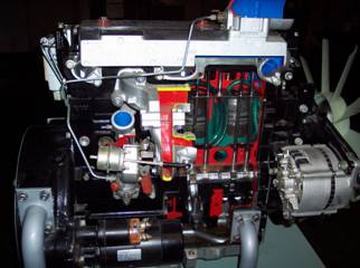
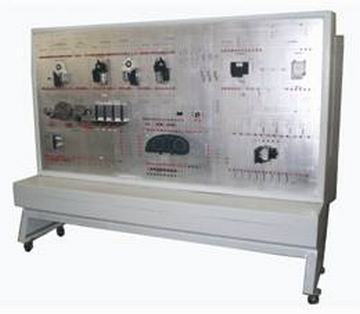
The structure of the 4 cylinder 4 stroke CI engine and gear box can be directly observed to make the students deeply understand the construction and the operating principle of 4 cylinder 4 stroke CI engine and gear box. It is made up of the good-quality spare parts of the vehicle and can be operated normally driven by geared down motor. The whole frame of the training model is made of GB steel with surface sand blasted. Key area is highlighted by lights.
Details:
Power Supply: | AC220V | Net Weight : | 550Kg | Gross Weight: | 565Kg | Package Size: | 1600*900*1300 | CONFIGURATION: (As per one set) | Frame | 1 | Operating Instruction | 1 |
|
Comprehensive Educational DemonstrationThis cut section model presents a detailed, hands-on experience for students to understand the mechanics of a 4-cylinder, 4-stroke CI engine and gearbox. Transparent acrylic panels and color-coded sections make it easy to identify and follow the movement of internal components, offering valuable visual learning for engineering courses.
Durable and User-Friendly DesignConstructed from mild steel, aluminum alloy, and plastic, the working model is base mounted with anti-vibration pads for stability and quiet operation. The robust construction ensures longevity, while re-lubricatable joints simplify routine maintenance in educational settings.
Adapted for Practical Lab UsePowered by an electric motor compatible with 12V DC or AC 220V, the model operates at a safe, variable speed (0-100 rpm) suitable for close examination. It is fit for demonstration only, making it ideal for labs without the risks associated with active fuel and heat-based systems.
FAQ's of WORKING MODEL OF 4 CYLINDER 4 STROKE CI ENGINE AND GEAR BOX:
Q: How does the working model demonstrate the operation of a 4-cylinder 4-stroke CI engine?
A: The model uses an electric motor with a pulley drive to move key components such as the crankshaft, pistons, valves, and camshaft. Transparent acrylic panels and color-coding allow users to visually follow air intake, compression, combustion, and exhaust cycles, as well as gear shifting in the transmission.
Q: What are the key educational benefits of using this engine and gearbox model?
A: This model provides a hands-on visual aid for understanding engine mechanics, gear transmission, and internal combustion principles. Students and trainees can observe real component movement, facilitating more effective learning than static diagrams or textbook descriptions.
Q: When is this model typically used in educational settings?
A: It is commonly used during practical lessons and workshops in engineering labs, technical institutes, and for instructor-led demonstrations. The model helps students grasp concepts of engine operation and gear mechanics during relevant modules.
Q: Where can the working model be installed and used?
A: The model is designed for indoor use in classrooms, educational laboratories, and training centers. Its portable base with anti-vibration pads allows stable placement on standard work surfaces and benches.
Q: What is the maintenance process for this demonstration model?
A: Joints are user serviceable and can be re-lubricated as required. Regular cleaning of external surfaces and inspection for loose or worn components ensures smooth operation. The design allows instructors or lab staff to easily perform routine upkeep.
Q: How is the model powered and controlled during demonstrations?
A: The engine cut section is motor-driven, accepting either a 12V DC adapter or AC 220V supply. Control is manual or by electric switch, allowing variable operating speeds suited for visual demonstration and study.
Q: What makes this model particularly beneficial for engineering students and technical instructors?
A: Its transparent, color-coded design, detailed moving parts, and gear shifting capabilities offer an immersive demonstration experience. This allows students to see operational principles in action, bridging the gap between theoretical knowledge and real-world engineering applications.







 English
 Spanish
 French
 German
 Italian
 Chinese (Simplified)
 Japanese
 Korean
 Arabic
 Portuguese


 Send Inquiry

