Product Description
ProductDescription
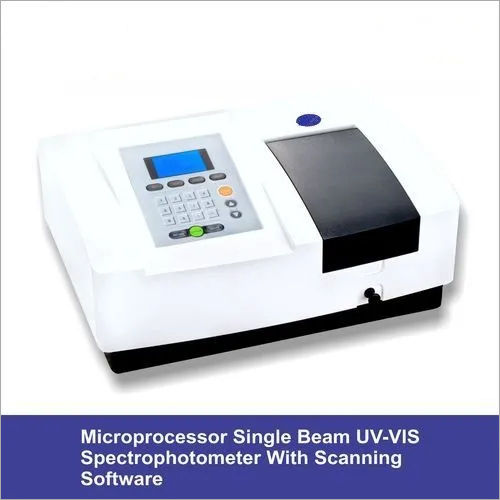
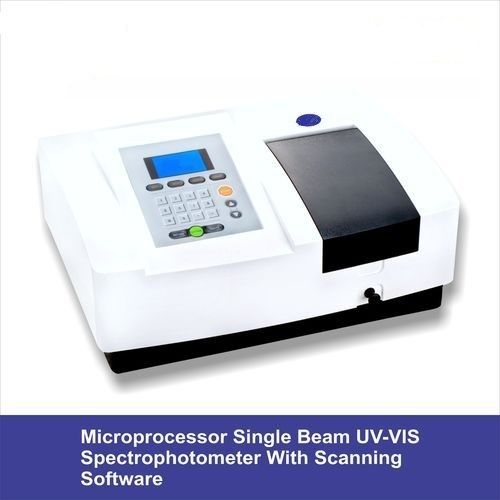
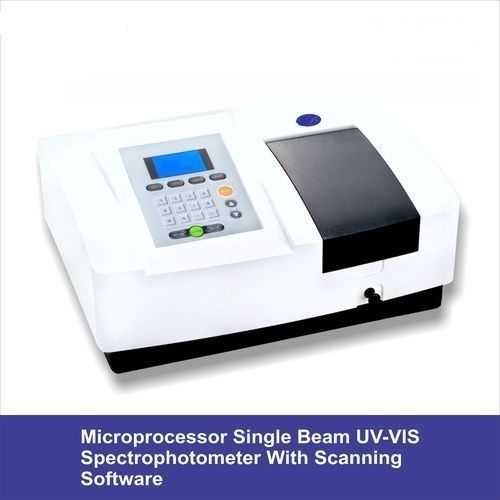
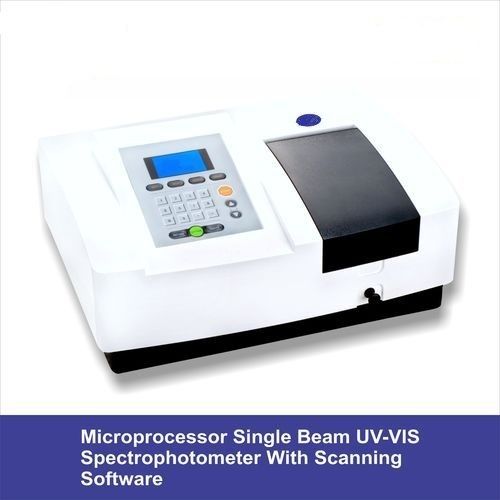
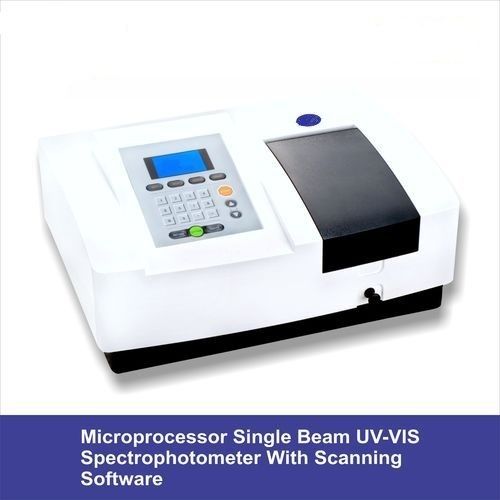
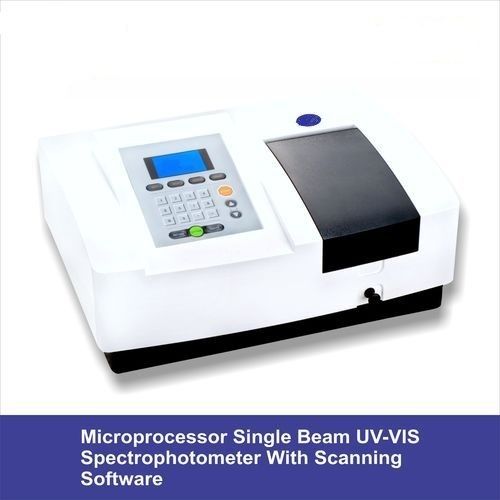
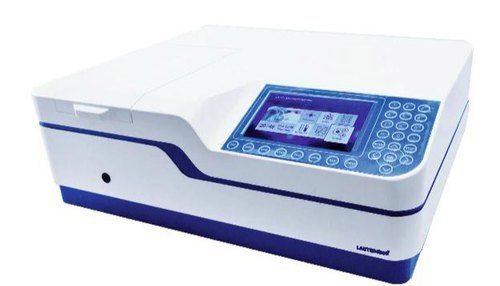
With richindustry experience and knowledge, we are providing an excellent quality rangeof Microprocessor UV-VIS Single Beam Spectrophotometer.
Product Specification
| Wavelength Range | 190-1000 nm |
| Model | Aei-AS-Rt112 |
| Application | Industrial Use |
| Brand | AjantaExports |
| Baseline Flatness | +/-0.002A |
| Display | 128x64LCD |
| Display modes | 4 LCD |
| Favelength Setting | Auto |
| Light Source | Imported Deuterium And Tungsten Lamp |
| Noise | +/-0.001A |
| Optical System | Single-Beam Grating 1200 lines/mm CT Grating Monochromator |
| Photometric accuracy | 0.5%T |
| Photometric repeatability | 0.2% T |
| Price | 1425 USD |
| Shipping Size | 700x580x340mm |
| Spectral bandwidt | 1nm |
| Stability | +/-0.0002A/h500nm |
| Stray light | 0.15% T |
| Wavelength Accuracy | 2nm |
| Wavelength repeatability | Less than=0.2nm |
| Weight | 20kg |
| Work Pattern | TAC |
| Minimum Order Quantity | 1 Piece |
Precision Spectrophotometric AnalysisEngineered for laboratories, the Microprocessor UV-VIS Single Beam Spectrophotometer offers exceptional accuracy and repeatability. The wide wavelength range (190-1100 nm) and advanced silicon photodiode detector provide detailed analyses across diverse samples, while the robust scanning software enhances experiment control and data management.
User-Friendly OperationsThis spectrophotometer features a straightforward LCD graphic display and an intuitive control panel. Automatic wavelength calibration and data storage simplify operation for users at various expertise levels, while the parallel printer interface and multiple data output options streamline documentation and reporting.
Reliable and Durable ConstructionConstructed with high-quality ABS plastic and metal, this device withstands rigorous daily use in laboratory environments. Its compact rectangular shape (510x420x210 mm) and manageable weight (6-10 kg) make it easy to position. The equipment is engineered for temperature resistance and longevity, supporting consistent performance for years.
FAQ's of Microprocessor UV-VIS Single Beam Spectrophotometer with scanning softwere:
Q: How does the spectrophotometer achieve precise wavelength measurement?
A: The spectrophotometer uses a microprocessor-based automatic wavelength calibration, delivering 0.3 nm wavelength accuracy and 0.2 nm repeatability. This ensures reliable and consistent results with every use.
Q: What is the process for scanning samples using the included software?
A: After placing your sample in a 10 mm quartz cuvette, use the scanning software via the LCD display panel. The software allows you to program scan parameters, view absorbance spectra, analyze data, and export results through USB or RS232 ports.
Q: Where is this spectrophotometer typically used?
A: This spectrophotometer is widely used in research, clinical, pharmaceutical, and industrial laboratories for qualitative and quantitative analysis due to its high accuracy, wide wavelength range, and versatile data output options.
Q: What materials and construction ensure the spectrophotometer's durability?
A: The device features a robust ABS plastic and metal casing, providing mechanical strength and chemical resistance. Its design supports ambient temperature operation and reliable long-term service in demanding lab environments.
Q: When should I use this spectrophotometer instead of a double-beam model?
A: Choose this single-beam spectrophotometer for routine lab analysis, educational purposes, or when high throughput and simpler operation are priorities. It is suitable for general analytical applications where high sample comparison precision of double-beam models is not required.
Q: How does the dual light source benefit spectrophotometric measurements?
A: The deuterium lamp covers UV ranges while the tungsten halogen lamp covers visible wavelengths. This combination allows for seamless absorbance and transmittance measurements from 190 to 1100 nm, accommodating a broad range of compounds.
Q: What advantages does the microprocessor-based control provide?
A: The microprocessor-based system automates calibration, ensures measurement reproducibility, incorporates data storage and export features, and delivers intuitive operation through the LCD graphic display.







 English
 Spanish
 French
 German
 Italian
 Chinese (Simplified)
 Japanese
 Korean
 Arabic
 Portuguese



 Send Inquiry

