Product Description
ProductDescription
structurecan inhibit the drift, Suitable for long time test .
0.5/1/1.5/2/4/5nm Variable Bandwidth
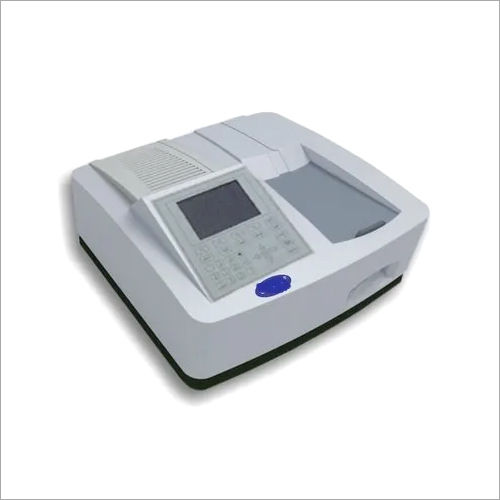
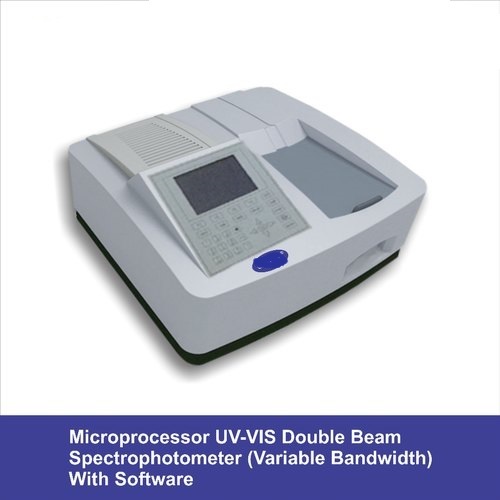
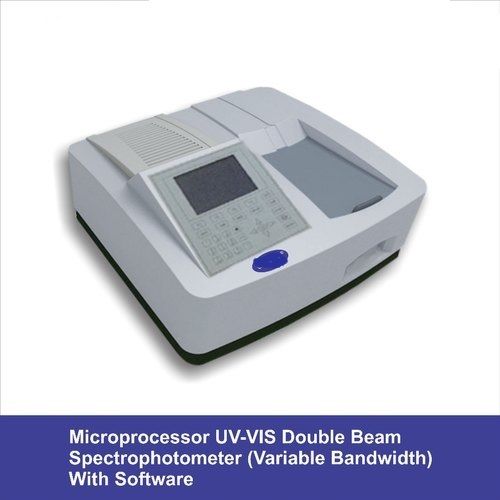
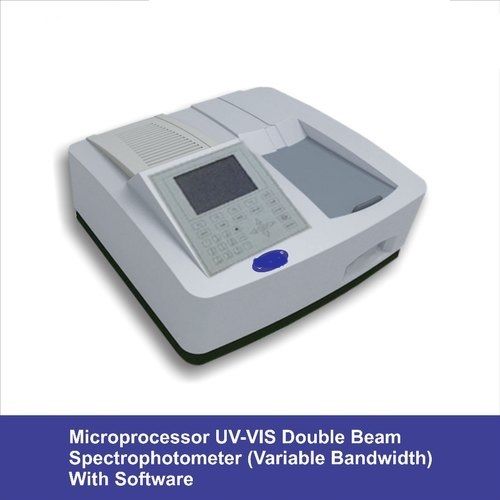
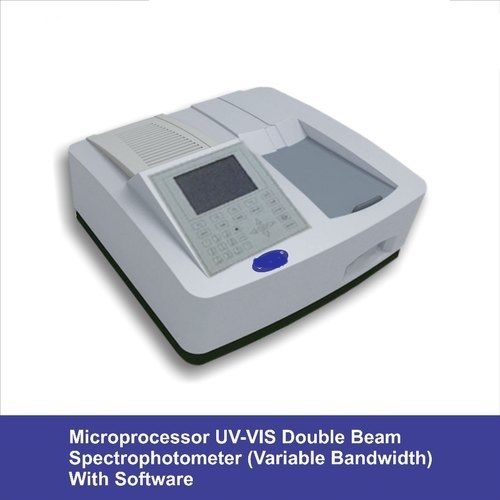
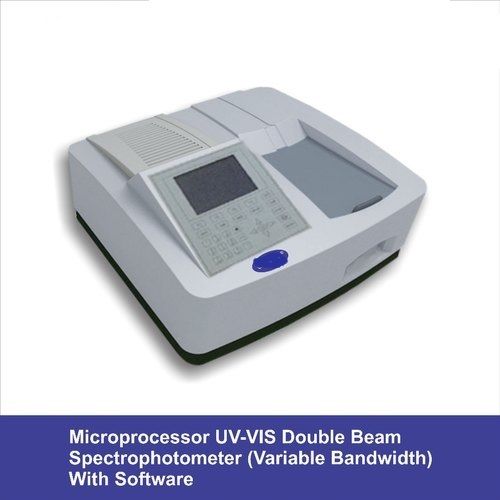
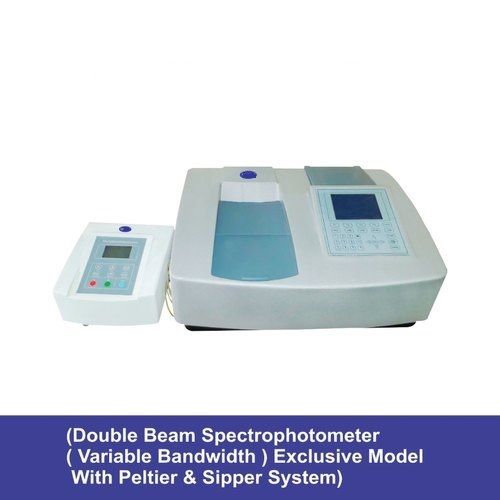
spectrophotometer are advanced double beam optical system. Double beamopticalbandwidth,They are suitable for research, biochemical and pharmaceuticallab applications.
ProductSpecification
| Model Number/Name | Aei-Db-Rt102 |
| Brand | AjantaExports |
| Optical System | Double Beam |
| Display | LCD Display |
| Type | Fixed |
| Application | Laboratory Use |
| Wavelength Range | 190-1100 nm |
| Band width | 0.5/1/1.5/2/4/5nm |
| Baseline Flatness | 0.001A |
| Data Output Port | USB |
| Detector | Silicon Photodiode |
| Dimensions | 635x515x255mm |
| Lamps | Tungsten Lamp & D2 Lamp |
| Noise | 0.2%T/3min (250/500nm,0%T) |
| Photometric Range | 0~200%T,-4~4A,0~9999C |
| Power Requirement | AC 90-250V,50/60Hz |
| Stability | 0.001A/h (500nm,0A) |
| Stray Light | 0.05%T(220/360nm) |
| Wavelength Accuracy | 0.5nm |
| Wavelength Repeatability | 0.2nm |
| Weight | 26 KGS |
| Path Length | 10 mm |
| Minimum Order Quantity | 1 Piece |
Advanced Performance & VersatilityOffering a wide wavelength range from 190 nm to 1100 nm, this double beam UV-VIS spectrophotometer delivers precise analyses with selectable spectral bandwidths (0.5, 1, 2, 4, and 5 nm). Its robust microprocessor control and powerful photometric accuracy support diverse applications in research and industry.
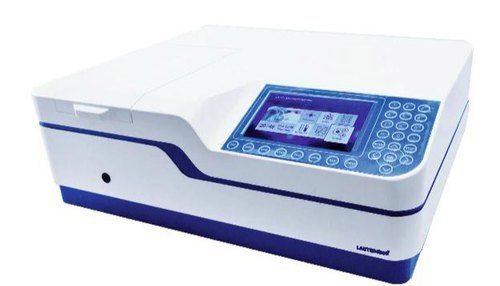
Intuitive Operation & Powerful SoftwareThe spectrophotometer features a large LCD graphical menu and touch keypad for streamlined operation and quick access to functions. Its Windows-compatible software enables spectrum scanning, quantitative analysis, and automated reporting, providing users with comprehensive data management and analysis tools.
Reliable Construction & Convenient AccessoriesBuilt with a powder-coated metal body and ABS impact-resistant housing, it withstands demanding laboratory environments. Included are 4 quartz cuvettes, a software CD, dust cover, and user manual, ensuring users have everything needed for immediate setup and reliable daily operation.
FAQ's of Microprocessor uv vis double beam spectrophotometer exclusive model variable bandwidth with software:
Q: How does the double beam function enhance spectrophotometric measurements?
A: The double beam configuration automatically corrects for background drift and lamp intensity fluctuations, providing more stable baselines and highly accurate absorbance readings throughout your analytical experiments.
Q: What types of analyses can be performed with this spectrophotometer?
A: It accommodates a broad spectrum of qualitative and quantitative analyses, including DNA/protein quantitation, spectrum scanning, and concentration measurements-making it suitable for research, pharmaceutical, chemical, and biotechnology laboratory applications.
Q: When should I select a different spectral bandwidth setting?
A: Selecting a smaller bandwidth (e.g., 0.5 nm) is ideal for high-resolution work, such as analyzing closely spaced peaks, whereas wider bandwidths (up to 5 nm) allow faster scans for routine measurements or samples with broad absorbance features.
Q: Where can I export or store the collected data?
A: You can save and export data via the USB port, RS232 interface, or printer port. The provided software allows for data storage, analysis, and reporting directly on a Windows PC for efficient workflow integration.
Q: What is the process for calibrating wavelength and verifying photometric accuracy?
A: The instrument automatically calibrates its wavelength upon startup. For photometric accuracy verification, use certified reference materials to compare measured values against known absorbance standards as recommended in the user manual.
Q: How user-friendly is the operational interface for new users?
A: The spectrophotometer features an intuitive keypad operation with a graphical LCD menu, enabling quick learning and straightforward navigation. The included software and comprehensive user manual further simplify operation for users at all experience levels.
Q: What are the key benefits of variable bandwidth capability?
A: Variable bandwidth allows users to optimize sensitivity and resolution according to their application needs, enhancing measurement precision for diverse sample types and enabling both high-resolution and high-throughput analyses.







 English
 Spanish
 French
 German
 Italian
 Chinese (Simplified)
 Japanese
 Korean
 Arabic
 Portuguese


 Send Inquiry

