Product Description
| Model Number/Name | Aei-Na-Rt124 |
| Brand | AjantaExports |
| Display | LED |
| Type | Portable |
| Detector | UV sillion photocell |
| Dimensions | 210 x 280 x 181 |
| Power Requirement | 24V DC |
| Wavelength Accuracy | 230nm 260nm 280nm |
| Weight | 3.6kg |
| Path Length | 0.2mm High concentration 1.0mm Ordinary concentration |
| Output | Aluminum alloy and Quartz fiber |
| Light Source | Xenon flash lamp |
| Minimum Order Quantity | 1 Piece |
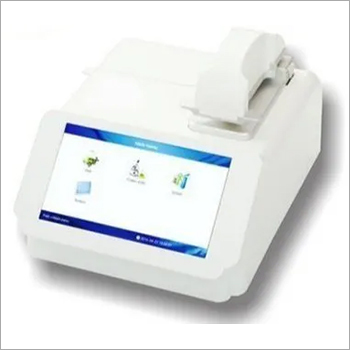
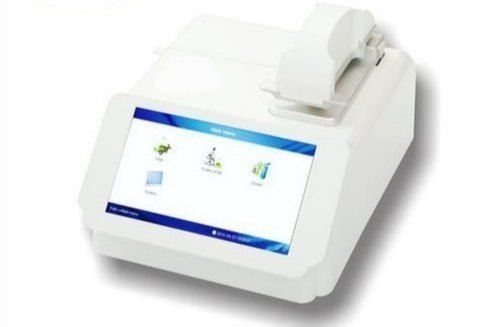
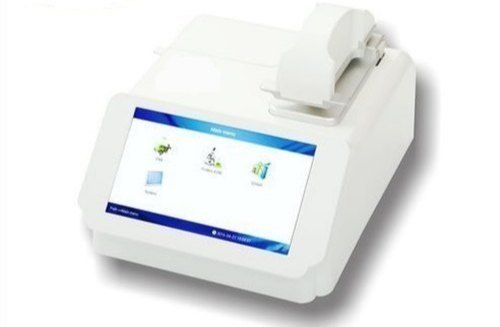
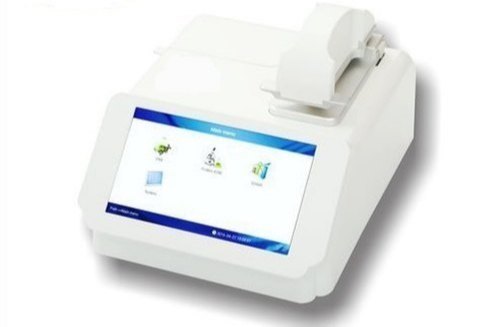
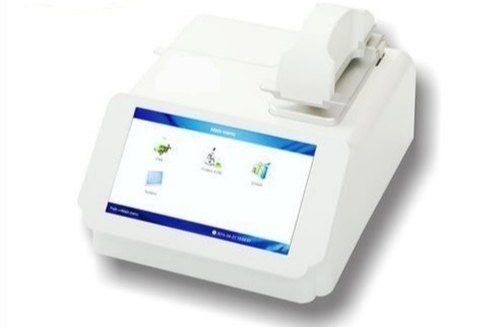
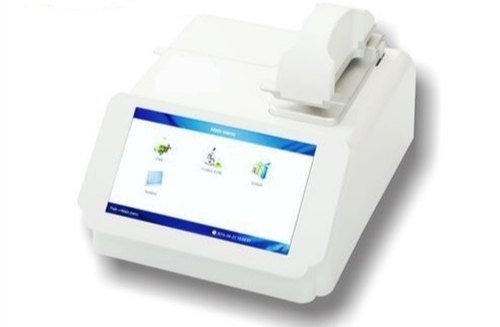
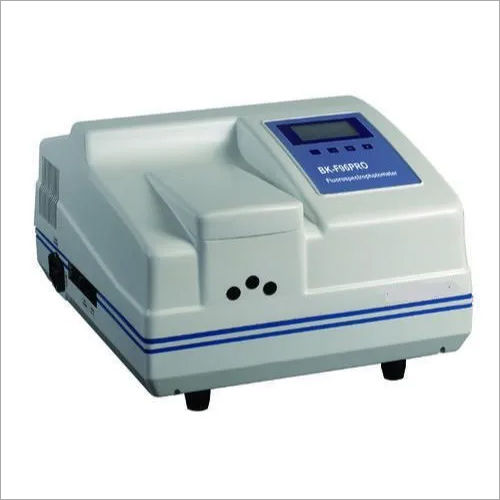
ProductDescription1. Nano is a basic micro-volume UV spectrophotometer designed (only3 types of wavelength: 230nm, 260nm and280nm) for the measurement of nucleicacids and proteins. It is added a function of bacterium cellconcentrationdetection (OD600)2. Android system operation, 7 inch touch screenno computer, APP soft, simple interface, easy to use3. The data can be printedwith built-in printer, the data can output via SD-RAM Card and USB memory4.Measure nucleic acids concentration at 260nm, and purity using the 260/280ratio. Measure purified protein at 280nm
Advanced Spectrophotometry in a Portable DesignCombining cutting-edge LED technology with micro-volume measurement, this nano spectrophotometer is crafted for convenience and performance. Its lightweight rectangular build and robust construction with high-grade plastic and aluminum alloy make it suitable for modern laboratories. Calibrated automatically for accuracy, the instrument ensures reliable results for a range of biomolecular applications, including DNA, RNA, and protein quantification.
Streamlined Data Management and ConnectivityThis spectrophotometer makes laboratory data handling effortless with internal memory, USB export, and Ethernet connectivity. Effortlessly transfer results to computers running Windows-based software or store them onboard for easy access. Its user-friendly 7-inch touch panel interface and keypad control further simplify instrument operation and experiment management.
FAQ's of LED Portable Nano Spectrophotometer:
Q: How does the LED portable nano spectrophotometer ensure accurate quantification of DNA, RNA, and proteins?
A: This device utilizes long-life UV and visible LED light sources and an automatic calibration function to achieve high measurement accuracy (2% at 260 nm with deionized water). Automatic selection between 0.5 mm and 1.0 mm optical path lengths further optimizes precision for micro-volume samples, making it reliable for DNA, RNA, and protein quantification.
Q: What types of samples and volumes can be measured with this spectrophotometer?
A: The instrument is designed for laboratory analysis of nucleic acids and proteins, requiring sample volumes as low as 0.5 L and up to 2 L. It employs a quartz microvolume platform for maximum sensitivity, with a detection limit as low as 2 ng/L for double-stranded DNA.
Q: When should the instrument be calibrated, and is the process manual or automatic?
A: Calibration is performed automatically by the spectrophotometer, eliminating the need for manual intervention. This ensures consistent, accurate readings across all assays, so users can focus on their experiments without additional maintenance steps.
Q: Where can the data generated by the spectrophotometer be stored or exported?
A: Measurement results are conveniently stored in the device's internal memory and can be exported via USB or Ethernet ports. This allows for seamless integration with laboratory information management systems and easy transfer to Windows-compatible computers.
Q: What are the main benefits of using this portable spectrophotometer in a laboratory setting?
A: Key advantages include rapid scan times (6 seconds/sample), minimal sample volume requirements, broad wavelength coverage (200-800 nm), robust data management, easy connectivity, and an intuitive 7-inch color LCD touch screen-all housed in a compact, durable unit for flexible deployment in any lab.
Q: How is the device powered, and what type of environmental conditions can it withstand?
A: The spectrophotometer uses an external power adapter (12 V DC, 18 W) and operates on an input voltage of 100-240 V AC, 50/60 Hz. It is built to function reliably in laboratory environments with operating temperatures ranging from 0-40C.







 English
 Spanish
 French
 German
 Italian
 Chinese (Simplified)
 Japanese
 Korean
 Arabic
 Portuguese




 Send Inquiry

