Product Description
Viscosity Bath
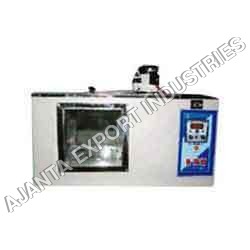
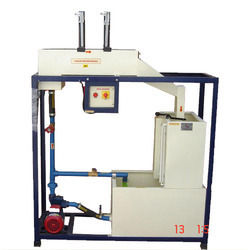
We offer a wide range of viscosity bath that are widely used for tests in the field of medical, agricultural, bio- chemical, research & development laboratories. These baths are of double walled construction, exterior made of mild steel powder coated, interior made of stainless steel 304 with puff insulation, S.S lid on top with the provision of viscometer holders. Full size toughened glass windows at front & back side of the bath with illumination arrangement. Some of the technical specifications of these water baths are:
Circulation: Water circulation by AC/DC geared motor stirrer mounted on a base and fitted on the top of the bath.
Heaters: S.S tubular heaters for maintain temperature.
Refrigeration System: Hermetically sealed compressor provides temperature for below ambient conditions.
Refrigerant: CFC free.
Temperature Controller: Digital Temperature controller with PT-100 sensor.
Temperature Range: 5ºC above ambient to 95 ºC
Accuracy: ± 0.5 ºC
This viscosity bath utilizes a digital PID microprocessor controller to ensure highly accurate temperature regulation, vital for repeatable kinematic viscosity testing. The LED digital display allows users to monitor temperature easily, supporting a range from ambient to 100C with an accuracy of 0.1C, suitable for both water and oil-based experiments.
Robust and Efficient ConstructionConstructed with a stainless steel 304 inner chamber and top lid, the bath is insulated with glass wool for superior heat retention and safety. The corrosion-resistant immersion-type heating element, combined with a uniform stirring system-either magnetic or mechanical-ensures long-lasting performance and reliable temperature stability throughout the sample environment.
Enhanced Safety and UsabilityLaboratories benefit from built-in safety features such as over temperature cut-off and fuse protection, reducing operational risks. The chamber holds 15-20 liters and accommodates multiple sample holders, streamlining the process for comparative analyses or batch testing while maintaining sample integrity.
FAQ's of Viscosity Bath:
Q: How does the temperature control system ensure accuracy in the viscosity bath?
A: The viscosity bath utilizes a microprocessor-based digital PID controller paired with an LED digital display. This advanced control system maintains precise bath temperatures within 0.1C, ensuring reliable conditions for measuring kinematic viscosity.
Q: What materials are used in the construction of the viscosity bath and why?
A: The inner chamber and top lid are made of high-grade stainless steel 304, offering excellent corrosion resistance and durability. Glass wool insulation is used to enhance thermal efficiency and maintain stable internal temperatures.
Q: When is water or oil chosen as the bath medium?
A: Water is recommended when operating temperatures remain within typical ambient to moderate ranges. For higher-temperature requirements closer to 100C, oil is preferred due to its higher boiling point and heat stability.
Q: Where can this viscosity bath be utilized effectively?
A: It is ideally suited for laboratory environments involved in petroleum analyses, material research, or chemical quality control, particularly in industries across India and globally that require accurate viscosity measurement.
Q: What is the process for using the viscosity bath with multiple samples?
A: Sample position holders are provided, allowing users to place multiple viscometer tubes into the chamber simultaneously. The uniform circulation system ensures all samples are evenly heated throughout the testing process.
Q: How does the bath's safety mechanism protect users and samples?
A: The bath is equipped with over temperature cut-off and fuse protection. These features automatically disconnect power if safe temperature limits are exceeded, reducing the risk of overheating or equipment damage.
Q: What are the main benefits of using this viscosity bath in a laboratory?
A: Users gain precise temperature control, uniform heat distribution, flexible sample handling, and robust safety features. These elements support reliable, repeatable viscosity measurements and streamlined laboratory operation.







 English
 Spanish
 French
 German
 Italian
 Chinese (Simplified)
 Japanese
 Korean
 Arabic
 Portuguese


 Send Inquiry

