Product Description
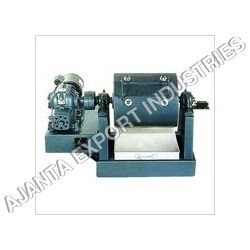
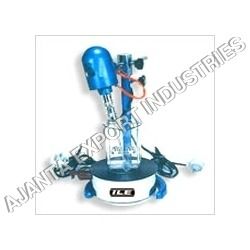
We are one of the prominent names in the industry engaged in manufacturing and exporting a wide range of Laboratory Ball Mill. Manufactured at par with the international quality standards, these mills are precision designed to grind pigments minutely. The material is grounded at a specific speed by a specific quantity of grinding media for a specific period. Appreciated for its excellent performance and longer service life, these milled cater to the demands of paint, plastic, tile and granite and cement industries.Versatile Laboratory Grinding SolutionThis Laboratory Ball Mill is ideal for laboratories seeking flexibility in grinding and mixing, with a capacity ranging from 1 kg to 10 kg. Its robust powder-coated exterior and stainless steel or mild steel drum make it suitable for various sample materials and applications, providing dependable performance in scientific and industrial laboratory environments.
Precision Controls and Safe OperationEquipped with a choice of analog or digital timers, variable rotation speed up to 80 rpm, and overload protection, this ball mill allows for meticulous process control. The control panel ensures easy operation, and the unit's low noise level makes it suitable for continuous laboratory use without causing disturbance.
FAQ's of Laboratory Ball Mill:
Q: How do you operate the Laboratory Ball Mill?
A: To operate, first load the sample and grinding balls into the drum. Set the required rotation speed and timer using the control panel, then start the motor. The machine's manual operation is straightforward, with built-in overload protection for safety.
Q: What materials can be processed in this Laboratory Ball Mill?
A: This ball mill can grind and mix a wide range of laboratory materials, including chemicals, minerals, and powders. The drum is available in mild steel or stainless steel, compatible with stainless steel or ceramic balls, allowing for versatile laboratory applications.
Q: When should the variable rotation speed feature be used?
A: Adjust the variable rotation speed up to 80 rpm depending on the material's hardness or mixing requirement. Lower speeds are suitable for gentle mixing, while higher speeds improve grinding efficiency for tougher materials.
Q: Where can this ball mill be placed in the laboratory?
A: The portable design, compact size, and lightweight build (approx. 25 kg) allow for easy placement on laboratory benches or workstations. The low noise level also permits operation near sensitive equipment or workspaces.
Q: What is the process for changing the drum or balls?
A: Stop the machine, open the drum's locking mechanism, and remove or replace the drum or grinding balls as required. Be sure to use balls of stainless steel or ceramic as per your application and re-secure all components before restarting.
Q: How does the Laboratory Ball Mill benefit laboratory testing?
A: It offers reliable, efficient, and controlled grinding and mixing, improving sample homogeneity and reproducibility-key for laboratory analysis and research. The variable controls and safety features ensure optimal results with minimal risk.







 English
 Spanish
 French
 German
 Italian
 Chinese (Simplified)
 Japanese
 Korean
 Arabic
 Portuguese


 Send Inquiry

