Product Description
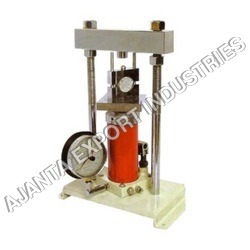
Our organization is a trusted business entity involved in manufacturing and exporting an extensive range of Rock Testing Machines. These machines are developed after extensive research work done by our researchers. Manufactured strictly in line with the set industry norms, the range we offer ensures high performance. Our clients can avail from us a Brazilian Testing Machine and Constant Pressure System, among others.Engineered for Precision and ReliabilityOur Rock Testing Machines are constructed using a heavy-duty welded steel body, providing outstanding durability and operational stability. The advanced hydraulic system works in tandem with either analog or digital high-precision load indicators to deliver consistent, accurate compression test results for a wide range of rock specimens.
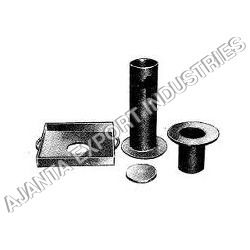
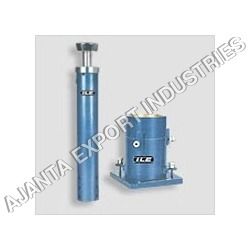
Flexible Configurations and Safety AssuredWe offer machines in multiple capacities (up to 200 kN) with customizable dimensions and loading piston strokes to meet diverse laboratory requirements. With built-in overload protection and safety shields, as well as standardized compression platens and spacers, safety during operation is a top priority. All units feature a corrosion-resistant powder-coated finish for long-term use.
FAQ's of Rock Testing Machines:
Q: How do Rock Testing Machines operate within laboratory settings?
A: Rock Testing Machines operate manually using a hydraulic system. The sample is placed between compression platens, and force is applied via the hydraulic system while the digital or analog indicator provides precise load measurements. The safety shield and overload protection ensure safe operation throughout the process.
Q: What types of specimens and tests can be performed with these machines?
A: These machines are designed for compressive strength testing of rock samples in laboratory environments. Standard compression platens and included spacers allow for testing a variety of rock types, making them suitable for research, construction material evaluation, and quality assurance testing.
Q: When should I select a model with a customized frame or capacity?
A: A model with customized dimensions or capacity should be chosen when your laboratory handles unique specimen sizes, requires higher load ranges (up to 200 kN), or needs to integrate the machine within existing setups. Customization ensures accurate and efficient testing tailored to your needs.
Q: Where are Rock Testing Machines commonly used?
A: These machines are commonly used in materials testing laboratories, research institutions, construction quality assurance labs, and educational settings across India and worldwide. Their reliability and adherence to testing standards make them essential in geological and civil engineering applications.
Q: What is the process for conducting a test using this equipment?
A: Begin by positioning the rock sample between the standard compression platens. Operate the hydraulic system manually to apply load, monitoring pressure with the high-precision indicator. The test continues until the rock fractures, and the maximum load value is recorded for analysis as per laboratory procedures.
Q: How does the safety mechanism benefit users during testing?
A: Safety features such as the overload protection system and safety shield protect users from accidental exposure to excessive force or flying debris. These mechanisms automatically stop loading when preset limits are exceeded, ensuring both operator safety and equipment longevity.
Q: What are the primary benefits of using this Rock Testing Machine?
A: The key benefits include robust, corrosion-resistant construction, highly accurate digital or analog measurements, adjustable strokes and capacities, straightforward manual operation, and comprehensive safety provisions. These features ensure consistent and dependable results for laboratory rock strength analysis.







 English
 Spanish
 French
 German
 Italian
 Chinese (Simplified)
 Japanese
 Korean
 Arabic
 Portuguese


 Send Inquiry

