Product Description
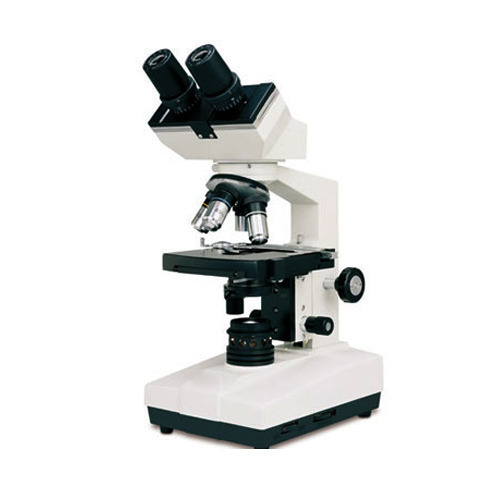
Inverted Tissue Culture Microscope
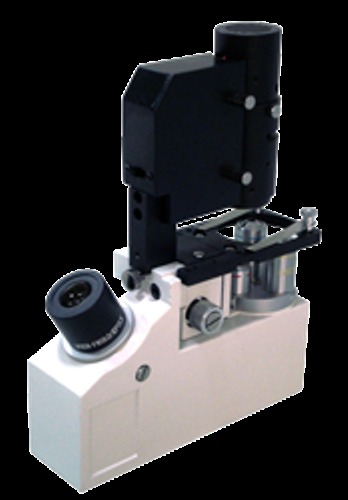
Inverted Tissue Culture Microscope Small hand-held portable microscope, simple operation, good performance and high-definition optical images. Liquid samples can also be observed, being inverted designed microscope. Compact designing, owned power supply, eassy to carry out to take wildlife observation and inspect protozoa in factory effluent and microbiology illuminator can be adjusted detached very easily.
Eyepiece - 10x/18
Nosepiece - Triple Nosepiece
Objectives -
- 4x/N.A.0.08, Working Distance 16
- 10x/N.A.0.25, Working Distance 3.6
- 40x/N.A.0.0.6, Working Distance 1.6
Stage - Plain stage size 45x55mm, with clear aperture of 42mm.with slide clips
Illumination - 0.1W LED Illumination(Rechargeable)
Range of vertical Stroke - 1.6mm. Up and 1.0mm Down
Dimensions - 40mm.x140mm.x180mm.Net weight 1kg. Supplied complete in a wooden carrying case with charger and operating instructions
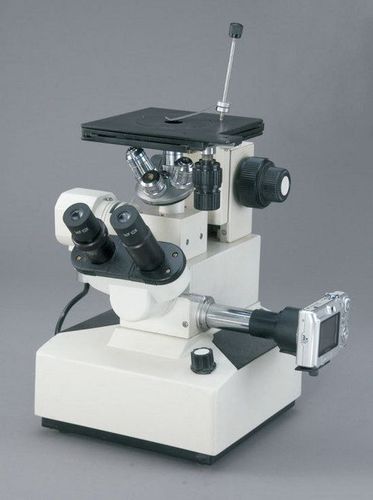
Innovative Stage and Optics for Cell CultureEngineered to excel in cell culture applications, this inverted microscope is equipped with a robust mechanical stage that supports X/Y movement over a 75 mm x 50 mm range. The large stage accommodates petri dishes, flasks, and comes with both glass and metal plates, streamlining diverse laboratory tasks. Infinite optical correction and long working distance achromatic objectives ensure sharp imaging for live cell inspection and analysis.
Ergonomic and Versatile Laboratory ToolDesigned for operator comfort and minimized fatigue, the microscope features a 45 inclined trinocular viewing tube with adjustable interpupillary distance. Coarse and fine focus adjustments and intensity-controlled LED or Halogen illumination simplify prolonged usage. Built-in camera port and C-mount allow direct image and video capture for documentation or sharing, serving various educational and research needs.
FAQ's of Inverted Tissue Culture Microscope:
Q: How does the inverted design benefit tissue culture observation?
A: The inverted design places objectives below the stage and the light source above, making it ideal for viewing living cells in large culture vessels like petri dishes and flasks. This set-up allows undisturbed observation of cell cultures at the bottom of containers, safeguarding sterile conditions and supporting routine laboratory processes.
Q: What are the main applications of this microscope in the laboratory?
A: This microscope is specifically designed for routine examination of living cells in tissue cultures, cytology, and microbiology labs. Its ergonomic features and ability to accommodate different vessel types make it suitable for research, academic teaching, clinical diagnosis, and industrial inspection involving cellular studies.
Q: When should I use the phase contrast observation method?
A: Phase contrast is recommended when observing transparent or unstained specimens, such as live cells in culture. This optional capability enhances contrast and detail, making it easier to view cell structures and dynamics that are otherwise difficult to see with standard brightfield illumination.
Q: Where can this microscope be used and what environmental conditions are required?
A: The microscope is ideal for use in professional labs, research institutions, hospitals, and universities. It operates reliably in ambient temperatures ranging from 0C to 40C, and its anti-rust coated alloy frame ensures long-term resilience in various lab environments.
Q: How is image and video capture managed with this microscope?
A: A standard C-mount adapter and optional CMOS camera enable image and video capture at resolutions up to 5 MP (still) and 1080p Full HD (video). Images can be saved in JPEG, BMP, or TIFF formats and transferred via USB, making analysis and documentation convenient and efficient.
Q: What accessories and spare parts are included or available for this model?
A: The microscope package includes a dust cover, user manual, power cord, universal slide holder, and petri dish and flask adaptors. Spare parts such as objective lenses, eyepieces, bulbs, and fuses are available to ensure continued operation and easy maintenance.
Q: What are the key ergonomic and safety features of this microscope?
A: With a 45 inclined viewing head, adjustable interpupillary distance, coaxial coarse and fine focus system, and anti-fungal optical components, the microscope is built for comfort and safety. The heavy-duty frame with anti-rust coating further protects the instrument, while transparent and metal stage plates provide flexibility for various sample types.







 English
 Spanish
 French
 German
 Italian
 Chinese (Simplified)
 Japanese
 Korean
 Arabic
 Portuguese


 Send Inquiry

