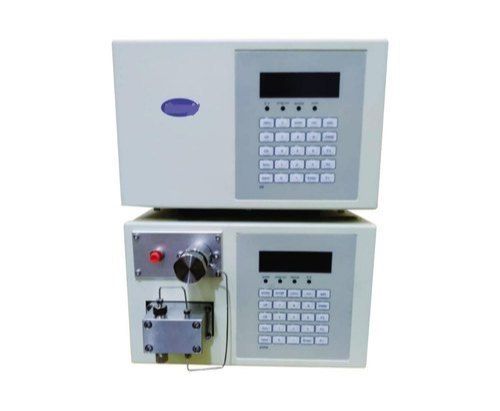
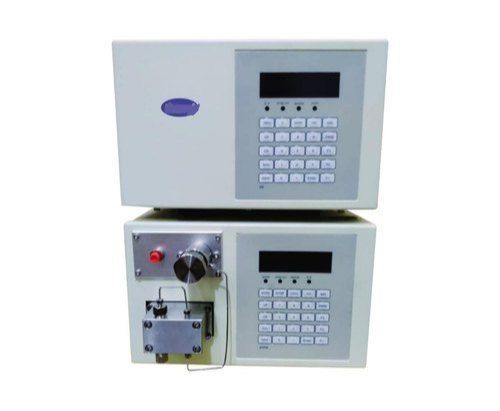
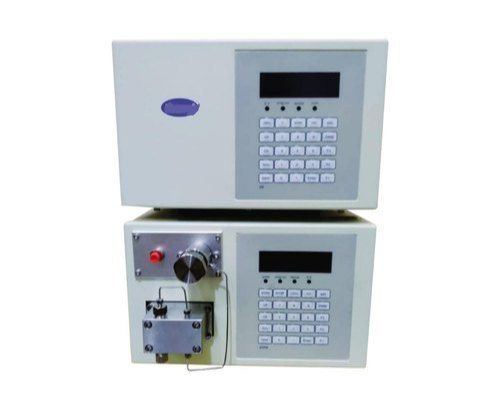
Product Description
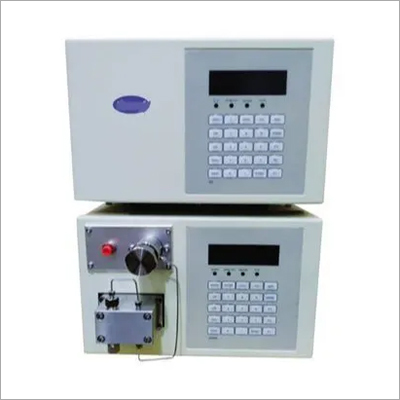
| Model Number/Name | Aei-Hp-Rt127 |
| Brand | AjantaExports |
| Display Inch | 4 inch |
| Size | 160 X 260 X,160 X 260 X 350 mm |
| Temperature Zone | 37 Degree Celsius |
| Dimension | 160X260X350 mm |
| Noise | 1 |
| Weight | 6 Kgs. |
| Minimum Order Quantity | 1 Unit |
ProductDescriptionWavelength - 190-700nm
Spectral Bandwidth - 6 nm
Wavelength Accuracy - 1nm
Wavelength Reproducibility - 0.5nm
Flow Pool Volume - 10L
Optical Path - 10mm
Dynamic Noise - 2.5 X 10AU(Methanol,1ml/min,254nm)
Static Noise - 1< 10AU(Empty Pool,Response time 1s)
Dynamic Drifting - 2.5 X10⁻⁴ AU(Methanol,1ml/min,254nm)
Static Dynamic - 1 X10AU (Empty Pool,Response time 1s)
Qualitative Repeatability - RSD0.1%
Quantitative Repeatability - RSD0.5%
Dimensions - 160X260X350 mm
Weight - 6Kgs.
Minimum Detection Concentration - 1 X10⁻⁸(Naphthalene/methanolSolution
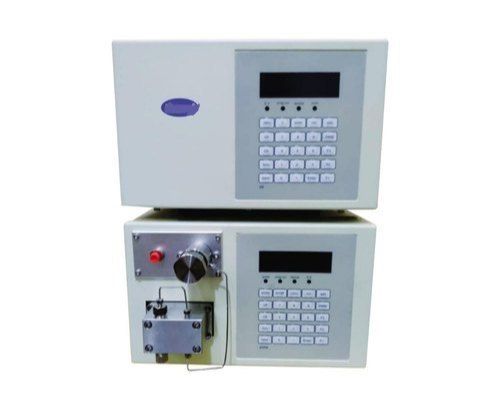
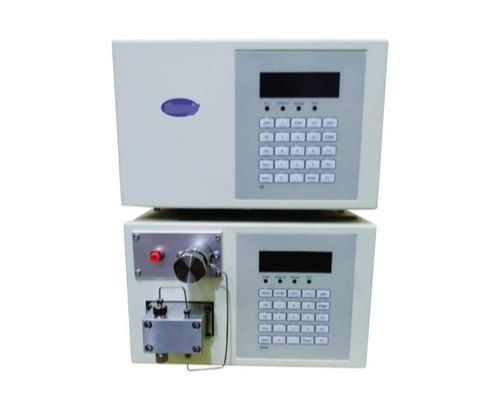
Advanced Detection and VersatilityThe built-in UV/Vis photometric detector covers a broad wavelength range of 190-700 nm, allowing users to analyze a wide array of compounds with high precision. Supporting up to two columns, the instrument enables method optimization and multi-dimensional separations for complex sample matrices.
Efficient Automation and Sample HandlingEquipped with an auto-sampler capable of injecting 1 to 100 L and handling up to 120 samples, this system streamlines high-throughput analyses. Its precise digital microprocessor control, programmable methods, and gradient mixing maximize efficiency and reproducibility.
Robust Design and SafetyConstructed from stainless steel, glass, and polycarbonate, the system withstands demanding laboratory environments. Built-in safety features, including leak detection, over-pressure protection, and solvent level sensors, safeguard both users and samples during operation.
FAQ's of High-Performance Liquid Chromatography:
Q: How does the UV/Vis photometric detector enhance sample analysis in this HPLC system?
A: The UV/Vis photometric detector, with a wavelength range of 190-700 nm, allows for the sensitive and selective detection of a wide range of analytes. This enables accurate quantification and identification across diverse pharmaceutical, food, chemical, and clinical applications.
Q: What are the maintenance requirements and how is routine servicing performed?
A: Routine maintenance is simple and does not require specialized tools, thanks to tool-free access design. Regular tasks include checking and replacing the solvent bottles, inspecting the waste tray, cleaning the column, and ensuring the flow cell and sample vials are in good condition.
Q: When should I use the gradient mixing function, and what benefits does it provide?
A: Gradient mixing is recommended when separating analytes with similar properties or when resolving complex mixtures. It allows for dynamic changes in solvent composition during analysis, resulting in superior separation efficiency and resolution.
Q: Where can this HPLC system be effectively utilized?
A: This system is ideal for use in analytical laboratories-including pharmaceutical, food safety, chemical, and clinical settings-thanks to its advanced detection, automation capabilities, and robustness.
Q: What process is used for sample injection and how does it ensure accuracy?
A: Samples are injected automatically using the auto-sampler, which offers precise control over injection volumes (1-100 L) and retention time accuracy (0.1 min). This minimizes user error and ensures consistent, reproducible analytical results.
Q: How does the system benefit laboratory workflow and productivity?
A: The large sample capacity, digital control, programmable methods, and automation features collectively streamline workflow, reduce manual intervention, and enhance throughput, allowing laboratories to efficiently handle high sample volumes and complex analyses.
Q: What safety features are included and how do they protect the instrument and user?
A: The HPLC system includes over-pressure protection, leak detection sensors, and solvent level monitoring. These features prevent damage to the instrument, minimize the risk of spills, and maintain operator safety during extended use.







 English
 Spanish
 French
 German
 Italian
 Chinese (Simplified)
 Japanese
 Korean
 Arabic
 Portuguese


 Send Inquiry

