Product Description
Details
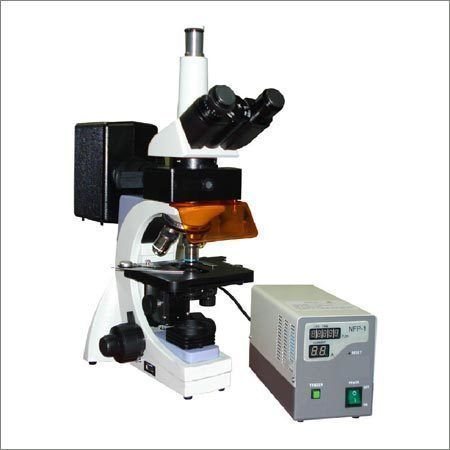
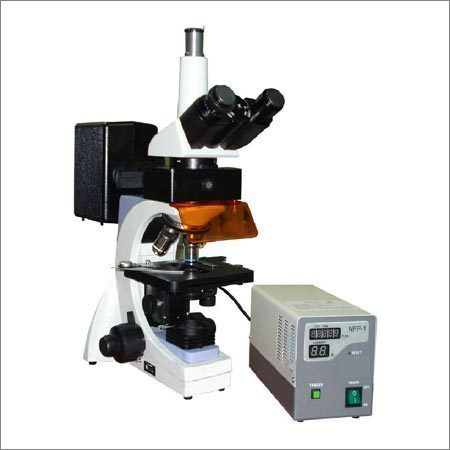
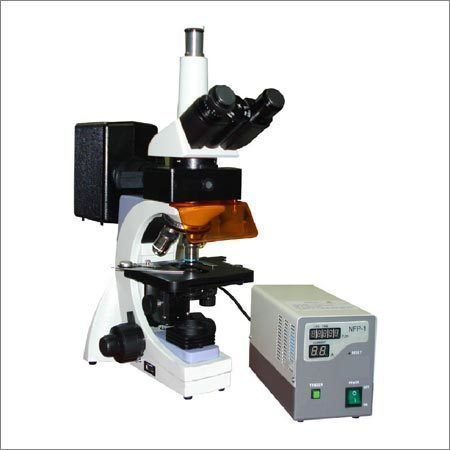
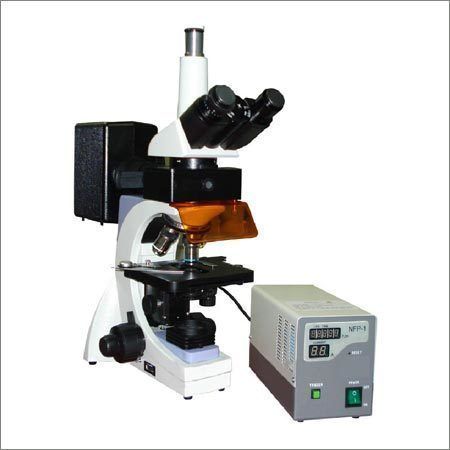
- Eyepieces: WF10x(LKW)&Huy 6x(paired)
- Objectives: 4x,10x,40x&100x(Fluorescent plan objectives)
- Filters: B(Blue),G(Green) Exciting Light Filter System,'O' Ordinary
- Light System.
- Epi- Fluorecent AIllumation: 100WHBO Ultra High Voltage Spherical
- Mercury Lamp
- Protection Barrier: Barrier to Resist The Ultra Violet Light
- Power Supply: 220V/110V AC,Input(Interchangeable) Digital Display
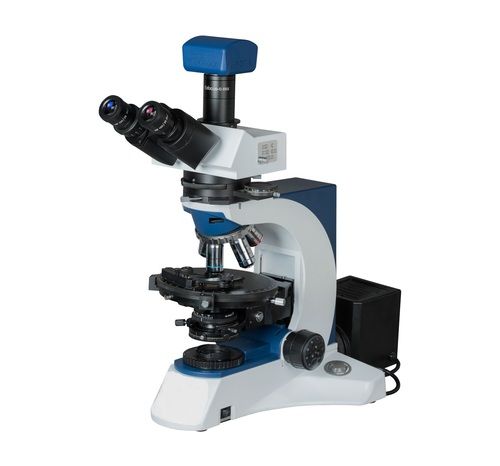
Advanced Fluorescence CapabilitiesEquipped with fluorescence filter cubes for standard B, G, and UV ranges, this microscope allows seamless switching between multiple fluorochromes. The high-pressure mercury lamp or LED light source ensures optimal fluorescence excitation, offering reliable results for research applications such as cell biology and molecular diagnostics.
Ergonomic and Durable DesignConstructed with a sturdy die-cast metal frame and steel/zinc components, the microscope withstands rigorous laboratory use. The inclined trinocular head, adjustable interpupillary distance, and mechanical stage enhance comfort and targeting accuracy during prolonged observations. Its 380 x 320 x 480 mm dimensions make it both substantial and manageable.
Flexible Imaging & Digital IntegrationWith a C-mount compatible design and optional CMOS digital sensor, this microscope is ready for modern documentation and presentation needs. It delivers image resolutions up to 1920 x 1080 pixels in multiple formats (JPEG, BMP, PNG). The 30 fps video capture and Full HD stills support dynamic and detailed sample recording.
FAQ's of Fluorescence Microscope:
Q: How does the fluorescence filter cube system work on this microscope?
A: The fluorescence filter cube system features Standard B, G, and UV filters, enabling users to selectively isolate and observe multiple fluorophores, such as FITC, DAPI, TRITC, GFP, and Rhodamine, by blocking unwanted wavelengths and optimizing fluorescence signal transmission.
Q: What magnification levels are available and how are they selected?
A: This microscope offers standard magnification of 40x, 100x, 400x, and 1000x via its quadruple revolving, ball-bearing nosepiece fitted with achromatic objectives (4x, 10x, 40x spring, 100x oil spring). Switching magnification involves rotaing the nosepiece to the desired objective.
Q: Where can this microscope be utilized most effectively?
A: The instrument is ideally suited for laboratory use in research institutes, universities, hospitals, and diagnostic centers, especially in applications requiring the detection and analysis of fluorescently labeled biological samples.
Q: What process is involved in capturing images or videos with this microscope?
A: Attach a compatible C-mount digital camera to the trinocular port. With the optional CMOS sensor, images up to 5MP and videos at 1920x1080 resolution and 30 fps can be captured, saving files in JPEG, BMP, or PNG formats via USB 2.0/3.0 interface.
Q: When should I adjust the iris diaphragm and condenser?
A: Adjust the Abbe condenser (N.A. 1.25 with iris diaphragm) before observation to achieve optimal contrast and illumination for your specimen, particularly when working at higher magnifications or with varying sample thicknesses.
Q: How do the ergonomic features benefit users during prolonged operation?
A: The 30 inclined trinocular head, adjustable interpupillary distance (55-75 mm), and sturdy mechanical stage enhance user comfort and reduce eye and neck strain during extended viewing sessions, improving focus and productivity.
Q: What power supply options and environmental tolerances does this microscope have?
A: Designed with a universal AC 110/220V, 50/60 Hz power supply, the microscope can be used worldwide. It operates efficiently in environments with 10C to 40C temperature and up to 85% relative humidity, ensuring reliable performance.







 English
 Spanish
 French
 German
 Italian
 Chinese (Simplified)
 Japanese
 Korean
 Arabic
 Portuguese


 Send Inquiry

