Product Description
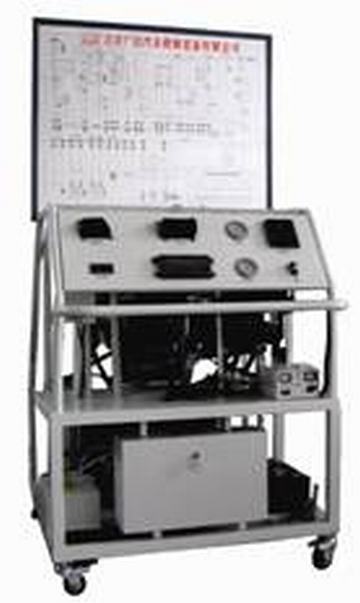
EXPERIMENTAL PLATFORM OF AUTO AIR-CONDITION
Description:
Teaching Function:
Understand structure and working principle of air-condition. Master diagnose and maintenance methods of common faults.
Standard Configuration:
1.Adopt accessories of original vehicle air-condition, with complete functions and normal operation.
2.Simulate the real working process of vehicle air-condition by adjusting temperatures.
3.Simulation artificially common faults of air-conditioning electronic control system.
4.It's safe enough because there is leakage protection device.
5.Digital electronic watch can show working process of all sensors and temperature of air outlet.
6.Pointer pressure gauge shows high and low pressures.
7.There are two models: teaching and training. It's convenient for teachers to teach and train.
8.Diagnose connections are configured to connect testing equipment special for motor vehicles.
9.It is configured with computer diagnose terminators to test voltage signal.
10.Draw engine structure diagram to analyze circuit. |
Comprehensive Learning ToolThis platform allows trainees to explore all aspects of automotive air-conditioning, from component identification to system troubleshooting. The clear acrylic panels provide superior visibility, letting users observe the refrigeration cycle, operational nuances, and response to manual or digital controls. Its educational value lies in hands-on experience and immediate feedback.
Built for Durability and MobilityConstructed from powder-coated steel and high-quality acrylic, the platform withstands repeated use in training centers or laboratories. Lockable castor wheels offer mobility and stability, while the compact rectangular form factor fits standard workshop layouts. Its modular design and safety features prioritize both user protection and equipment longevity.
Advanced Instrumentation and SafetyIntegrated digital displays, precise temperature and pressure sensors, and safety devices ensure that every experiment or demonstration is conducted under closely monitored and secure conditions. Overpressure protection, emergency stop, and short circuit safeguards enhance operator confidence during intensive training sessions.
FAQs of EXPERIMENTAL PLATFORM OF AUTO AIR-CONDITION:
Q: How does the experimental platform help in understanding automotive air-conditioning systems?
A: The platform is designed to visually demonstrate the complete A/C cycle, allowing users to identify key components, monitor real-time parameters, and learn troubleshooting through functional operation. Its transparent sections and easy-to-use instrumentation foster a deeper grasp of theoretical and practical aspects.
Q: What safety features are integrated into this equipment?
A: The platform includes overpressure protection, short circuit protection, and an emergency stop. These features safeguard both the user and equipment during experiments, ensuring a safe environment in educational and technical training settings.
Q: When should the platform be utilized during the learning process?
A: It is ideal for use after introductory theory lessons, enabling learners to transition from conceptual understanding to hands-on practice. The comprehensive setup aids both structured demonstrations and freeform experimentation in automotive air-conditioning training programs.
Q: Where can this experimental platform be installed and used?
A: Thanks to its lockable castor wheels and robust construction, the platform is suitable for use in technical institutes, vocational schools, research labs, and automotive training centers. Its moderate size allows it to be positioned in most standard workshop or classroom environments.
Q: What is the process for operating the equipment?
A: Begin by powering up and setting the desired parameters using manual or digital controls. The systems sensors and visual casings allow real-time observation of temperature, pressure, and refrigerant flow. Safety devices are always on standby, and operational feedback is provided through digital displays for accurate monitoring.
Q: How can users benefit from using this platform?
A: Learners gain practical expertise in diagnosing faults, understanding the interplay of components, and mastering both manual and digital control of HVAC systems. Real-time monitoring and clear visual access to system internals reinforce theoretical knowledge with direct application.







 English
 Spanish
 French
 German
 Italian
 Chinese (Simplified)
 Japanese
 Korean
 Arabic
 Portuguese


 Send Inquiry

