Product Description
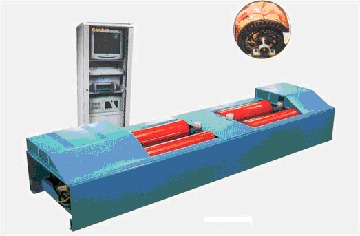
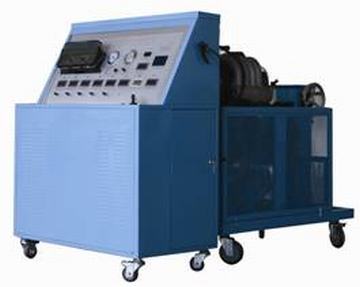
AUTOMOBILE CHASSIS DYNAMOMETER
Description:
This machine can simulate normal road condition, test the automobile chassis output power and then display it on the screen or print.
Details:
Max test speed km/h | 120 | 120 | Roller diameter mm | 318 | 370 | Roller length mm | 900 | 1100 | Flywheel numbers | 2 | 1 | Dimension mm | 4200*1075*680 | 4800*1275*780 | Power supply | 220v50Hz | 220V50HZ |
|
Advanced Testing CapabilitiesThis chassis dynamometer supports multiple testing modes, including constant speed, acceleration, deceleration, coastdown, and customizable profiles. Automatic data acquisition and real-time monitoring ensure detailed analysis for research, diagnostics, and compliance with international testing standards.
Integrated Safety and Precision EngineeringEngineered with overload protection, emergency shutdown, and anti-slip roller surfaces, this dynamometer prioritizes operator safety. With 0.5% full scale accuracy and features like auto calibration and overheat protection, users are assured of reliable and precise results for every test.
Flexible Installation and Comprehensive ConnectivitySuited for laboratory and hospital uses, the dynamometer can be installed in a pit or above ground. It boasts versatile data interfaces-USB, Ethernet, and Wi-Fi-and is delivered with a Windows-compatible software suite, ensuring seamless integration with existing workflows.
FAQ's of AUTOMOBILE CHASSIS DYNAMOMETER:
Q: How is the automobile chassis dynamometer installed and where can it be set up?
A: The unit supports both pit and above-ground installation, making it adaptable for a variety of laboratory or testing facility layouts. It is commonly installed in automotive research labs, educational institutes, and diagnostic centers.
Q: What is the process of operating the dynamometer and what control options are available?
A: Operation involves positioning the vehicle on the rollers, selecting the desired testing mode via the digital touchscreen or remote, and starting the test sequence. Automatic data acquisition, auto calibration, and real-time monitoring streamline the testing process.
Q: When should the dynamometer's safety features be utilized?
A: In instances of overload or system malfunction, built-in safety measures like emergency shutdown and overload protection are automatically triggered to ensure both equipment and operator safety.
Q: How does the dynamometer benefit users in a hospital laboratory setting?
A: The dynamometer offers precise and repeatable measurements of vehicle power, torque, and emissions, aiding in medical research, teaching, or rehabilitation that involves automotive technology, and supports integration with exhaust and other physiological sensors.
Q: What vehicle types and applications can be tested with this equipment?
A: It supports a broad range of vehicles fitting within its load and dimension limits, including passenger cars and light commercial vehicles, for performance verification, research, and compliance checks.
Q: What makes the dynamometer's data acquisition and software unique?
A: The system offers real-time monitoring, automatic recording of results, compatibility with Windows-based software, and connectivity via USB, Ethernet, or Wi-Fi, facilitating easy data analysis and reporting.
Q: How does the dynamometer maintain measurement accuracy during operation?
A: It utilizes auto calibration and overheat protection, paired with high-resolution LCD displays and digital controls, to ensure accuracy within 0.5% across the full measurement scale.







 English
 Spanish
 French
 German
 Italian
 Chinese (Simplified)
 Japanese
 Korean
 Arabic
 Portuguese


 Send Inquiry

