Product Description
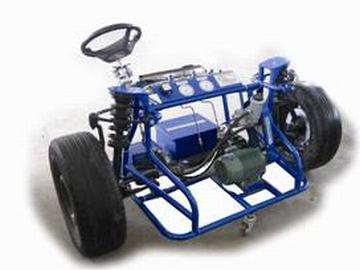
ELECTRIC MOTOR STEERING EXPERIMENTAL PLATFORM
Description:
Teaching Function:
It can show components, working principle and structure of electric motor steering system.
Standard Configuration:
Choose different types according to teaching requirement.
Control panel; Faults can be set up for practice.
It can display the two independent suspension systems and carry out the actual removal experiment.
Non-destructive testing
Removable rack and caster wheel brake
|
Comprehensive EPAS Testing PlatformThis platform is engineered to demonstrate the full functionality of Electric Power Assisted Steering (EPAS). With integrated sensors for torque and angle measurement, students can experience hands-on comparison between manual and assisted steering methods. Its compact, mobile design allows for flexible use in classrooms and laboratories.
Safety and User-Focused DesignSafety is paramount, featuring an automatic overload protection system and an emergency stop button for quick response. The accessible user interface includes a digital control panel, indicator lights, and digital speed display to ensure straightforward, safe operation for learners and instructors alike.
Durable, Portable, and VersatileManufactured with a powder-coated mild steel frame and long-life ball joints, the structure resists corrosion and handles frequent relocation. The base incorporates sturdy caster wheels, supporting weight up to 200 kg, ensuring easy mobility within laboratory spaces while retaining stability during experiments.
FAQ's of ELECTRIC MOTOR STEERING EXPERIMENTAL PLATFORM:
Q: How does the platform enable comparative analysis between manual and EPAS steering?
A: The Electric Motor Steering Experimental Platform provides the capability to switch between manual and electric power-assisted steering modes. This allows users to directly compare the effort, response, and performance characteristics of both steering types in real-time using integrated torque and angle sensors.
Q: What safety features are incorporated into this experimental platform?
A: This platform is equipped with overload protection, an emergency stop button, and indicator lights to notify users of operational status. The safety switches and sturdy construction ensure secure usage, even during high-demand experiments.
Q: When and where can the platform be utilized effectively?
A: The platform is ideally used in automobile and mechanical engineering laboratories, particularly in educational institutes, research centers, and technical training facilities. Its robust design supports regular use by students and instructors during practical classroom sessions and laboratory experiments.
Q: What is the typical process for conducting a demonstration with this equipment?
A: To conduct a demonstration, the user powers on the system, selects the desired steering mode via the control panel, and utilizes the digital display to monitor torque, angle, and speed. The system's variable speed drive allows for fine adjustments, while safety features protect against overloads during operation.
Q: What are the primary benefits of the electric motor steering experimental platform for users?
A: Users benefit from its accurate digital measurements, hands-on demonstration capabilities, and straightforward digital controls. The portable, compact design allows for convenient repositioning, and its sturdy, anti-corrosive finish ensures long-term reliability in busy academic environments.
Q: How does the digital control system enhance experimentation and data accuracy?
A: The platform uses a digital control with a variable speed drive and digital display, providing precise adjustment and real-time data for torque and angle. This enhances the learning experience by allowing users to observe and record exact changes due to modification in speed or load.







 English
 Spanish
 French
 German
 Italian
 Chinese (Simplified)
 Japanese
 Korean
 Arabic
 Portuguese


 Send Inquiry

