Product Description
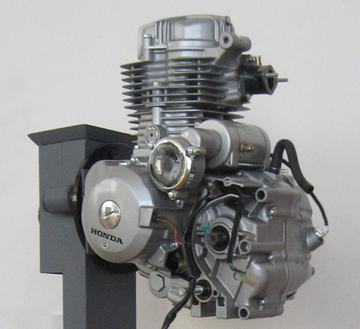
WORKING MODEL OF 1 CYLINDER, 4 STROKE SI ENGINE
Description:
The structure of the 1 cylinder, 4 stroke SI engine can be directly observed to make students deeply understand the construction and the operating principle of the 1 cylinder, 4 stroke SI engine. It is made up of the good-quality spare parts of the vehicle and can be operated normally driven by geared down motor. The whole frame of the training model is made of GB steel with surface sand blasted. Key area is highlighted by lights.
Details:
Power Supply: | AC220V | Net Weight : | 200Kg | Gross Weight: | 215Kg | Package Size: | 800*600*1000 | CONFIGURATION: (As per one set) | Frame | 1 | Operating Instruction | 1 |
|
Comprehensive Demonstration ToolWith its partially transparent section and clearly visible components, this model enables users to observe critical internal mechanisms like piston movement, valve timing, and crankshaft rotation. The specially shielded moving parts and overheat-resistant glass window enhance safety during hands-on operation, making it well-suited for use in educational settings.
Manual or Motorized OperationThis engine model offers flexibility through both manual hand cranking and an optional motorized function powered by a 12V DC adapter. This dual-operation mode allows for controlled demonstration speeds and consistent visual learning for students and trainees, accommodating various instructional approaches.
Durability and Easy MaintenanceConstructed with a mild steel body and aluminium cylinder block, the model is built for repeated use in demanding academic environments. Its simple design allows for straightforward cleaning and servicing, ensuring smooth functionality and extending life for continued educational benefit.
FAQ's of WORKING MODEL OF 1 CYLINDER, 4 STROKE SI ENGINE:
Q: How does the demonstration model help visualize internal combustion processes?
A: The partial glass window of the model makes the internal movements of the piston, valves, and spark plug visible, allowing students to clearly observe each stage-suction, compression, power, and exhaust-within the four-stroke process.
Q: What components are active during operation and how is the engine powered?
A: Key moving components include the piston, crankshaft, and valves. The model can be operated manually via a hand crank or powered by a 12V DC electric motor, offering two demonstration modes for flexible instruction.
Q: When is this engine model most beneficial for educational use?
A: This model is particularly useful during practical demonstrations in engineering, polytechnic, and technical training programs where visual understanding of basic engine mechanics and ignition is required.
Q: Where can the working model be used safely and efficiently?
A: Designed for academic settings, it is best used in laboratories, classrooms, or workshops where students can gather around, observe safely, and interact with the model thanks to its anti-vibration mounting and shielded sections.
Q: What are the safety features included to protect users during operation?
A: Safety is ensured through shielded moving parts, an overheat-resistant glass window for the demonstration area, and stable anti-vibration feet that secure the model on a heavy-duty base.
Q: How is maintenance handled for this demonstration engine model?
A: The model's straightforward engineering allows for easy cleaning and routine servicing, ensuring it remains functional with minimal downtime in teaching environments.
Q: What benefits does manual and motorized operation offer for demonstrations?
A: Manual cranking promotes user engagement and understanding of engine cycles, while motorized operation offers controlled and consistent running speeds ideal for group demonstrations and observation.







 English
 Spanish
 French
 German
 Italian
 Chinese (Simplified)
 Japanese
 Korean
 Arabic
 Portuguese


 Send Inquiry

