Product Description
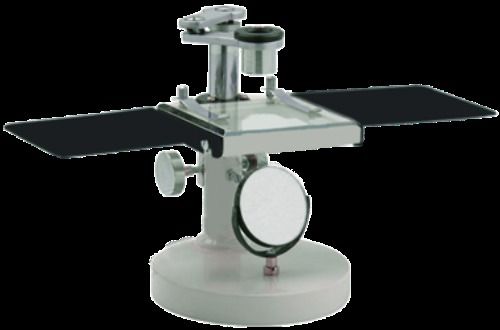
Dissecting microscope model hl-112 today, the company stands among the prominent student dissecting microscope exporters based in india. Our technically superior student microscope is in huge demand in the national and international market due to its high optical quality. Excellent magnifying power, user-friendly structure and low maintenance. . .
Physilab dissecting microscope : Aplantic 10x and acromatic 20x EP on joint arm with glass plate. Mirror for light; rack and pinion for focusing packing : packed in box with dust protection cover and illustrated manual.
Superior Build and StabilityConstructed from mild steel and a die-cast metal frame, the dissecting microscope offers remarkable stability and corrosion resistance, making it suitable for rigorous use in classrooms and laboratories. The heavy, stable base effectively dampens vibrations, ensuring steady and precise observations during specimen examination.
Versatile Stage and OpticsThis microscope is equipped with interchangeable stage plates (black/white and frosted glass) to provide optimal contrast for a wide range of specimen types. Achromatic objectives and wide-field eyepieces deliver crisp, stereoscopic images at varying magnifications-perfect for biological and industrial investigations.
User-Friendly and Safe PackagingDesigned for ease of use, the dissecting microscope features a monocular vertical tube for straightforward, direct observation. All components are securely packaged in a foam-lined, sturdy box for safe transport and storage, further supporting educational and professional use across different environments.
FAQ's of Dissecting Microscope :
Q: How do I operate the dissecting microscope for specimen observation?
A: To use the dissecting microscope, securely place the specimen on the round stage and fix it using the metal stage clips. Select the preferred stage plate for optimal contrast, and adjust coarse focus with the rack and pinion mechanism while looking through the monocular eyepiece until a clear stereoscopic image is achieved.
Q: What types of specimens can be examined with this microscope?
A: This microscope is ideal for biological, entomological, and industrial specimens. It is perfect for observing the details of insects, plant parts, minerals, fabrics, and other surface structures requiring low magnification and reflected light observation.
Q: When should I consider using interchangeable stage plates?
A: Interchangeable stage plates, such as black/white and frosted glass options, should be used when you need to enhance the contrast of different specimens. For example, a white plate can be used for dark objects, whereas a black plate is preferable for lighter specimens. The frosted glass plate is suitable for translucent objects.
Q: Where can this microscope be used, and who is it best suited for?
A: The dissecting microscope is designed for use in educational institutions, laboratories, and industrial settings. It is particularly suitable for students, teachers, laboratory technicians, and professionals conducting field or in-house research.
Q: What is the magnification range and how is it achieved?
A: The magnification typically ranges from 10X to 40X, accomplished by pairing wide-field eyepieces (10X or 15X) with achromatic objectives (2X or 4X). This combination provides clear, stereoscopic views of specimens under low magnification.
Q: What benefits does the die-cast metal frame provide?
A: A die-cast metal frame offers enhanced durability and resistance to corrosion, ensuring long-lasting performance even under frequent use. This robust construction also promotes stability, reducing vibrations for sharper imaging.







 English
 Spanish
 French
 German
 Italian
 Chinese (Simplified)
 Japanese
 Korean
 Arabic
 Portuguese


 Send Inquiry

