Product Description
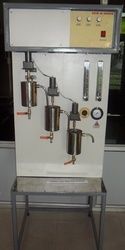
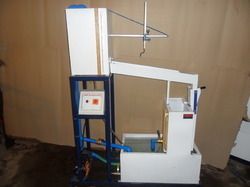
In an ideal CSTR the contents in reactor are well mixed and have uniform composition throughout. Thus the exit stream has the same, composition as the fluid within the reactor. This type of reactor is known as mixed flow reactor. This set-up is used to study a non-catalytic homogeneous second order liquid phase reaction under ambient condition.
The set up consists of two feed tanks through which two reactants are fed to the reactor. Rotameters are provided to measure the individual flow of Chemicals. The flow rate can be adjusted by operating the needle valves provided on respective Rotameter. The magnetic drive pump is used for circulation of feed. The CSTR is fitted with stirrer for proper mixing. From top outlet of it samples are collected for analysis
Experiments
- Sponification Reactor studies in CSTR
- To determine the Reaction Rate Constant
Features
- Continuous operation
- Superb Painted structure
- Simple to operate & maintain
- Compact & stand alone set up
- Soundless Stirrers
Utilities Required
- Water Supply & Drain
- Electricity Supply: 1 Phase, 220 V AC, 0.5 kW
- Instruments, Laboratory Glassware and Chemicals required for analysis as per the system adopted
Advanced Mixing and Temperature ControlEquipped with a variable-speed motorized agitator and a digital PLC touch panel control system, this CSTR guarantees exceptional mixing and precise parameter regulation. Its heat uniformity of 1C and adjustable sterilization time make it ideal for sensitive laboratory processes, ensuring consistent results and safe operation.
High-Grade Construction for Durability and ComplianceThe reactor's interior is mirror polished, while all contact parts are made from SS304 or SS316 stainless steel, ensuring corrosion resistance and compliance with food-grade standards. Insulation with high-density mineral wool minimizes heat loss, making the unit efficient and safe for high-temperature applications.
FAQ's of Continuously Stirred Tank Reactor:
Q: How does the motorized agitator contribute to efficient mixing in the CSTR?
A: The motorized agitator provides variable-speed mixing from 0 to 150 RPM, promoting thorough and homogeneous blending of reactants. Adjustable speed enables the optimization of mixing intensity, suitable for a variety of laboratory processes.
Q: What are the safety features integrated into this CSTR?
A: Key safety features include a pressure relief valve, over-temperature alarm, and ISI-marked SS316 valves, all designed to protect the equipment and users during operation. The system also ensures safe operation up to the design pressure (2.5 bar) and temperature (135C).
Q: When is the Clean-in-Place (CIP) provision used, and how does it benefit laboratory operation?
A: The CIP provision is utilized during scheduled cleaning or after batch completion, allowing automated, effective internal cleaning without opening the reactor. This minimizes downtime, maintains hygiene, and aligns with food-grade and laboratory standards.
Q: Where can this stainless steel CSTR be installed for optimal performance?
A: With its compact outer size and mobility features (stainless steel trolleys), the reactor can be conveniently fitted in laboratory environments. Its compatibility with standard compressed air (0.4-0.6 Mpa) and steam supplies further simplifies installation within laboratories or pilot plants.
Q: What is the process for controlling and monitoring operating parameters?
A: The digital PLC with touch panel interface allows real-time monitoring and adjustment of parameters such as temperature, time, pressure, and agitator speed. Parameters are continuously recorded for traceability and quality assurance during experiments or production runs.
Q: What are the key benefits of using this CSTR for laboratory applications?
A: This reactor offers reliable and consistent results with advanced safety and control features. Its robust construction, efficient mixing, and easy cleaning ensure operational efficiency, compliance with hygiene standards, and minimized maintenance, making it ideal for laboratory research and development.







 English
 Spanish
 French
 German
 Italian
 Chinese (Simplified)
 Japanese
 Korean
 Arabic
 Portuguese


 Send Inquiry

