Product Description
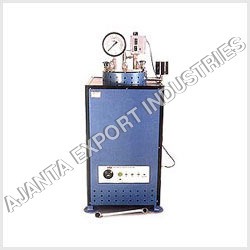
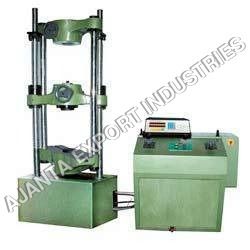
Pioneers in the industry, we have been able to provide the customers with excellently designed Cement Autoclaves. Designed under the vigil of expert professionals, our range is widely used or conducting accelerated soundness tests on mortar & cement. Acknowledged for h operational accuracy, reliability and smooth operation, our range available in varied sizes & dimensions.
Construction:
- Consists of stainless steel cylinder with an insulated cover
- Sturdy supporting frame enclosed in a heat insulated metal housing
- Control unit comprising sensitive pressure regulator & pressure gauge
- Power switches & lamps for controlling the electric heating units
Inside chamber dimensions
- Height: 15 cm dia x 60 cm
- Pressure capacity: 20 kg/cm2
- Operation: 220 V, 50 Hz & single phase AC supply
Accessories:
- Test bar holder
- Special rack
Reliable Laboratory TestingOur cement autoclaves are engineered to meet demanding laboratory requirements, ensuring accurate and repeatable testing of cement and building materials. Their mild steel construction and efficient electric power operation make them a trusted choice for quality control and research labs across India and beyond.
Manual Operation for User ControlThe manual operating mechanism provides the user with precise control over each test cycle. This facilitates a deeper understanding of testing variables and allows customized procedures as needed, making these autoclaves advantageous for research and educational settings alike.
FAQ's of Cement Autoclaves:
Q: How are Cement Autoclaves used in a laboratory setting?
A: Cement autoclaves are primarily used in laboratories to test the soundness of cement by subjecting it to controlled high-pressure steam conditions. This helps determine the material's durability and expansion, ensuring compliance with quality standards.
Q: What are the main benefits of a mild steel Cement Autoclave?
A: Mild steel construction offers the benefits of durability, resistance to wear-and-tear, and cost-effectiveness. It ensures the autoclave withstands repeated laboratory use, making it reliable for intensive testing procedures.
Q: When is it necessary to use a Cement Autoclave in cement testing?
A: A cement autoclave should be used when assessing the soundness of cement, particularly to detect the delayed expansion caused by the presence of free lime or magnesia. These tests are commonly required during quality assurance and compliance checks.
Q: Where are these Cement Autoclaves manufactured and supplied from?
A: These autoclaves are manufactured, exported, and supplied by our company based in India. We cater to both domestic laboratory needs and international export markets, delivering our equipment worldwide.
Q: What is the operating process of a manual Cement Autoclave?
A: To use the autoclave, operators manually control the filling, heating, timing, and depressurizing steps, following laboratory testing protocols. The device operates at 230 volts and requires close supervision during the cycle for best results and safety.
Q: What advantages does electric power at 230 volts offer for laboratory autoclaves?
A: Operating at 230 volts ensures stable and efficient power supply, which is standard in many laboratory environments. This enables quick heating and consistent performance, crucial for accurate and reproducible testing results.







 English
 Spanish
 French
 German
 Italian
 Chinese (Simplified)
 Japanese
 Korean
 Arabic
 Portuguese


 Send Inquiry

