Product Description
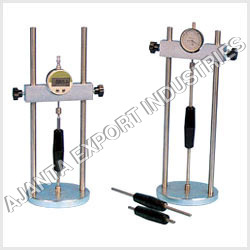
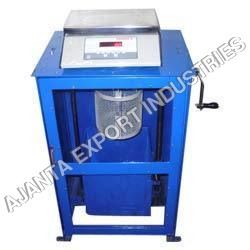
We are actively engaged in fulfilling the diversified demands of the customers bringing forth uniquely designed Length Comparators. Ideally a cement testing equipment, the range is widely used for measuring the drying shrinkage of concrete expansion of port land & reactive cement.
Additionally, the range can be used for performing the following tests:
- Initial drying shrinkage: Difference between length of cured specimen to when it is dried
- Drying shrinkage: Difference between lengths from existing structure to when it is completely dried
- Moisture movement: Difference between length of specimen when dried and hen saturated with water
Specifications:
- Frame with adjustable cross plate &recessed seating
- 300 ± 1.0 mm long alloy steel bar with less than 2x10⁻⁶ degree coefficient of thermal expansion
- 6 mm steel balls mounted at the ends
- Dial gauge of 0.002 mm x 10 mm
Exceptional Measurement ResolutionFeaturing a resolution of 0.001 mm, our Length Comparators allow for highly precise measurements, making them ideal for laboratory environments that demand rigorous accuracy. The choice between dial and digital gauges delivers versatility in reading preferences, while maintaining absolute measurement integrity.
Durable and Stable Build QualityConstructed with a granite or cast iron base and stainless steel components, these comparators offer unmatched stability and longevity. The bench-mounted design minimizes vibrations, ensuring repeatable and consistent results over extended periods, even under heavy laboratory use.
Factory-Calibrated and Ready to UseEach unit is meticulously calibrated at the factory against standard references for immediate deployment. The precision ground and lapped surface finish further enhances measurement reliability, reducing the need for frequent recalibration and maintenance.
FAQ's of Length Comparators:
Q: How does a Length Comparator operate using the Mechanical Comparator principle?
A: A Length Comparator operates by comparing the measured object against a standard bar using the Mechanical Comparator principle. The gauge, either analog or digital, detects minute differences in length, which are then displayed with high resolution. This direct comparison ensures high measurement accuracy.
Q: What bar length options are available and can custom lengths be supplied?
A: Standard bar lengths of 100 mm, 200 mm, and 300 mm are readily available. Custom bar lengths can also be provided to meet specific user requirements, ensuring versatility across various applications.
Q: When should factory calibration be rechecked or adjusted?
A: The comparators are factory calibrated against certified references to ensure initial accuracy. It is recommended to verify calibration periodically, based on usage frequency and laboratory standards, or immediately after any potential mechanical shock or relocation.
Q: Where are these comparators typically mounted and utilized?
A: Designed for bench mounting, these Length Comparators are predominantly used in laboratory settings, research centers, or precision engineering workshops where stable and controlled conditions are essential for accurate measurements.
Q: What is the process of operating the comparator manually?
A: To operate, the user manually places the object to be measured against the reference bar, ensuring proper alignment. The dial or digital gauge will then display any variation in length. Proper handling and setup are crucial for optimal accuracy and repeatability.
Q: What benefits does a granite or cast iron base provide?
A: A granite or cast iron base delivers exceptional stability by dampening vibrations and reducing thermal distortion. This enhances measurement accuracy and consistency, especially crucial in sensitive laboratory environments.
Q: How does the precision ground and lapped surface finish contribute to the instrument's performance?
A: The precision ground and lapped surface finish ensures smooth contact and minimal friction between the reference bar and the item being measured. This improves repeatability, accuracy, and prolongs instrument life by minimizing wear.







 English
 Spanish
 French
 German
 Italian
 Chinese (Simplified)
 Japanese
 Korean
 Arabic
 Portuguese


 Send Inquiry

