Product Description
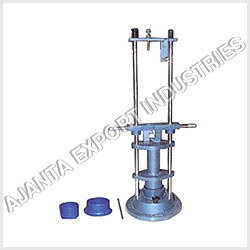
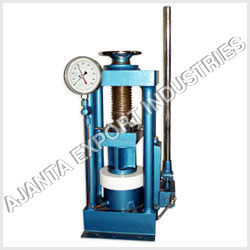
We have established ourselves as a prominent organization engaged in catering to the variegated demands of the customers by bringing forth excellently designed Aggregate Impact Testing Equipments. Widely used in the construction sector for determining aggregate impact value, the offered range is acknowledged for higher accuracy and improved functioning.
Specifications:
Comprises a circular base with two vertical guides
The hammers in vertical guides weigh 13.75 ± 0.25 kg
These are raised to fall freely down the guides and is removed for emptying
Height of fall is adjusted through 380 ± 5 mm
Metal measures
High-Grade Mild Steel ConstructionBuilt with durability in mind, the Aggregate Impact Testing Equipment features high-grade mild steel construction and a powder-coated or painted finish. This ensures outstanding longevity and resilience during rigorous aggregate testing procedures. The robust build supports consistent laboratory performance.
Comprehensive Laboratory AccessoriesEach unit comes equipped with a tamping rod and metal measure to facilitate accurate sample preparation and measurement. These essential accessories, combined with the precisely engineered impact mechanism, streamline aggregate impact value assessments in laboratory environments.
Reliable Manual Operation for Accurate ResultsDesigned for manual operation, the equipment allows for hands-on control over the testing process. The drop height of the 13.5 kg hammer is maintained at 380 mm for repeatable and accurate impact results, making it a trusted choice for laboratories engaged in material testing.
FAQ's of Aggregate Impact Testing Equipments:
Q: How is the Aggregate Impact Testing Equipment used in laboratory settings?
A: The Aggregate Impact Testing Equipment is utilized in labs to determine the impact value of aggregates, which helps assess their toughness and resistance to sudden shocks. It involves placing aggregate samples in the cup, tamping them, and striking them with a 13.50.5 kg hammer dropped from 380 mm, as per standard test procedures.
Q: What materials are used in the construction of this testing equipment?
A: This equipment is constructed using high-grade mild steel for maximum strength and durability. Its surface is finished with either powder coating or paint, providing resistance against wear, corrosion, and laboratory chemicals.
Q: When should laboratories perform aggregate impact tests using this equipment?
A: Aggregate impact tests are typically conducted when evaluating or qualifying aggregates for construction projects, especially when ensuring compliance with safety and quality standards. The tests are usually performed during initial material approval or periodic quality assessments.
Q: Where is this Aggregate Impact Testing Equipment manufactured and supplied?
A: The equipment is manufactured, exported, and supplied by reputable distributors, manufacturers, and traders across India, ensuring easy accessibility for laboratories and construction material testing facilities throughout the region.
Q: What is the process involved in operating the Aggregate Impact Testing Equipment?
A: The operation process involves filling the steel cup with aggregate samples, tamping them evenly, securing the apparatus, and releasing the hammer from a fixed height to impact the samples. The disintegration of aggregates is measured to calculate the impact value.
Q: What are the benefits of using high-grade mild steel with a powder-coated finish for this equipment?
A: Using high-grade mild steel enhances the structural integrity of the equipment, while a powder-coated or painted finish increases its resistance to damage, corrosion, and frequent handling, extending the equipment's lifespan in demanding laboratory environments.







 English
 Spanish
 French
 German
 Italian
 Chinese (Simplified)
 Japanese
 Korean
 Arabic
 Portuguese


 Send Inquiry

