Product Description
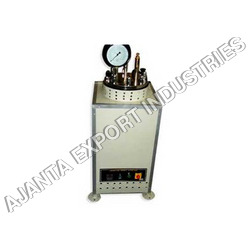
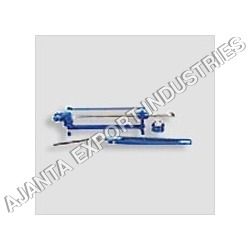
This autoclave is apt for conducting accelerated soundness tests on cements as well as the autoclave expansion test, needing a constant steam pressure by the corresponding constant temperature. Components : It consists of a stainless steel cylinder with an insulated cover, mounted on a sturdy supporting frame, enclosed in a heat insulated metal housing. The attached control unit encloses a sensitive pressure regulator and pressure gauge, power switches and pilot lamps for controlling the electrical heating units.
Superior Safety and DurabilityConstructed from premium stainless steel and featuring a double-walled insulated chamber, the Cement Autoclave ensures optimal durability and heat retention. Safety is prioritized with a pressure release valve, automatic pressure control, and a robust, lockable door, making it highly reliable for demanding laboratory environments.
Accurate and Easy OperationThe analog pressure and temperature display provide clear, real-time monitoring, while the high-quality immersion heater and PID temperature controller deliver precise temperature management. Manual operation offers flexibility and control throughout the process, making it suitable for a range of cement testing requirements.
Versatile Use in Laboratory SettingsWith its approximate internal chamber dimensions of 100 mm diameter and 400 mm length, and its compatibility with 220-230V power supply, this cement autoclave is ideal for laboratories, manufacturers, and distributors who need reliable performance for the boiling test of cement samples.
FAQ's of Cement Autoclave:
Q: How is the Cement Autoclave typically used in laboratories?
A: This Cement Autoclave is primarily used for performing the boiling test of cement, which evaluates the soundness and consistency of cement samples. The sample is placed in the stainless steel chamber, exposed to high temperature and pressure, simulating accelerated curing conditions.
Q: What safety features are included with the Cement Autoclave?
A: It comes with several advanced safety features, including a pressure release valve, automatic pressure control, double wall insulation, and a robust, lockable door to minimize risk during high-pressure and high-temperature operations.
Q: When should I use a Cement Autoclave for my cement testing?
A: A Cement Autoclave should be used when reliable assessment of cement's soundness is required, especially in laboratories performing quality control or research for cement manufacturers, distributors, or construction companies.
Q: Where can this Cement Autoclave be installed and used?
A: This autoclave is designed for laboratory environments and is suitable for installation in test labs, research centers, and quality control departments of cement manufacturing units across India.
Q: What is the operational process for running a Cement Autoclave?
A: Begin by preparing your cement sample and placing it inside the chamber. Set the desired temperature and pressure using the PID temperature controller. Monitor the test using the analog gauges and let the high-quality immersion heater maintain the set parameters. After completion, ensure the chamber is depressurized safely before opening.
Q: What are the primary benefits of using this Cement Autoclave?
A: Benefits include precise temperature and pressure testing, enhanced laboratory safety, quicker turnaround times for test results, and robust construction that ensures reliable performance for repeated laboratory testing.
Q: How does the manual operating method affect its use?
A: Manual operation provides users with direct control over each step, allowing customization and adjustment throughout the cement boiling test. This ensures flexibility and fine-tuning for diverse laboratory requirements.







 English
 Spanish
 French
 German
 Italian
 Chinese (Simplified)
 Japanese
 Korean
 Arabic
 Portuguese


 Send Inquiry

