Product Description
BRAKE TESTER
Description:
Details: Technical (Roller) | 030 series | FZ-100 series |
Max. Axle-load | 3t | 10t |
Roller Diameter x Length | 245mm x 1000m | 190mm x 950 |
Roller central distance | 430mm |
Roller linear speed | 2.5km/h |
Range of Brake Power | 0~3000daN |
Difference of height between front
and back roller | 30mm |
Inner diameter x outer wide | 770x2600mm |
Power (rating/exceed) | 11.0/25.6kw |
Motor | AC220V, 380V, 10%,50Hz |
Outside Dimension (L x B x H) | 2500mm x 900mm x 422mm |
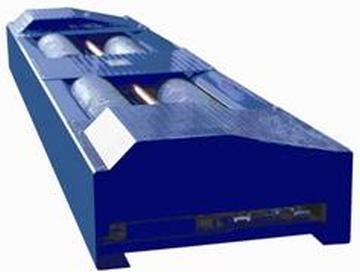
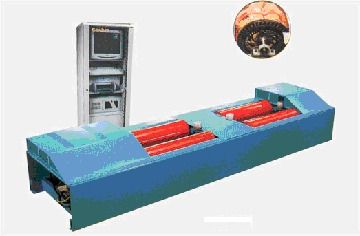
Advanced Brake Testing TechnologyOur roller brake tester employs highly sensitive strain gauge sensors to deliver accurate and reliable measurements of braking force. With a user-friendly digital control system and automatic/manual operation modes, the device simplifies your vehicle brake assessments for cars, LCVs, and small trucks with axle loads up to 10 tonnes.
Designed for Safety and DurabilityConstructed with a heavy-duty steel chassis, anti-slip coated rollers, and IP54 protection, the tester ensures reliable performance even in tough environments. Its industrial blue finish with yellow safety markings enhances visibility and safety, making it ideal for demanding laboratory or workshop settings.
Flexible Data Output and Calibration OptionsEasily integrate the brake tester with your data management systems thanks to its RS232/USB output. The equipment arrives factory calibrated, with on-site adjustments possible to maintain peak performance. Comprehensive digital LED displays provide instant access to measurement results for streamlined reporting.
FAQ's of BRAKE TESTER:
Q: How does the brake tester measure the braking force of vehicles?
A: The brake tester uses advanced strain gauge sensors mounted within the rollers to precisely detect and measure the braking force exerted by a vehicle. This measurement is digitally processed and displayed on the LED screen, ensuring high accuracy and repeatable results.
Q: What types of vehicles can be tested with this machine?
A: This brake tester is suitable for cars, light commercial vehicles (LCVs), and small trucks, provided their axle load does not exceed 10 tonnes. Its robust design and dimensions accommodate a range of vehicle sizes commonly found in hospital laboratories and automotive workshops.
Q: When should the brake tester be calibrated or adjusted?
A: The machine is factory calibrated upon delivery for immediate use. Nevertheless, periodic checks and on-site adjustments are recommended, which can be performed whenever accuracy verification is necessary, or after major maintenance activities.
Q: Where can this equipment be installed and used?
A: Designed for hospital laboratory use, the brake tester is equally suitable for professional automotive workshops, inspection centers, and research facilities. Its IP54 rating and operating temperature range of -10C to +50C make it versatile for various indoor environments.
Q: What is the process for conducting a brake test using this machine?
A: To perform a brake test, the vehicle is driven onto the anti-slip coated rollers and positioned according to instructions. The operator can select automatic or manual mode from the digital control panel. Once initiated, the rollers rotate, and the system measures braking force as the vehicle's brakes are applied. Results are displayed in real time.
Q: How is data exported from the brake tester?
A: Test data can be exported via RS232 or USB interfaces, allowing seamless integration with laboratory information systems or external computers for analysis and record-keeping purposes.
Q: What are the benefits of using this roller brake tester?
A: The main benefits include accurate and consistent brake performance assessments, user-friendly digital controls, high safety standards, robust construction, and ease of data management. These features help ensure vehicle safety compliance and efficient workflow in laboratory and industrial settings.







 English
 Spanish
 French
 German
 Italian
 Chinese (Simplified)
 Japanese
 Korean
 Arabic
 Portuguese


 Send Inquiry

