Product Description
We are counted among the prominent organizations engaged in catering to the variegated demands of the customers by bringing forth high performing Bitumen Centrifuge Extractors. The offered range is widely used for determining bitumen percentage in varied bituminous mixes.
Acknowledged for high operational accuracy and excellent performance, our range is available in two operational modes that are:
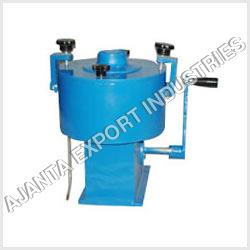
Specification & working of hand driven operated bitumen extractor:
- Mix is added with a solvent
- Dissolved bitumen is removed through centrifugal action
- Comprises a removable 1500 gm aluminum rotor bowl with a cup & tightening nut
- Bowl assembly mounted on a vertical shaft that protrudes from cast housing
- Shaft & bowl is manually rotated fast
- Solvent is introduced in the cap of the housing
- Provided with a drain for collecting dissolved bitumen
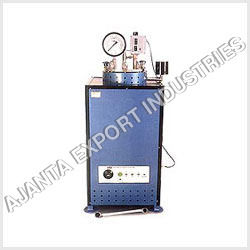
Electrically driven operated extractor:
- Centrifuge extractor
- Electrical operation
- Capacity 1500g
- Dimmer stat for speed control from 2,400 to 3,600 rpm
- Suitable for operation on 230 V, 50 Hz, single phase and A.C. supply
High Extraction Accuracy and Safety FeaturesEngineered for reliable performance, this bitumen centrifuge extractor offers extraction accuracy up to 99%, ensuring consistent and dependable results. The stainless steel sample container resists chemical corrosion, while the safety lock and powder-coated chassis minimize operational risks. Whether operated manually or electrically, safety and accuracy are prioritized.
Compliance and Laboratory AdaptabilityMeeting ASTM D2172 and AASHTO T58 international standards, this extractor is trusted in laboratories for composition analysis of asphalt. Its design accommodates both academic research and industrial quality control, making it a versatile tool for laboratories, exporters, distributors, and manufacturers throughout India.
FAQ's of Bitumen Centrifuge Extractors:
Q: How does the Bitumen Centrifuge Extractor operate for bitumen separation?
A: The extractor operates by spinning asphalt samples at high speeds (up to 3600 RPM) in a stainless steel container, separating bitumen from the aggregates. It can be hand operated or powered electrically, depending on your model preference and laboratory setup.
Q: What are the key benefits of using this bitumen extractor in a laboratory setting?
A: Key benefits include high extraction accuracy (up to 99%), compliance with ASTM D2172 and AASHTO T58 standards, durable materials such as cast aluminium and stainless steel, a safety lock feature, and a quiet operation at 65 dB, making it ideal for frequent laboratory use.
Q: When is the optimal situation to use the Bitumen Centrifuge Extractor?
A: This equipment is best used when you need to analyze the composition of asphalt mixtures, particularly for quality control in road construction or academic research. Its high precision and compliance with recognized standards ensure trustworthy results for composition assessment.
Q: Where can this centrifuge extractor be effectively utilized?
A: It is suitable for laboratory environments in institutions, construction quality control labs, research centers, and industrial facilities across India. Exporters, distributors, suppliers, and traders will also find this a highly adaptable product for their clients.
Q: What is the extraction process using this device?
A: The test sample is placed in the stainless steel container and the device-analog controlled and either manually or electrically driven-spins the bowl to separate the bitumen from aggregates. The extracted bitumen can then be collected for further analysis.
Q: How does the safety lock enhance the operation of the extractor?
A: The integrated safety lock prevents the lid from opening during operation, reducing risks of spillage, contamination, or accidents, and ensuring the user's safety throughout the testing process.
Q: What is the operational noise level and why is it significant?
A: The extractor operates at a maximum noise level of 65 dB, which helps maintain a comfortable and safe laboratory environment, particularly where noise regulations are important or in shared laboratory spaces.







 English
 Spanish
 French
 German
 Italian
 Chinese (Simplified)
 Japanese
 Korean
 Arabic
 Portuguese


 Send Inquiry

