Product Description
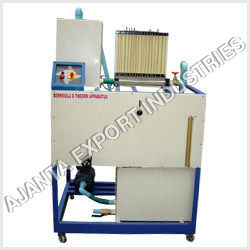
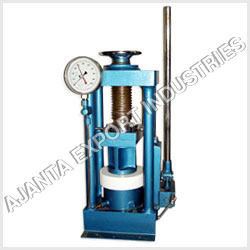
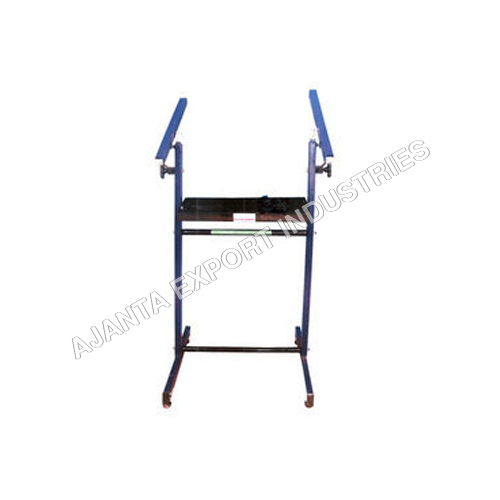
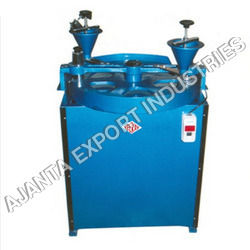
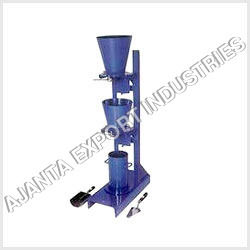
Being a client-centric organization, we are engaged in offering an unmatched range of Fluid Mechanics Lab Equipments to the clients. Manufactured in compliance with global quality standard, these products are developed using premium quality raw material that have had a lasting effect. Our offered range is widely used for the measurement of the height of the ship, closed circuit orifice meter apparatus and redwood viscometer.
Following are the attributes:
- Resistance against corrosion
- Dimensional accuracy
- Robust design
Comprehensive Fluid Mechanics ExplorationThis equipment set enables hands-on experimentation with fundamental and advanced fluid dynamics concepts. From Bernoulli's Theorem to pipe friction analysis, users can perform a wide array of laboratory tests vital for mastering the principles of fluid mechanics.
Durable and User-friendly DesignEngineered from high-quality stainless steel and finished with a powder coating, this equipment offers both durability and corrosion resistance. The thoughtful construction makes routine maintenance simple, while benchtop setup guarantees easy integration into any lab environment.
FAQ's of Fluid Mechanics Lab Equipments:
Q: How is the Fluid Mechanics Lab Equipment installed in a laboratory setting?
A: This laboratory equipment is designed for easy benchtop or table-mount installation. Simply position the units on a stable surface, connect to the 230V AC, 50 Hz power supply, and attach the provided pipes and accessories as required for the desired experiment.
Q: What experiments can be conducted using this equipment set?
A: The set supports a wide range of fluid mechanics experiments, including Bernoulli's Theorem, Reynolds Experiment, Venturimeter calibration, orifice meter tests, examining pipe friction, jet impact studies, notch calibration, and a variety of flow measurements.
Q: When is this equipment most beneficial in an academic curriculum?
A: This set provides maximum value during foundational and advanced fluid mechanics courses in engineering and technical programs, fostering practical understanding through experimentation. It is also highly useful in research and project-based scenarios.
Q: Where can this equipment be used?
A: It is suited for engineering colleges, technical institutions, and research laboratories. Its robust design ensures reliable operation in educational settings requiring frequent experimental use.
Q: What materials are used and how do they benefit users?
A: Fabricated from high-grade stainless steel with a powder-coated, rust-resistant exterior, the equipment delivers long-term durability and reduced maintenance, even when used with water as the test fluid.
Q: How is water flow measured and controlled during experiments?
A: Flow measurement is handled using calibrated gauges and measuring tanks, supporting precise readings between 0.5 and 25 LPM depending on the experiment. Industrial pumps and adjustable flow controls allow users to monitor and alter flow rates as needed.
Q: What are the main benefits of utilizing this set in fluid mechanics studies?
A: Users gain firsthand experience with both basic and complex flow scenarios, enhancing conceptual understanding and practical skill. The robust construction, flexible experimental range, and comprehensive accessory kit make it a reliable cornerstone for fluid mechanics education.







 English
 Spanish
 French
 German
 Italian
 Chinese (Simplified)
 Japanese
 Korean
 Arabic
 Portuguese


 Send Inquiry

