Product Description
Description:
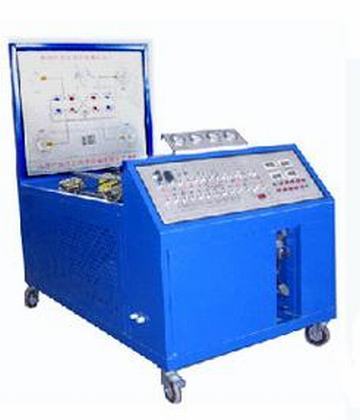
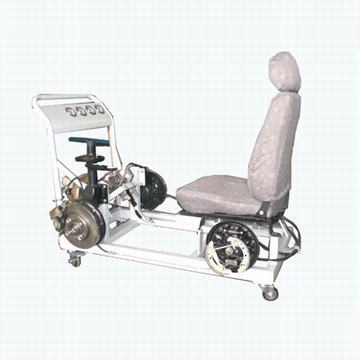
Teaching Function:It can show the structure and working process of ABS system to help students understand the abstract theory.It can imitate, diagnose and test the common faults and troubles of ABS system. Train students to analyze and solve practical problems.Extend items: Multimedia network teaching, the establishment of specialized teaching and learning environment, and standardized evaluation system.Standard Configuration:Components are from original Santana 2000GSL, including sensors, actuators and control computers.It can display control process by manual, automatic and computer-driven models.Draw circuit diagram of ABS control system to facilitate circuit analysis.Draw oil channel diagram, with LED, to reflect work processes.Experience the work process of ABS through anti-jump of pedalAdvanced Demonstration and Educational ToolSpecially designed for educational institutions and research facilities, the AUTO BRAKING SYSTEM TEST BED provides a clear, practical understanding of automotive disc and drum braking mechanisms. With genuine, working components and transparent sections, it ensures interactive, hands-on training in a safe, academic environment.
Versatile and Precise Testing CapabilitiesEquipped with instrumentation such as pressure gauges, RPM tachometers, voltmeters, and ammeters, the system delivers accurate measurements (1%) under variable operating conditions. Users can test, monitor, and analyze braking force, component performance, and system response across a range of simulated applications, ensuring valuable learning outcomes.
Robust Construction and Superior MobilityManufactured with a durable mild steel frame and epoxy powder coating, the test bed is built to withstand rigorous use while resisting corrosion. Heavy-duty wheels with a locking mechanism enable easy mobility, and all components are securely mounted for stability and safety during demonstrations.
FAQ's of AUTO BRAKING SYSTEM TEST BED:
Q: How is the AUTO BRAKING SYSTEM TEST BED operated?
A: The system can be operated using both manual and electrical controls, allowing students and researchers to simulate a variety of braking scenarios. All operational parameters are easily managed from an accessible control panel, with real-time readings displayed on analog or digital gauges.
Q: What are the main demonstration components included in the test bed?
A: The test bed features a full set of genuine brake system parts: brake pedal, master cylinder, brake booster, caliper assembly, drum assembly, and a brake fluid reservoir. These components enable detailed demonstration and hands-on learning for both disc and drum braking systems.
Q: When should this equipment be used for educational purposes?
A: This test bed is ideal for use during automotive engineering courses, practical lab sessions, and R&D investigations where a real working model of braking systems is required for instruction, experimentation, or performance analysis.
Q: Where can the AUTO BRAKING SYSTEM TEST BED be deployed?
A: It is suitable for university and polytechnic automotive labs, technical training centers, and research & development facilities. Its mobility and robust construction allow it to be repositioned easily within these environments for varied instructional needs.
Q: What process does the test bed follow to ensure safety during demonstrations?
A: The system features built-in overload protection, a circuit breaker, and clear safety standards compliance. These measures safeguard users and equipment by automatically shutting down in the event of abnormal operation or electrical fault.
Q: How does the test bed benefit students and educators?
A: With real working components and transparent sections, students gain a hands-on understanding of braking systems. Educators can demonstrate component operations and system responses in real time, enhancing engagement and reinforcing theoretical learning with practical application.
Q: What instrumentation and measurement accuracy can users expect?
A: The test bed includes pressure gauges, RPM tachometers, ammeters, and voltmeters for comprehensive monitoring. All test readings are precise, with an accuracy within 1%, supporting reliable data collection and analysis during demonstrations.







 English
 Spanish
 French
 German
 Italian
 Chinese (Simplified)
 Japanese
 Korean
 Arabic
 Portuguese


 Send Inquiry

