Product Description
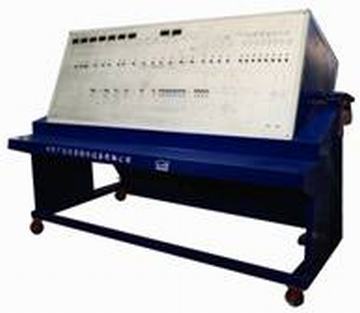
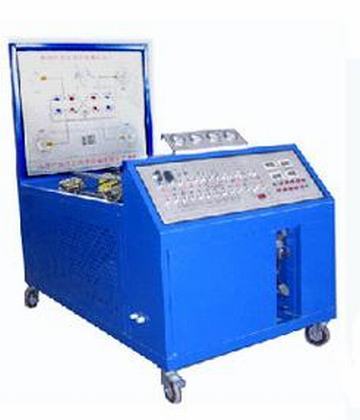
TEACHING TEST BED OF ENTIRE AUTO
Description:
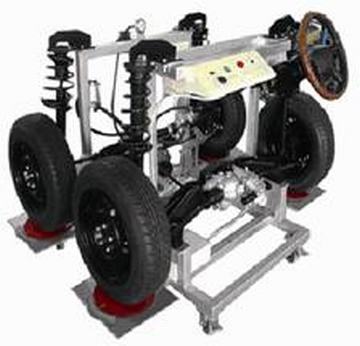
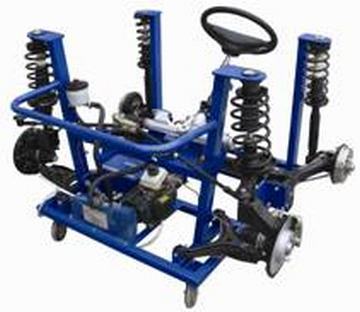
Teaching Function: Students can intuitively understand components and their installation positions of electronically controlled automotive and deepen understanding to the structure and working principle of electronically controlled automotive. Teachers can use multimedia teaching system to achieve the true circumstances teaching. Standard Configuration: Adopt the entire auto designated by customers; Adopt original plant accessories, without any replacement; The bracket is original plant truck chassis. All the systems, electronically controlled engine, automatic transmission, ABS anti-lock braking system, automatic air-conditioning systems, vehicle electrical systems, suspension systems, steering systems and other automotive componentssystems, are fixed in a steel road load simulation bench. The layout of its components and wiring harness are basically consistent with the original car. The equipment can simulate as much as possible various working conditions in the running. Car circuit board is configured, and engraved with the car circuit diagram of the system.
Comprehensive Automotive Learning PlatformThis test bed covers all major automotive subsystems, including engine, transmission, suspension, steering, brake, and electrical modules. Designed with both safety and instructional value in mind, it integrates emergency stop and overload protection, while transparent shields offer safe observation during demonstrations.
Advanced Instrumentation and ControlEquipped with analog and digital sensors, the system ensures precise measurement of parameters like temperature, pressure, and RPM with 1% accuracy. The digital multi-function display and control panel enable real-time monitoring and easy control over test conditions, making it a valuable asset for technical demonstrations and troubleshooting exercises.
FAQ's of TEACHING TEST BED OF ENTIRE AUTO:
Q: How is the Teaching Test Bed of Entire Auto used in educational settings?
A: The test bed is utilized in engineering institutes and technical training centers as a practical tool for demonstrating and analyzing various automotive systems. Students can observe engine operation, transmission changes, sensor responses, and system integration in a controlled environment, enhancing hands-on learning.
Q: What components can be demonstrated on this test bed?
A: The test bed is designed to cover multiple modules, including the engine, transmission, suspension, steering, brake, and electrical systems. It enables observation and experimentation through dedicated panels and real-time instrumentation.
Q: When should the emergency stop feature be used?
A: The emergency stop button must be activated immediately if unsafe conditions arise or during any emergency, ensuring that power is cut off to prevent accidents and protect both the operator and equipment.
Q: Where can this teaching test bed be installed?
A: Primarily, the test bed is suited for installation in automotive laboratories, technical training centers, and engineering colleges. Its caster wheels allow mobility within a facility, and brakes ensure it can be safely secured in place during use.
Q: What is the process for observing automotive system behaviors on the test bed?
A: Users start by powering on the test bed, selecting control modes, and operating the desired system (engine, transmission, etc.), while safely observing through the shielded transparent panels. Real-time sensor data is displayed, allowing students or trainers to monitor and analyze the results directly on the integrated digital display.
Q: How does the real-time data acquisition benefit automotive education?
A: Real-time data acquisition allows learners to instantly observe the effects of system changes, troubleshooting scenarios, and sensor reactions, fostering a deeper understanding of automotive engineering principles through interactive experimentation.
Q: What safety features are included for operator protection?
A: The test bed has tempered glass shields for safe system observation, emergency stop controls, overload relays, and shielded electrical components, all designed to maximize safety for users during operation and demonstration.







 English
 Spanish
 French
 German
 Italian
 Chinese (Simplified)
 Japanese
 Korean
 Arabic
 Portuguese


 Send Inquiry

