Product Description
Salient Features
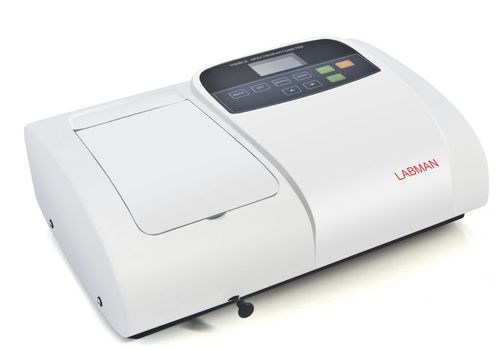
| | MULTIPLE RESULTS READOUT
Can display wavelength, absorption and transmittance with 5 result |
| AUTO SETTING WAVELENGTH
Users set wavelength automatically through arrow keys to avoid operation errors |
| | STANDARD CURVE
Can set up various standard curves according to customer's solutions and find the concentration of unknown solutions. |
| | DATA OUTPUT
LMSP-V325 is equipped with USB port to connect with a PC to display spectrum scanning, kinetics and multi wavelength testing results on the screen. |
| | 2.5' LCD SCREEN
Equipped with a 2.5 LCD screen to give a clear display of standard curves and groups of results. |
Versatile Wavelength CoverageSpanning the visible spectrum from 320 to 1000 nm, this spectrophotometer allows for comprehensive analysis of diverse samples. This range is ideal for measurements in chemistry, biology, and industrial applications, providing flexibility to suit multiple methods of quantitative assessment.
Efficient and User-Friendly OperationDesigned with automatic zero adjustment, wavelength adjustment, and a clear digital display, the instrument ensures straightforward operation. The inclusion of knob and push button controls simplifies user interaction, minimizing training time and allowing for swift, accurate results with every use.
Robust Laboratory ConstructionWith a durable metal and plastic housing, this spectrophotometer is crafted for routine laboratory environments. The sample holder accommodates four cuvettes at once, enhancing throughput. Its stable design (0.002 A/h @ 500 nm) maintains measurement reliability over extended sessions.
FAQ's of Visible Spectrophotometer:
Q: How does the visible spectrophotometer ensure accurate quantitative analysis in laboratories?
A: The spectrophotometer achieves precise measurements through a 4 nm spectral bandwidth, a stable photodiode detector, and automatic wavelength and zero adjustments. Its photometric accuracy of 0.5%T and digital display resolution allow for reliable quantitative analysis of various solutions.
Q: What types of samples can be analyzed with this spectrophotometer and in which environments?
A: This instrument is suitable for transparent or colored liquid samples housed in imported optical glass cuvettes. It is designed for use in laboratories, research facilities, and industrial quality control settings, accommodating routine to advanced spectrophotometric tasks.
Q: When should the lamp or cuvettes be replaced for optimal performance?
A: The tungsten lamp should be replaced if you notice a decline in light intensity or inconsistent readings, which typically occurs after extended use. Cuvettes should be replaced if scratched, stained, or if measurements become inconsistent despite repeated cleaning.
Q: Where can this spectrophotometer be installed and used most effectively?
A: This spectrophotometer is best suited for bench-top installation in laboratories with access to AC 220V power. The sturdy, rectangular unit fits easily on standard laboratory workbenches and should be operated at room temperature for optimal performance.
Q: What is the process for conducting a measurement using this device?
A: To use the spectrophotometer, first set the desired wavelength and ensure automatic zero calibration. Place the sample in the imported optical glass cuvette and insert it into the sample holder. Read the absorbance or transmittance on the digital display after pressing the appropriate control buttons.
Q: How does this spectrophotometer benefit laboratory workflows?
A: The 4-position cuvette holder allows for rapid, sequential analyses of multiple samples, saving time. Automatic adjustments, digital controls, and a stable measurement system (0.002 A/h) enhance reliability and usability, making it a practical instrument for routine and specialized lab tasks.
Q: What safety and maintenance guidelines should be followed for this instrument?
A: Operate the spectrophotometer at room temperature and avoid exposure to moisture or corrosive chemicals. Regularly clean the sample compartment and cuvette holder, and ensure the power supply is stable. Refer to the user manual for routine maintenance schedules to sustain performance.







 English
 Spanish
 French
 German
 Italian
 Chinese (Simplified)
 Japanese
 Korean
 Arabic
 Portuguese



 Send Inquiry

