Product Description
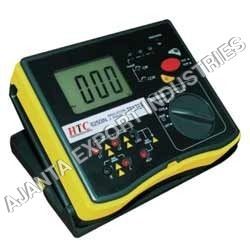
Features:- 3 Digit LCD Display
- 1999 Counts
- Backlight
- Data Hold
- Auto Ranging
- 3 In 1 Insulation Resistance Phase Testing & Voltage Testing
Standard Accessories: Carrying Case, Test Leads, ManualDimensions: 150(H)x100(W)x70(D) mm Reliable and Accurate MeasurementsEnsure the integrity of your electrical systems with this insulation resistance tester, offering high-resolution (100 k) measurements across a broad 0-1000 M range. Its analog meter and 2% full-scale accuracy deliver consistent, trustworthy results, vital for both routine and advanced diagnostics.
Convenient Design for Laboratory and FieldWeighing between 1.9 and 4 kg and housed in a robust ABS plastic body, this tester is built for portability. The 1-meter test leads, manual toggle switch, and battery operation allow for effortless use whether in the laboratory or on-site. Its compact 250 x 190 x 120 mm dimensions ensure easy handling and storage.
Comprehensive Protection and ComplianceBuilt with advanced overload protection and adhering to IEC 61010-1 standards, the tester prioritizes user safety during operation. Engineered for reliable function in environments ranging from 0C to 40C (and storage up to 60C), it exhibits impressive temperature resistance and durability even under demanding conditions.
FAQ's of Insulation Resistance Tester:
Q: How do I use the insulation resistance tester to measure electrical equipment?
A: Begin by connecting the test leads (approximately 1 meter long) to the equipment under test. Select the desired voltage (500V or 1000V DC) using the manual toggle switch, then observe the measurement on the analog display. Always ensure the device is powered with six 1.5V batteries for optimal performance.
Q: What types of applications is this insulation resistance tester suitable for?
A: This tester is ideal for measuring insulation resistance in electrical appliances, cables, motors, and laboratory equipment. It is especially useful for ensuring safety and maintenance compliance in industrial, laboratory, and field settings.
Q: When should insulation resistance tests be conducted?
A: Perform insulation resistance tests during periodic maintenance, after installing new equipment, before commissioning, and whenever troubleshooting is required for abnormal operation of electrical systems.
Q: Where can this insulation resistance tester be used?
A: Thanks to its portability and battery operation, the tester is versatile and can be used both in laboratories and at remote field locations. The durable plastic body and overload protection ensure safe usage in various electrical environments.
Q: What is the process for maintaining this insulation resistance tester?
A: Keep the tester clean and store it within the recommended temperature range (-10C to 60C). Periodically check the battery status, replace batteries as needed, and inspect test leads for damage to ensure measurement accuracy and reliability.
Q: What benefits does this tester offer compared to other models?
A: It features a wide test range, high measurement resolution, overload protection, compliance with safety standards, and a lightweight, durable design. These attributes make it an efficient, safe, and dependable choice for electrical insulation testing requirements.







 English
 Spanish
 French
 German
 Italian
 Chinese (Simplified)
 Japanese
 Korean
 Arabic
 Portuguese


 Send Inquiry

