Product Description
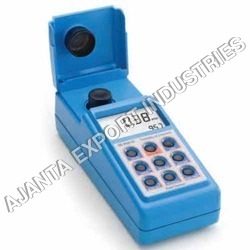
Turbidity and Free/Total Chlorine Portable Meter with CAL CHECK Technology, EPA Compliant. The HI 93414 measures the most important parameters of drinking water: turbidity and free/total chlorine. Designed for water quality measurements, HI 93414 provides reliable and accurate readings on low turbidity and chlorine values. The HI 93414 meets and exceeds the requirements of USEPA and Standard Methods both for turbidity and colorimetric measurements. This instrument incorporates an optical system which guarantees accurate results. The optical system, consisting of a tungsten filament lamp, three detectors (scattered, transmitted for turbidity meter range and one for colorimeter range), and a narrow band interference filter at 525 nm assures long term stability and minimizes stray light and color interferences. It also compensates for variations in intensity of the lamp, making no need for frequent calibration. The 25 mm round cuvettes made from special optical glass guarantee repeatability and consistency of measurements.Accurate Nephelometric MeasurementUtilizing the nephelometric principle, this turbidity meter ensures dependable and accurate readings by detecting scattered light from suspended particles in water samples. The high intensity LED light source enhances measurement reliability, making it well-suited for laboratory analyses of water quality. With a measurement range of 0-1000 NTU and a resolution of 1 NTU, it provides users with precise data for regulatory and research needs.
Simple and Efficient CalibrationCalibration is straightforward using the standard formazin solutions. The auto zero and direct reading features, along with knob and push-button controls, facilitate quick setup for accurate measurements. This efficient process ensures consistent and repeatable results, meeting laboratory and industrial compliance requirements as per ISI and ISO 7027 standards.
Robust Design for Laboratory UseBuilt with a durable ABS plastic body, this meter is lightweight at 34 kg, portable, and designed in a compact, rectangular shape (305 x 210 x 95 mm). Its resistance to temperatures up to 50C and the inclusion of specific glass cuvettes make it adaptable for extensive laboratory use across varying environmental conditions.
FAQ's of Turbidity Meter:
Q: How do I calibrate the Digital Turbidity Meter?
A: Calibration is performed using a certified formazin standard. The device's auto zero and direct reading features, along with its knob and push-button controls, make the process quick and straightforward, ensuring accurate and repeatable results.
Q: What types of samples can be measured, and what is the minimum required volume?
A: This turbidity meter is designed for laboratory water quality analysis and requires a minimum sample volume of 10 ml. It uses specific cuvettes to ensure optimal accuracy during measurement.
Q: When should the turbidity meter be used during water analysis?
A: Use the turbidity meter whenever you need to assess the clarity or particle content of water, such as during environmental monitoring, industrial process control, or laboratory research. It is suitable for both routine examinations and compliance testing.
Q: Where can this turbidity meter be utilized effectively?
A: Due to its portable design and adherence to ISI and ISO 7027, the meter is ideal for laboratory environments, field applications, and water treatment facilities, anywhere accurate turbidity measurement is essential.
Q: What benefits does the LED digital display and auto zero feature offer?
A: The LED digital display provides clear and immediate readings, while the auto zero function enhances measurement reliability and reduces user error during calibration and analysis.
Q: How resistant is the meter to varying temperatures and environmental conditions?
A: Constructed from high-quality ABS plastic, the meter operates effectively in temperatures ranging from 5C to 45C and is resistant up to 50C, ensuring durability and consistent performance under diverse laboratory conditions.
Q: What are the main advantages of using this turbidity meter for laboratory analysis?
A: Its key advantages include compliance with international standards (ISI & ISO 7027), easy calibration, portability, direct digital readings, and robust build, making it a reliable tool for precise and efficient water quality assessment.







 English
 Spanish
 French
 German
 Italian
 Chinese (Simplified)
 Japanese
 Korean
 Arabic
 Portuguese


 Send Inquiry

