Product Description
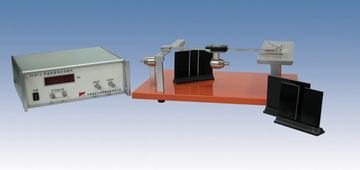
SYNTHESIS EXPERIMENTAL INSTRUMENT FOR MEASURING SOUND VELOCITY
Description:
To measure propagation velocity of supersonic wave has important significance in application of supersonic wave to such measurements as distance finding, positioning, flow rate of liquid, modulus elasticity of material and transient change of gas temperature. The sound velocity laboratory apparatus produced by our corporation is a multi functional one, which can not only be used for observing standing wave and phenomenon of resonance interference to measure propagation velocity of sound in the air, but also observing double slits interference and single slit diffraction to measure the wavelength of sound wave in the air, as well as observing the interference of initial wave and reflected wave. Through the experiment, the students will master the basic principle and test method of wav emotions thorough. The apparatus has following advantages:
1. Adopted with mini type high efficiency ultrasonic sensor. The sensor is shielded with metal case, possessed of strong anti jamming capability and perfect acknowledgement signal;
2. Connection of ultrasonic receiver and rotating device can make the angle of rotation being read out; with the proper double-slit and single-slit sheets, the experiments of double slits interference and single slit diffraction can done.
3. Equipped with reflector plate, the apparatus can fulfill the interference experiment of initial wave and reflected wave when the reflector and receiver are at a certain angle, and display wave node diagram as well.
EXPERIMENTS:
1. Learn the generation and receive principled of supersonic wave; how to measure the propagation velocity of sound in the air by way of phase method and resonance interference; and make comparison with the recognized value.
2. Study interference figure formed by reflected wave and initial wave, namely realization and anacom of Lloyds mirror interference experiment;
3. Observe and measure double slits interference and single slit diffraction of sound wave and make comparison with the theoretical value.
Details:
| Sine signal generator: | frequency-tuning range is 38KHz-42KHz, display resolution of frequency is 0.001KHz |
| Ultrasonic transducer (piezoelectric ceramics wafer): | Oscillation frequency is 40.10.4KHz |
| Digital display venire: | rang is 0-200mm, accuracy is 0.01mm |
| Position of ultrasonic receiver: | swiveling range is -90 to 90; single side scale of angle of rotation is 0-20 and division value 1. |
| Uncertainty between the measured sound velocity in the air and the recognized value is less than 2% (phase method). |
|
Precise and Versatile Laboratory MeasurementsThis instrument is expertly engineered for the accurate measurement of sound velocity in both liquids and solids. With a wide measurement range and high resolution, it supports diverse experimental needs in academic and research laboratories. The digital push-button controls and LCD display ensure ease of use, while the robust construction enables everyday use in challenging lab conditions.
Advanced Features and Safety ComplianceDesigned for reliability, the instrument features a fused power input and conforms to CE and ISO standards, ensuring user safety. Both manual and automatic operation modes are available, with all essential accessories such as calibration fluid and user manual included. The glass and stainless steel sample holder offers superior chemical and thermal resistance, enabling experiments up to 120C confidently.
FAQ's of SYNTHESIS EXPERIMENTAL INSTRUMENT FOR MEASURING SOUND VELOCITY:
Q: How is the instrument calibrated for accurate sound velocity measurement?
A: The instrument is user-calibratable with a reference liquid provided in the accessories. Calibration involves using the digital controls to set baseline measurements with the calibration fluid, ensuring all subsequent readings are precise.
Q: What materials can this sound velocity instrument measure?
A: This instrument is designed for use with both liquids and solids, making it suitable for a wide range of physics laboratory experiments. Its borosilicate glass and stainless steel sample holder enable measurements even in demanding conditions.
Q: When should I perform calibration on the device?
A: Calibration should be performed before the start of each experiment session or whenever high measurement accuracy is required. Regular calibration guarantees reliable and accurate data collection.
Q: Where is the instrument best utilized?
A: The equipment is optimized for use in educational and research physics laboratories. Its compact, robust design and adherence to safety standards make it suitable for institutional and academic environments.
Q: What is the process for measuring sound velocity using this instrument?
A: To measure sound velocity, place the sample in the holder, set operational parameters using the digital controls, and select manual or automatic mode. The piezoelectric transducer sends and receives ultrasonic pulses; the instrument calculates the sound velocity, displaying the result on the LCD screen.
Q: How does the digital push-button control benefit the user?
A: Digital push-button controls provide a straightforward user interface, enabling accurate setting adjustments and seamless operation. This feature is especially beneficial for repetitive laboratory work and educational demonstrations.
Q: What makes this instrument advantageous over other laboratory devices?
A: Its combination of a wide measuring range, user-friendly calibration, dual operation modes, digital display, and adherence to international safety and performance standards provides superior efficiency and measured reliability, making it highly beneficial for precise scientific work.







 English
 Spanish
 French
 German
 Italian
 Chinese (Simplified)
 Japanese
 Korean
 Arabic
 Portuguese


 Send Inquiry

