Product Description
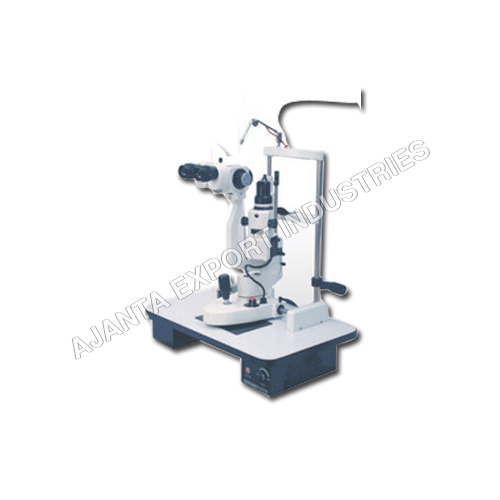
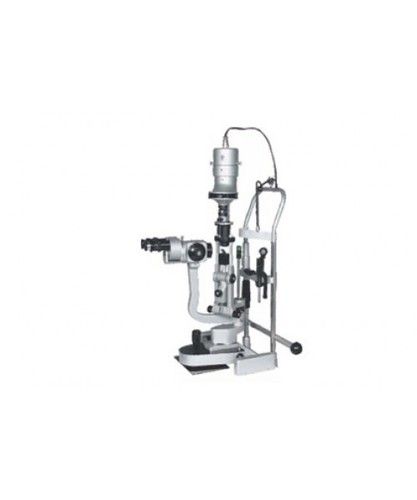
Slit Lamp Z Excel
Slit Lamp Excel is often used as part of a routine eye exam. It is used to detect disorders in the front of the eye, such as clouding of the lens (cataracts), glaucoma, or abnormalities of the cornea. It provides a magnified, three-dimensional view of the structures within the eye.
Specifications:-
Binocular Microscope
| Eye Pieces : | 10x, 15x |
| Objective : | 1x, 1.6x |
| Total Magnification : | 10x, 16x and 24x |
Illumination Unit
| Slit Image Rotation : | 0 to 180 |
| Filter Disc : | Cobalt Filter, Green Filter, Yellow Filter Natural Density and Open Aperture |
| Slit Disphragm Disc : | Wedge Shaped Diaphragm Of Infinitely Variable Slit Lengths |
| Halogen Lamp : | 6 Volt 20 Watts |
Standard Accessories
| 15x Eyepieces Plastic Breath Shield |
| Dust Cover and Fuse Testing Rod |
| Replacing Lamp One Piece For Illumination Unit |
Optional Accessories:-
| Beam Splitter With CCD Camera Adaptor |
| CCD Camera |
| Power Table / Mechanical Table |
| Optional accessories are listed as separate items in "Accessories" section under products, there brought separately. |
Advanced Laser TechnologyEquipped with cutting-edge laser technology, the Slit Lamp Z Excel provides medical professionals with superior imaging for comprehensive eye examination. The sophisticated optics allow for detailed viewing of the anterior and posterior segments of the eye, ensuring precise diagnosis and treatment planning for various ocular conditions.
Robust Stainless Steel BuildManufactured using high-grade stainless steel, the Z Excel model ensures lasting durability and stability during examinations. Its weight range of 10 to 29 kg strikes a balance between portability and substantial build, making it suitable for frequent hospital usage while maintaining operational integrity and patient safety.
Versatile Clinical ApplicationsIntended for use in hospital environments, the Slit Lamp Z Excel accommodates the needs of ophthalmologists working in diverse clinical settings. Its manual-driven mechanism and user-friendly design make it ideal for routine assessments, specialized procedures, and laser-based therapies, enhancing the efficiency of eye care delivery.
FAQ's of Slit Lamp Z Excel:
Q: How is the Slit Lamp Z Excel typically used in hospital settings?
A: The Slit Lamp Z Excel is primarily used for comprehensive eye examinations in hospitals. Ophthalmologists utilize its advanced laser functionality and precision optics to examine the anterior and posterior segments of the eye, aiding in diagnostics and treatment planning.
Q: What material is the Slit Lamp Z Excel constructed from, and what are the benefits?
A: The device is made from high-quality stainless steel, which provides excellent durability, stability during use, and ease of cleaning. This material ensures the equipment remains reliable over extended periods of clinical operation.
Q: When should hospitals consider using the Slit Lamp Z Excel?
A: Hospitals should utilize the Slit Lamp Z Excel when detailed, laser-assisted ocular examinations are required. It is suitable for routine eye assessments as well as specialized diagnostic procedures in ophthalmic departments.
Q: Where can the Slit Lamp Z Excel be installed within a healthcare facility?
A: The slit lamp is designed for placement in ophthalmology departments, outpatient clinics, and examination rooms within hospitals, thanks to its moderate weight and stable, stainless steel structure.
Q: What is the process for operating the manual-driven Slit Lamp Z Excel?
A: To operate the Z Excel, clinicians position the patient, adjust the lamp's settings manually, and use the laser optics for illumination and magnified viewing. The manual controls offer precise customization based on examination requirements.
Q: How does the laser technology of this slit lamp enhance eye care?
A: The integrated laser technology allows for high-resolution visualization of eye structures, which leads to more accurate diagnoses and better management of ocular conditions. This feature is particularly valuable for detecting subtle abnormalities.





 English
 Spanish
 French
 German
 Italian
 Chinese (Simplified)
 Japanese
 Korean
 Arabic
 Portuguese


 Send Inquiry

