Product Description
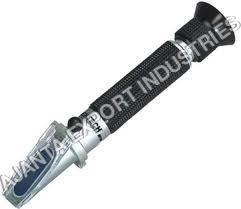
Features :- This instrument is designed to control the concentration of saltwater, such as in cooking or rinsing seafood, and utilizes a new material that is durable against salty and acidic samples. It is Automatic Temperature Compensation (ATC) model with water resistant properties (IP65), Specifications: Model: MASTER-S10a, Cat.No.: 2471Scale range: Sodium chloride 0.0 to 10.0% (Automatic Temperature Compensation)
Measurement Accuracy:0.2% (10 to 30C), Minimum Scale: Sodium chloride 0.1%
International Protection Class:IP65 (except eye piece) Dust-tight and Protected against water jets. Optional: Calibration Certificate,Parts: Milky White Daylight Plate For MASTER series : RE-2471-56M, Size & Weight: 3.23.420.3cm, 105g
Precision Salinity MeasurementObtain accurate salinity and specific gravity readings with a simple sample application. The device's automatic temperature compensation ensures reliability between 10C and 30C, making it suitable for varied laboratory and field settings.
Built for Convenience and PortabilityThis refractometer is lightweight (150-300 g), portable, and encased in a durable aluminum and plastic body with a comfortable grip. The set includes all necessary accessories-lens cover, cleaning cloth, and a sturdy carrying case-for effortless transport and use.
Simple Manual OperationNo batteries or electrical power are needed. Calibration is done easily using distilled water, and accurate measurement is achieved by manually applying 2-3 drops of sample liquid to the prism. The analog scale is viewed through the focussable eyepiece.
FAQ's of Salinity Refractometer:
Q: How do I calibrate the Salinity Refractometer before use?
A: To calibrate the refractometer, place 2-3 drops of distilled water on the prism, close the cover, and look through the eyepiece. Adjust the calibration screw until the boundary lines up with zero on the scale. This ensures subsequent measurements are accurate.
Q: What is the process for measuring the salinity of a water sample?
A: Open the lens cover, place 2-3 drops of your sample onto the prism, then close the cover gently. View the measurement through the focussable eyepiece, and read the salinity or specific gravity from the analog scale. Clean the prism with the provided cloth after use.
Q: When should calibration with distilled water be performed?
A: Calibration should be done before the first use, after cleaning, or if you notice inconsistent readings. Routine calibration ensures continued measurement accuracy, especially if the refractometer is used in different environments or after transportation.
Q: Where can this refractometer be used?
A: This refractometer is suitable for laboratory applications, aquarium maintenance, hydroponics, and any situation where precise water salinity monitoring is required. Its portability and durable construction allow for both indoor and field use.
Q: What are the benefits of using an analog refractometer with automatic temperature compensation?
A: Automatic temperature compensation minimizes errors from fluctuating ambient temperatures, ensuring precise readings. The analog design eliminates the need for batteries or power, making it reliable and always ready to use.
Q: How do I adjust the eyepiece for a clear reading?
A: To focus, simply rotate the eyepiece until the scale is sharp and easy to read. Eyepiece adjustment accommodates different users' eyesight for optimal clarity during each measurement.







 English
 Spanish
 French
 German
 Italian
 Chinese (Simplified)
 Japanese
 Korean
 Arabic
 Portuguese


 Send Inquiry

