Product Description
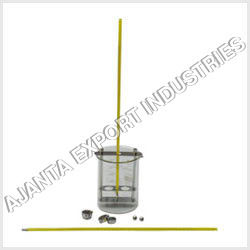
This apparatus is used to determine Softening point of Bitumen. It is that temperature at which a sample of bituminous material loaded by a 9.5mm dia steel ball, drops a specified distance when heated under specified conditions.Specification:The apparatus consists of steel bracket with a sliding plate support. That support has two holes of 10mm dia on which a ring and ball guide can be kept. A central hole on this plate is for inserting thermometer. Supplied with a glass beaker approximate 600ml, high and a hand stirrer and 2 Nos. 9.5mm dia steel balls. Precise Measurement for Softening Point TestsEngineered for accuracy, the Ring & Ball Apparatus delivers reliable softening point measurements for bitumen and tar. The included thermometer allows for precise monitoring of temperature changes throughout the test, ensuring standardized results that meet IS 1205, ASTM D36, and IP 58 requirements.
Durable Design and Enhanced UsabilityWith a powder-coated steel frame and stainless steel rings, the apparatus is built to withstand intensive use in both academic and industrial laboratory environments. Its thoughtful accessories-such as the support frame and ball centering guide-streamline the setup process and promote consistent testing.
Versatile Heating Options for Various ApplicationsThis apparatus supports both water and glycerine as heating media, expanding its temperature range and utility. The choice of heating medium makes it adaptable to diverse bitumen formulations, while optional electrical fittings offer further convenience in lab settings.
FAQ's of Ring & Ball Apparatus:
Q: How is the Ring & Ball Apparatus used to determine the softening point of bitumen?
A: The apparatus is used by filling the glass beaker with a heating medium (water or glycerine), placing the rings with bitumen samples and the balls in the holder, and gradually heating the bath. The softening point is recorded when the bitumen softens enough to allow the ball to fall through a specified distance.
Q: What heating media can be used with the beaker, and what temperature ranges do they support?
A: You can use water in the beaker for tests up to 100C, and glycerine for temperatures up to 250C. Select the appropriate medium based on the expected softening point of your material and test requirements.
Q: When should the optional electrical fittings be considered?
A: Optional electrical fittings are useful if you require precise and consistent heating control, especially for frequent or high-throughput laboratory testing. They enhance user convenience and reduce dependency on external heat sources.
Q: Where is the Ring & Ball Apparatus typically used?
A: This device is commonly used in petroleum product testing facilities and civil engineering laboratories, especially when determining the softening points of bituminous materials as part of quality control or research activities.
Q: What standards does the apparatus conform to?
A: The Ring & Ball Apparatus strictly conforms to IS 1205, ASTM D36, and IP 58 standards, ensuring that your test results are accurate and internationally recognized.
Q: What are the main benefits of using this apparatus?
A: Key benefits include durable construction, compliance with global testing standards, precise temperature measurement, and flexible heating options, all of which contribute to dependable laboratory performance and ease of use.







 English
 Spanish
 French
 German
 Italian
 Chinese (Simplified)
 Japanese
 Korean
 Arabic
 Portuguese



 Send Inquiry

