Product Description
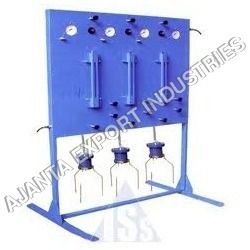
On offer from us is an extensive range of Permeability Apparatus, which is developed after extensive market research. These are manufactured using high grade raw material as per the latest technological advancements. The apparatus tests best accounted in well points, depumping ground water, retention of water, construction of dams. Our range can be availed at market leading rates.Precision in Soil Permeability TestingThis laboratory permeability apparatus enables precise measurement of soil permeability and accurate determination of the permeability coefficient. It is equipped with three glass tubes (approx. 500mm length), brass moulds (100mm diameter), and a stainless steel tank to ensure reliable and repeatable test results. The apparatus is especially valuable for research laboratories, academic use, and quality control in geotechnical projects.
Robust and Corrosion-Resistant ConstructionCrafted with a polished stainless steel tank and powder-coated mild steel stand, the permeability apparatus resists abrasion and corrosion for extended service life. The brass specimen mould offers additional durability, while carefully selected materials withstand the demands of routine laboratory testing.
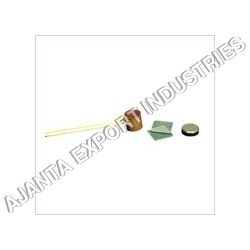
Comprehensive Accessories and Ease of OperationSupplied with essential accessories like a measuring cylinder, filter papers, tamping rod, and porous plates, the apparatus is ready for use upon delivery. Manual operation allows for direct user control, and the adjustable overflow water level simplifies the test setup. The system facilitates easy specimen placement and removal, enhancing laboratory workflow efficiency.
FAQ's of Permeability Apparatus:
Q: How does the permeability apparatus determine soil permeability?
A: The apparatus measures the rate at which water flows through a soil sample under controlled conditions using three glass tubes and a pressure gauge. By analyzing the flow and head loss, it calculates the soil's permeability coefficient following standardized laboratory procedures.
Q: What is the role of the adjustable water level overflow arrangement?
A: The adjustable water level overflow ensures a constant hydraulic head is maintained during testing, which is critical for accurate and reproducible permeability results. It allows precise control of water flow across the soil specimen.
Q: When should the included accessories be used during testing?
A: Accessories such as the measuring cylinder, tamping rod, filter papers, and porous plates are used at different stages: specimen preparation, tamping, protection during testing, and collecting effluent water, thereby supporting a robust and reliable testing process.
Q: Where should the permeability apparatus be installed for optimal use?
A: The apparatus is best used in a stable, flat laboratory environment with access to water and drainage. Proper installation ensures accurate readings and maintains safety throughout testing operations.
Q: What is the process for operating the permeability apparatus manually?
A: Prepare the specimen using the brass mould, install it in the tank, set up the water inlet and overflow, and adjust the pressure gauge as needed. Begin water flow, record head values and outflow readings at specific intervals, and calculate permeability using the provided measurements.
Q: What are the main benefits of using this laboratory permeability apparatus?
A: It provides accurate, reliable results for soil permeability with durable construction, ease of use, and all necessary accessories included. Its robust materials and design mean long service life and suitability for regular laboratory applications.







 English
 Spanish
 French
 German
 Italian
 Chinese (Simplified)
 Japanese
 Korean
 Arabic
 Portuguese



 Send Inquiry

