Product Description
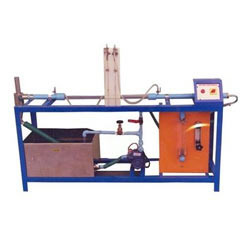
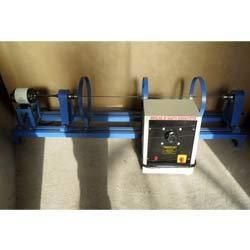
We have in store for our clients excellently designed Pressure Drop in Two Phase. The product is provided with a borosilicate glass test section to visualize the different patterns. For water supply to the pipeline, the product is provided with a centrifugal pump with flow control valve, by-pass valve and an outlet to separate air from water. Further, the product is provided with two rota-meter to measure flow rates of air and water separately.
Scope Of Experimentations:
Utilities Required:
Water supply
Drain
Floor Area: 1.5 x 0.75 m
Electricity
1.5 kW, 220 V, single phase
Compressed air supply at 2 bar, 2.5 CFM
Technical Details:
Separator
Material stainless steel, compatible capacity
Piping
Material stainless steel/PVC, capacity 60 liters
Pr. drop measurement
Differential manometer
GI and PVC
Control panel comprising of standard make on off switch, mains indicator fuse
The whole set-up is well designed and arranged in a good quality painted structure
Material borosilicate glass
Water circulation
FHP pump, crompton/sharp make
Flow measurement
Rotameters. 2 Nos. (one each for water & air)
Air circulation
By compressed air
Buffer tank
Material stainless steel, suitable capacity with safety valve and pressure gauge
Water tank
Test section
Constructed with high-grade Stainless Steel 316/304, this equipment ensures longevity and resistance to harsh laboratory environments. The spraying and piping systems use SS 316 for maximum corrosion protection. Durable silicone/PTFE gaskets and robust chamber thickness provide enhanced safety and functionality during high-pressure sterilization processes.
Advanced Control & Display FeaturesThe PLC-based automatic control system, combined with a digital touch panel, enables intuitive operation and monitoring. All vital parameters including pressure, temperature, and sterilization time are clearly recorded and displayed in real-time, streamlining laboratory workflows and improving accuracy.
FAQ's of Pressure Drop in Two Phase:
Q: How does the PLC-based automatic control benefit laboratory operations?
A: The PLC-based automatic control system offers precise management of process variables, real-time monitoring, and automated adjustment for optimal performance. This reduces the likelihood of human error, ensures accurate data logging, and makes operation more efficient.
Q: What safety features are integrated with this equipment?
A: Emergency stop and overpressure protection systems are built in to maximize operational safety. These features protect users and equipment by immediately halting processes during abnormal conditions, preventing accidents and equipment damage.
Q: When should I use this apparatus in a laboratory setting?
A: This system is ideal for experiments or processes requiring controlled two-phase flow and precise pressure drop measurement between 0 to 1.5 Bar. Its robust design and advanced control make it suitable for research, quality control, and industrial laboratory settings.
Q: Where can the equipment be installed, and what are its space requirements?
A: Designed for floor-mounted installation, it fits well in laboratory environments due to its external dimensions of 1700 x 2900 x 2350 mm. The equipment also requires access to a 6-7 Bar compressed air supply and a safe steam connection for sterilization.
Q: What is the process for adjusting the number of shelves?
A: The unit features ten adjustable shelves that can be easily repositioned to accommodate different sample sizes and quantities, enhancing versatility for a range of laboratory processes involving two-phase flow.
Q: How does the system ensure heat uniformity and efficient sterilization?
A: The chamber is equipped with rock wool or glass wool insulation for heat consistency within 2C. Combined with uniform steam distribution and precise temperature control, this ensures effective sterilization at 121C for 30 minutes every cycle.
Q: What are the benefits of using Stainless Steel 316/304 in this equipment?
A: Stainless Steel 316/304 construction provides superior resistance to corrosion and chemical attack, ensuring long-term performance even in demanding laboratory conditions. This results in lower maintenance needs and extended operational life.







 English
 Spanish
 French
 German
 Italian
 Chinese (Simplified)
 Japanese
 Korean
 Arabic
 Portuguese


 Send Inquiry

