Product Description
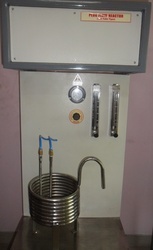
In an ideal Plug Flow Reactor (PFTR) there is no mixing in the direction of flow and complete mixing perpendicular to direction of flow. Concentration of reactants varies along the length of reactor but not in radial direction: This set-up is used to study a non-catalytic homogeneous reaction under ambient condition.
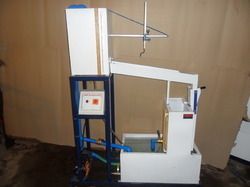
The set up consists of two feed tanks through which two reactants are fed to the reactor. Rotameters are provided to measure the individual flow of Chemicals. The flow rate can be adjusted by operating the needle valves provided on respective Rotameter. The magnetic drive pump is used for circulation of feed. A straight tube type reactor kept horizontally and inclined upward at outlet from where samples are collected for analysis
Experiments
- Sponification Reaction Study in straight tube Plug Flow Reactor.
- To determine Reaction Rate Constant
Utilities Required
- Water Supply & Drain
- Instruments, Laboratory Glassware and Chemicals required for analysis as per the system adopted
Advanced Construction and Safety StandardsThe reactor is built with SS 316L wetted parts and SS 304 for non-contact areas, providing chemical resistance and durability. Essential safety mechanisms include a mechanical interlock, pressure safety lock, over-temperature and over-pressure protection, and double borosilicate sight glasses. The Food/Pharma grade silicone gasket and robust insulation ensure both longevity and operator safety, making the unit ideal for stringent laboratory environments.
Precision Automation and User-Friendly OperationFeaturing a PLC automation system with a responsive HMI touchscreen interface, users can easily monitor and control all parameters. The multi-channel digital chart recorder allows seamless data logging. Parameters such as temperature and pressure are maintained with high accuracy (1C and 0.1 Bar, respectively), meeting the strict requirements of laboratory research and development settings.
Efficient Sterilization and PerformanceThe plug flow reactor delivers adjustable sterilization cycles between 15 to 60 minutes at temperatures from 121C to 135C. A pressurized rotary spray system ensures uniform heating and thorough sterilization. The mirror-polished internal finish enhances process hygiene and cleaning, while the high flow SS sanitary drain valves enable efficient flushing and maintenance. This results in both superior product quality and reduced downtime.
FAQ's of Plug Flow Reactor:
Q: How does the plug flow reactor ensure precise control over temperature and pressure during operation?
A: The reactor utilizes a PLC-based automation system with HMI touchscreen for easy parameter adjustment. It provides temperature control accuracy of 1C and pressure control within 0.1 Bar, supported by digital multi-channel chart recording for real-time monitoring and data integrity.
Q: What construction materials are used for wetted and non-wetted parts, and why are they selected?
A: All wetted parts are constructed from SS 316L for its superior corrosion resistance, meeting food and pharmaceutical standards. Non-wetted parts use SS 304, offering durability while optimizing cost without compromising performance.
Q: When is it appropriate to use this plug flow reactor in laboratory applications?
A: This reactor is ideal for laboratory-scale chemical reactions, sterilization, and process development, especially where precise temperature and pressure control are critical. Adjustable sterilization settings and reliable sanitary features make it suitable for frequent and varied use in research labs.
Q: Where can this reactor be installed and what are the utility requirements?
A: The reactor is designed for laboratory settings and comes skid-mounted for easy integration. It requires a 440 V, 3-phase, 50 Hz electrical supply, compressed air (6-8 bar), and connections for steam and water. The compact dimensions and removable stainless steel trolleys facilitate flexible placement.
Q: What is the process for safe operation and what safety systems are incorporated?
A: Operations are controlled via PLC and HMI, with safety features including a mechanical interlock, pressure safety lock, over-temperature/over-pressure protection, and double-safety sight glasses. All sealing gaskets are food/pharma grade silicone, and the system enforces strict limits before allowing operation, ensuring user protection.
Q: How is the cleaning and maintenance of the reactor simplified?
A: Maintenance is efficient due to the mirror-polished interior, sanitary SS 316L drain valves, and removable trolleys. Pressurized spray systems aid in cleaning, while easy access doors with silicone gaskets ensure quick inspection and routine service.
Q: What are the benefits of using this reactor compared to traditional lab reactors?
A: Key benefits include enhanced process safety, superior hygiene, precise process control, and improved data logging. The robust construction and efficient sterilization cycle contribute to consistent results, reduced downtime, and higher experimental reliability.







 English
 Spanish
 French
 German
 Italian
 Chinese (Simplified)
 Japanese
 Korean
 Arabic
 Portuguese


 Send Inquiry

