Product Description
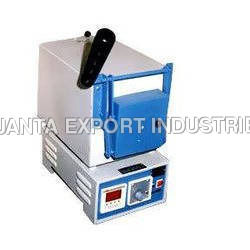
We manufacture laboratory furnaces that can make the temperature rise upto 1800C and are used for continuous heating for processing samples and materials in a laboratory. These laboratory furnaces are built using refractory materials in order help maintaining high temperatures for a longer duration. These furnaces are manufactured keeping in mind that they can be sometimes used to work for many days or months for completing a process set. Application areas:Laboratory furnaces are used in number of industries including:- Pharmaceuticals
- Chemicals and Petrochemicals
- Refineries
- Clinical Laboratory
- Research Laboratory
Advanced High-Temperature PerformanceEngineered for reliability, this muffle furnace achieves consistent temperatures up to 1700C using durable MoSi2 heating elements. The precision control system and double-layer insulation ensure both efficiency and exceptional uniformity, making it suitable for rigorous laboratory applications.
User-Friendly and Safe OperationFeaturing a hinged front-loading door with a safety interlock, this furnace prioritizes user safety. Automatic shutoff and thermal fuses protect against overheating, while the intuitive digital PID controller allows for straightforward programming and monitoring of all heating processes.
Versatile Customization and ConstructionWith internal chamber sizes customizable from 1.5 to 36 liters and multiple voltage compatibility, this furnace is available in both standard and tailored dimensions. Its construction with high-purity alumina fiber board and stainless steel exterior delivers durability for demanding laboratory environments.
FAQ's of Muffle Furnace Up To 1700 Degree Celcius:
Q: How is the temperature controlled and monitored in this muffle furnace?
A: The muffle furnace employs a digital PID controller for precise temperature regulation, offering adjustable ramp rates between 10C and 30C per minute. The system's display, either LED or LCD, shows temperature readings with a resolution of 0.1C, ensuring high accuracy and easy monitoring.
Q: What safety features are integrated into the furnace's design?
A: Safety measures include an automatic shutoff, a thermal fuse, and a safety interlock switch on the front-loading hinged door. These mechanisms safeguard both the user and the equipment by preventing unauthorized door opening during operation and shutting down the furnace in case of overheating or fault.
Q: When should I use this furnace, and what applications is it best suited for?
A: This muffle furnace is ideal for laboratory tasks such as ashing, heat treatment, and material testing that require high temperatures up to 1700C. It is suitable whenever precise and uniform heat processing of samples is necessary, especially in research, quality control, or educational labs.
Q: Where can this furnace be installed for optimal results?
A: The muffle furnace should be installed in a well-ventilated laboratory environment where the ambient temperature does not exceed 40C. Its compact yet robust design allows placement on stable laboratory workbenches. Ensure adequate space for air circulation around the furnace.
Q: What process does the furnace use to achieve uniform heating?
A: Utilizing high-quality MoSi2 heating rods and double-walled ceramic fiber insulation, the furnace efficiently distributes heat throughout the high-purity alumina chamber. This design achieves temperature uniformity within 5C, ensuring consistent treatment of samples in every batch.
Q: How can the furnace be customized for different laboratory needs?
A: Chamber sizes and dimensions can be tailored according to specific laboratory requirements, with capacities ranging from 1.5 to 36 liters. Various power and voltage options are also available, making this furnace adaptable for diverse lab setups and workloads.
Q: What are the benefits of using a muffle furnace with alumina fiber and stainless steel construction?
A: Alumina fiber insulation provides excellent thermal stability and minimizes heat loss, while the stainless steel exterior ensures mechanical strength and resistance to corrosion. This combination extends equipment longevity and maintains consistent performance even in high-demand laboratory settings.







 English
 Spanish
 French
 German
 Italian
 Chinese (Simplified)
 Japanese
 Korean
 Arabic
 Portuguese



 Send Inquiry

