Product Description
ProductDescription
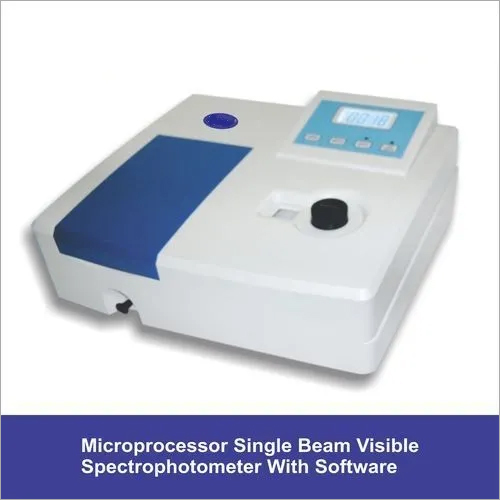
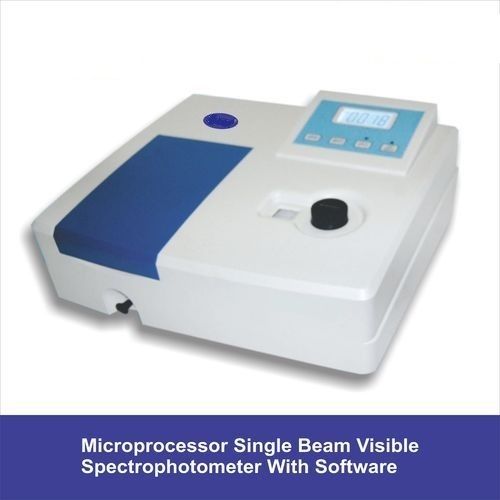
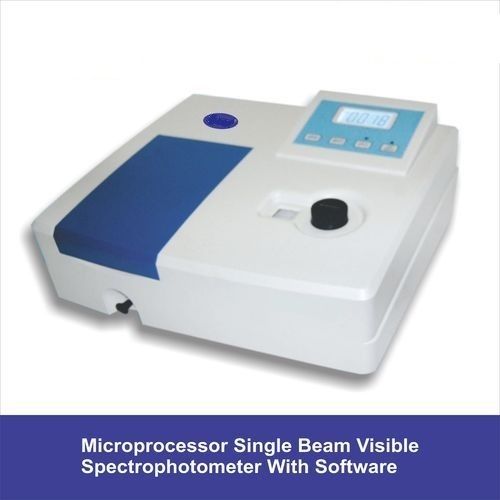
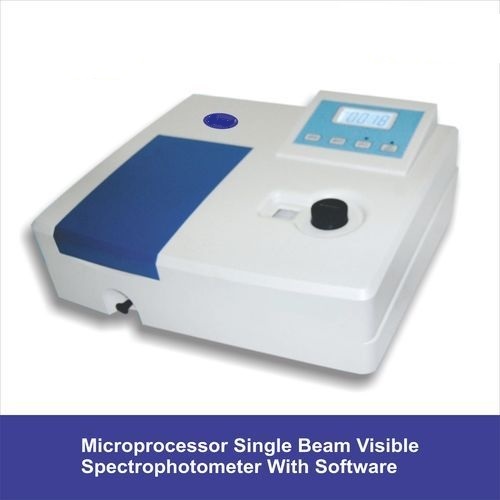
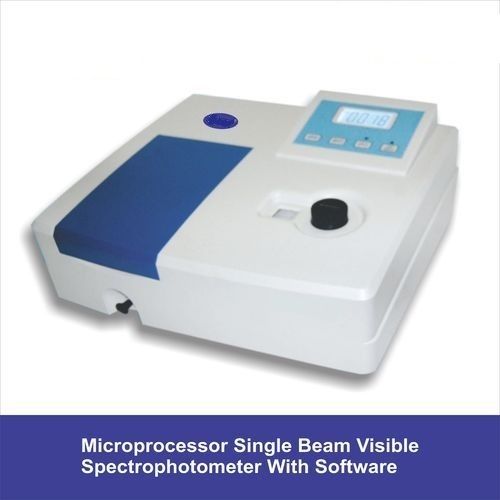
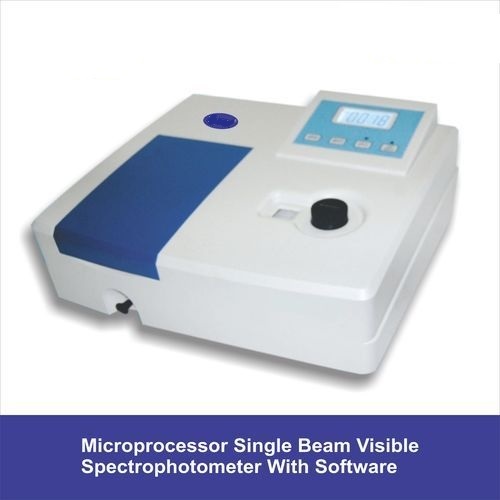
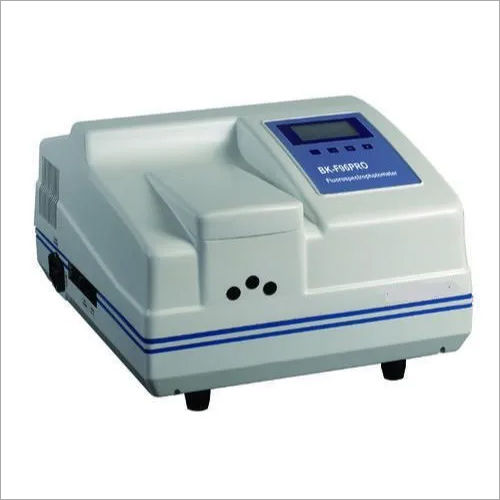
We aredevoted towards offering the qualitative range of MicroprocessorSingle Beam Visible Spectrophotometer, as per clients precise need andrequirements.
Other detail:
- This spectrophotometer is available in different models and sizes.
- Moreover, it is designed by our skilled professionals by using quality material and advanced technology.
ProductSpecification
| Wavelength Range | 325-1000 nm |
| Model | Aei-Ms-Rt114 |
| Brand | AjantaExports |
| Cell holder | 10 mm |
| Dark current drift | 0.2 %/3 min |
| Dimensions | 56 x 48 x 29 cms |
| Gross weight | 13.5 kgs |
| Light current drift | 0.5 %/3 min |
| Net weight | 11.5 kgs |
| Price | 575 USD |
| Spectrum bandwidth | 2 nm/1 nm |
| Stray light | Less than 0.5 % (at 360 nm, NaNO) |
| Transmittance accuracy | +/-0.5 % |
| Transmittance repeatability | Less than 0.2 % |
| Wavelength accuracy | Less than 2 nm |
| Wavelength repeatability | Less than 1 nm |
| Minimum Order Quantity | 1 Piece |
Advanced Wavelength Accuracy and StabilityThis spectrophotometer guarantees precise measurement with a wavelength accuracy of 2 nm and repeatability of 1 nm. Its baseline flatness and minimal drift ensure consistent, reliable results, making it an excellent choice for research and educational laboratories requiring high accuracy.
Integrated Software for Efficient Data ManagementThe built-in, Windows-compatible software offers intuitive data analysis and reporting. Users benefit from features like data storage, USB data export, and automated calibration and zeroing, ensuring both data integrity and workflow efficiency during routine and demanding spectrophotometric tasks.
Robust Construction and Ease of UseBuilt with a combination of high-quality plastic and metal housing, the device is lightweight (2-5 kg) and designed for durability. Its large LCD display and ergonomic, microprocessor-controlled system make it easy to operate, suitable for labs focusing on reliability and user convenience.
FAQ's of Microprocessor single beam visible spectrophotometer with software:
Q: How do I operate the microprocessor single beam visible spectrophotometer and perform measurements?
A: To operate the spectrophotometer, first power it using the external main supply (220V AC 10%, 50 Hz). Insert your samples in quartz cuvettes into the 4-position cell holder, set the desired wavelength using the large LCD display, and follow the prompts for auto-zero and calibration. Measurements are initiated via the control interface, with data displayed and stored using the integrated software.
Q: What types of samples and analyses are suitable for this spectrophotometer?
A: The instrument is designed for both qualitative and quantitative analyses of chemical, biological, and environmental samples within the 325-1000 nm range. It supports applications such as concentration determination, absorbance/transmittance studies, and routine laboratory experiments requiring accurate photometric readings.
Q: When should I calibrate or perform maintenance on the spectrophotometer?
A: Regular calibration is recommended before starting any new series of measurements, as well as after any change in sample type or wavelength range. Auto calibration functions simplify this process. Routine maintenance, such as checking the tungsten-halogen lamp and cleaning the cuvette holder, helps sustain accurate performance. Refer to the manufacturer's manual for specific intervals.
Q: Where is the data stored and how can I export analytical results?
A: Measurement data can be securely stored on the device thanks to its internal memory and integrated software. Results are easily exported via USB or RS232 interfaces for further analysis or reporting on external Windows-compatible computers.
Q: What makes this spectrophotometer beneficial for laboratories in India?
A: This device combines accuracy (0.5% T), reliability, and ease of use, making it ideal for varied laboratory environments across India. Its robust build, compliance with standard laboratory voltage, and support from local distributors and suppliers ensure accessibility and convenient after-sales service.
Q: How does the integrated software enhance the user experience?
A: The integrated, Windows-compatible software streamlines data analysis, reporting, and storage. It offers features such as automated baseline correction, quick export, and easy set-up of calibration procedures, which helps reduce errors and improves workflow efficiency for laboratory technicians.







 English
 Spanish
 French
 German
 Italian
 Chinese (Simplified)
 Japanese
 Korean
 Arabic
 Portuguese




 Send Inquiry

