Product Description
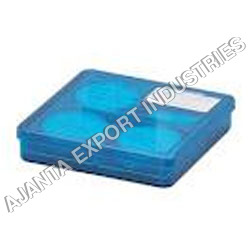
Description:We are a leading supplier of a wide range of Membrane Filters Milipore. These filers and mixed esters of cellulose, standard autoclavable membranes are used for various lab application like Particle removal & analysis in fluids, Water & Beverages, Culture media, Sterilization of tissue & Purification.
Specifications of Membrane Filters Milipore:
- GSWP 01300 13 mm 0.22 um White Plain 100/PK
- GSWP 02500 25 mm 0.22 um White Plain 100/PK
- GSWP 04700 47 mm 0.22 um White Plain 100/PK
- HAWP 01300 13 mm 0.45 um White Plain 100/PK
- HAWP 02500 25 mm 0.45 um White Plain 100/PK
- HAWP 04700 47 mm 0.45 um White Plain 100/PK
- SMWP 04700 47 mm 5.0 um White Plain 100/PK
Durapore, Low protein dinding PVDF membranes, ideal for filtration of biological fluids:
- GVWP 01300 13 mm 0.22 um White Plain 100/PK
- GVWP 02500 25 mm 0.22 um White Plain 100/PK
- GVWP 04700 47 mm 0.22 um White Plain 100/PK
- HVLP 01300 13 mm 0.45 um White Plain 100/PK
- HVLP 02500 25 mm 0.45 um White Plain 100/PK
- HVLP 04700 47 mm 0.45 um White Plain 100/PK
Precision Filtration for Laboratory NeedsMillipore membrane filters are engineered to provide consistent and accurate pore size separation, ensuring reliable results for sterility testing, microbial analysis, and particulate removal. Their circular, high-flow design supports efficient filtration, saving valuable time during laboratory procedures.
Versatile Materials & ConfigurationsOffered in hydrophilic and hydrophobic variants, the filters are manufactured from robust polymers such as cellulose nitrate, cellulose acetate, PVDF, and PTFE. Users can choose between plain or gridded white surfaces, and a range of diameters to match their specific equipment or process requirements.
Designed for Performance and DurabilityWith a maximum operating pressure of 5.2 bar and temperature resistance up to 130C, Millipore membrane filters maintain integrity under demanding conditions. Their low extractable content and high flow rates further enhance performance for both air and liquid filtration.
FAQ's of Membrane Filters Milipore:
Q: How do I choose the right pore size and diameter for my application?
A: The ideal pore size and diameter depend on your specific requirement-use smaller pore sizes (0.2, 0.22 m) for sterility testing and microbial analysis, while larger pores (0.45, 1.2 m) suit particle removal. Match the filter diameter (13, 25, 47, 90 mm) to your filtration apparatus or sample volume.
Q: What is the process for using Millipore membrane filters in laboratory filtration?
A: Install the selected membrane filter into your manual (non-electric) filtration device. Apply sample or air under pressure (not exceeding 5.2 bar) and allow filtration at the recommended water flow rate. Select sterile filters for aseptic work and follow manufacturer's handling instructions for best results.
Q: When should I choose hydrophilic or hydrophobic membrane materials?
A: Hydrophilic membranes (e.g., cellulose nitrate, cellulose acetate) are ideal for aqueous solutions and biological preparations. Hydrophobic membranes (such as PVDF or PTFE) perform best with organic solvents and air filtration, providing flexibility across different experimental requirements.
Q: Where are these membrane filters typically used in laboratory settings?
A: Millipore membrane filters are essential accessories in microbiology labs, pharmaceutical quality control, environmental testing, and research facilities for tasks like sterility testing, microbial enumeration, and particulate analysis.
Q: What benefits do these membrane filters provide over conventional filtration?
A: Millipore membrane filters offer superior pore size accuracy (0.02 m), high flow rates, low extractables, and adaptability for sterile and non-sterile applications. Their temperature and pressure resistance ensure durable performance even under rigorous laboratory conditions.
Q: What are the available packaging options and how does that benefit my laboratory workflow?
A: The filters are offered in packs of 100 or 1000, accommodating both routine and high-throughput laboratories. This flexibility helps optimize inventory and reduce the frequency of restocking, contributing to efficient workflow management.







 English
 Spanish
 French
 German
 Italian
 Chinese (Simplified)
 Japanese
 Korean
 Arabic
 Portuguese


 Send Inquiry

