Product Description
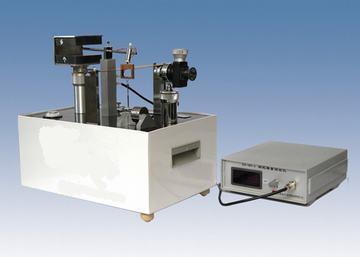
MEASURING INSTRUMENT FOR YOUNGS MODULUS OF ELASTICITY
Description:
Measurement experiment of Youngs modulus of solid material is a must of physics experiment in engineering universities and colleges. Through the experiment, students can master measurement method of length and micro displacement and improve experimental techniques. This apparatus is equipped with a Hall position sensor on the base of the Laboratory apparatus for measuring Youngs modulus with bending method, and it can help students to better understand and master the new measurement method of micro displacement with non-electric-quantity method. The experimental device and method of this apparatus are greatly improved comparing to old apparatus. The original experimental contents are remained and additional experimental contents is added, such as structure, principle, characteristics and operation of Hall positional sensor, which will adds to students knowledge. The apparatus has been getting favorable comments since being put into market. Its test data is stable and reliable, teaching contents are advanced and rich. The error of the apparatus in measuring Youngs modulus is 3% comparing to standard value.
EXPERIMENTS:
1. Getting familiar with characteristics of Hall positional sensor, measuring Youngs modulus of brass with bending method;
2. Calibrating Hall sensor when measuring Youngs modulus;
3. Measuring Youngs modulus of malleable cast iron with Hall sensor.
Details:
| Reading microscope: | range 8mm resolution 0.01mm amplification 20 |
| Weight | 10.0g and 20.0g |
| Digital voltmeter: | 3-and-half; range 200mV |
| Sample: | brass and forgeable iron |
High Precision MeasurementEngineered for accuracy, this Young's Modulus Tester offers readings with a graduation of 0.01 mm. Its robust construction and stable table-top design, combined with high-quality materials, ensure reliable, repeatable results for elasticity experiments involving steel, brass, or aluminum bars.
User-Friendly and VersatileThis instrument comes with an intuitive manual operation system, featuring locking screws and a clear scale with pointer display. Supplied with all necessary accessories, including a comprehensive user manual and mass sets, it streamlines the setup for both students and professionals in educational and research settings.
Durability and SafetyThe device is built from corrosion-resistant, powder-coated and polished stainless steel, making it suitable for long-term use in laboratory environments. Its rugged design, precision engineering, and solid clamping mechanism provide dependable performance and safety for repeated testing.
FAQ's of MEASURING INSTRUMENT FOR YOUNGaS MODULUS OF ELASTICITY :
Q: How does the instrument determine Young's Modulus of Elasticity?
A: The instrument measures the deflection of a metal bar (such as steel, brass, or aluminum) when a known load is applied. By recording the deflection using the precise scale (0.01 mm graduation) and knowing the force, Young's Modulus can be calculated using standard formulas.
Q: What materials can be tested with this equipment?
A: This measuring instrument is compatible with steel, brass, and aluminum bars, allowing users to assess the elastic properties of these common engineering metals.
Q: Where is this instrument typically used?
A: It is primarily designed for use in physics laboratories, educational settings, research and testing labs-suitable for both academic demonstrations and advanced engineering studies.
Q: What accessories are included with the instrument?
A: The instrument set includes a set of calibrated masses, a precision caliper for measurements, and a user manual for step-by-step operation and calculation guidance.
Q: What are the benefits of using this measuring device in a learning environment?
A: It provides accurate, hands-on experience in understanding the elastic behavior of metals, helping students and researchers visualize and quantify fundamental material properties in real time.
Q: Is the instrument easy to set up and operate?
A: Yes, with its manual control, locking screws for secure clamping, and clear pointer-scale display, the instrument is engineered for user-friendly operation and quick assembly on a laboratory bench.
Q: How does robust construction enhance the usability of the equipment?
A: The corrosion-resistant, powder-coated and stainless steel structure ensures long life and reliable performance, even with frequent use, making it a smart investment for labs that require durability and precision.







 English
 Spanish
 French
 German
 Italian
 Chinese (Simplified)
 Japanese
 Korean
 Arabic
 Portuguese


 Send Inquiry

