Product Description
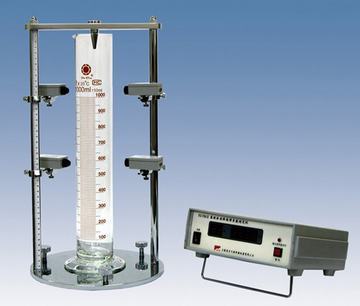
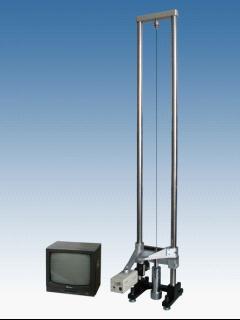
MEASURING INSTRUMENT FOR LIQUID VISCOSITY COEFFICIENT BY THE METHOD OF DROPPING BALL
Description:
Coefficient of viscosity is one of the most important properties of liquid and has significant application in many fields such as production technique and medicine. Measurement of liquid viscosity coefficient with falling-sphere method is suitable for experiment and teaching of freshman and sophomore because its physical phenomenonis very clear, the concept is well defined and it needs much operating and practice. The old method has poor accuracy in measuring rate of fall because it is limited by many factors such as manual timer reading, parallax and off-center of falling ball. This measuring apparatus has following features:
1. Timing is done with photoelectric pickup and single-chip microcomputer, so the parallax and response error of manual timing with stopwatch is avoided. Measuring of falling-sphere speed is accurate. By doing it students will master a new method of timing, speed measurement and counting.
2. The apparatus is equipped with adjustment mechanism to adjust levelness of base plate and verticality of stand bar and a falling-ball guide tube, which ensures that the ball falls in the center of the measurement cylinder.
3. Falling time and distance can be accurately measured with two parallel laser beams. Manual timing can be compared with laser-beam timing with this apparatus.
EXPERIMENTS:
1. Learning how to measure coefficient of viscosity of liquid with falling-sphere method
2. Learning the experimental method of timing with laser, light-sensitive receiver and SCM.
3. Learning how to measure time elapsed by falling sphere with a stopwatch, and compare the timing result to that with laser photoelectric timing method.
Details:
| Timer moving range: | 40cm resolution 1mm |
| Timer range: | 250.0S resolution 0. 1S |
| Measuring cylinder: | 1000mL height 40cm |
| Error of measured value comparing to standard value: | less than 3% |
Precision Construction for Accurate Viscosity MeasurementWith its polished stainless steel balls and laser-etched graduations on a borosilicate glass tube, this apparatus ensures precise readings when measuring the viscosity coefficient using the dropping ball method. The rubber base guarantees stability during use, while the robust stand supports a secure, hassle-free setup.
Versatile Application Across Laboratory SettingsSuitable for measuring the viscosity of a wide range of liquids-including water, oils, and laboratory samples-this instrument is an essential tool in research and educational laboratories. The transparency of the glass tube and clear graduation markings make observation and measurement straightforward.
Dependable and User-Friendly DesignOperating entirely without the need for electrical power, this viscosity measuring device features manual ball release and timing by stopwatch. The apparatus is easy to clean, allows for straightforward ball replacement, and is packaged with foam protection and a comprehensive instruction manual.
FAQ's of MEASURING INSTRUMENT FOR LIQUID VISCOSITY COEFFICIENT BY THE METHOD OF DROPPING BALL:
Q: How does the dropping ball method measure liquid viscosity with this instrument?
A: The dropping ball method involves releasing a polished stainless steel ball into a liquid-filled, laser-etched borosilicate glass tube. By timing the ball's descent between predefined graduation markings, the viscosity coefficient of the sample can be calculated based on the ball diameter, density, and the measured fall time.
Q: What types of liquids can be analyzed using this viscosity measurement apparatus?
A: This instrument is compatible with a variety of laboratory liquids, including water, different oils, organic solvents, and other common research samples typically studied for their viscosity properties.
Q: When should an external thermostatic bath be used with this equipment?
A: An external thermostatic bath is recommended when precise temperature control is needed to achieve high measurement accuracy, especially if your samples require temperatures outside typical room conditions (5C). The glass tube withstands temperatures up to 120C.
Q: Where is this instrument best utilized?
A: The apparatus is ideal for use in laboratory, academic, and research settings, where reliable measurement of liquid viscosity is required. Its stable, anti-slip base and clear visibility make it suitable for both instructional and practical applications.
Q: What is the process for cleaning and maintaining the equipment?
A: After use, rinse the borosilicate glass tube and stainless steel balls with an appropriate solvent to avoid contamination. The device is designed for easy cleaning, and balls can be replaced as needed to maintain measurement accuracy.
Q: What are the main benefits of using this dropping ball viscosity measuring instrument?
A: Benefits include manual power-free operation, high measurement precision (1%), sturdy anti-slip design, transparent observation for clear results, compliance with academic standards, and easy adaptability for different liquid samples and temperatures.







 English
 Spanish
 French
 German
 Italian
 Chinese (Simplified)
 Japanese
 Korean
 Arabic
 Portuguese


 Send Inquiry

