Product Description
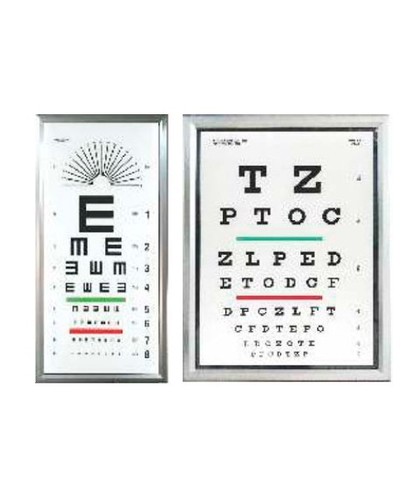
LED Chart Single Language
The classic example of an eye chart is the Snellen eye chart, developed by Dutch eye doctor Hermann Snellen in the 1860s. There are many variations of the Snellen eye chart, but in general they show 11 rows of capital letters. The top row contains one letter (usually the "big E," but other letters can be used). The other rows contain letters that are progressively smaller.
Durable ABS Plastic ConstructionBuilt from sturdy ABS plastic, the LED Chart Single Language offers excellent durability and resilience to daily clinical usage. This material not only keeps the chart lightweight at just 1 kilogram but also provides longevity, making it a cost-effective choice for busy hospital environments.
Advanced Laser TechnologyThe eye chart utilizes laser technology to produce sharp, precise letters and symbols. This ensures consistent high visibility for patients, leading to more accurate vision assessments. The clarity offered by laser technology reduces any ambiguity during testing.
Versatile Applications Across IndiaSuitable for hospitals and eye care centers, this chart is widely used by distributors, exporters, manufacturers, suppliers, and traders. Its design satisfies various roles within the healthcare distribution network, making it a reliable choice for eye testing needs throughout India.
FAQ's of LED Chart Single Language:
Q: How is the LED Chart Single Language used during eye examinations?
A: The LED Chart Single Language is placed at a standard testing distance and illuminated to display letters or symbols, which patients are asked to read aloud. Its manually driven mechanism makes it simple to operate during routine vision assessments.
Q: What are the benefits of using laser technology in this eye chart?
A: Laser technology ensures the letters and symbols are sharply defined and uniformly illuminated, reducing eye strain and enhancing the accuracy of vision assessments for both patients and clinicians.
Q: When should hospitals consider using this single language LED eye chart?
A: Hospitals and clinics should use this chart during routine vision screenings, pre-operative evaluations, and follow-up appointments. It's designed for reliability in frequent, everyday use.
Q: Where is this LED Chart Single Language most commonly used?
A: This chart is typically used in hospitals, clinics, and specialty eye care centers across India, but it also suits distributors, exporters, manufacturers, suppliers, and traders involved in medical equipment.
Q: What is the process of maintaining the LED Chart Single Language?
A: Routine maintenance involves keeping the ABS plastic surface clean with a soft cloth, checking the manual operation mechanism for smooth function, and ensuring the laser illumination is consistently bright.
Q: How does the manual operation method work for this eye chart?
A: The manual operation means users physically control chart adjustments without electronic automation, providing greater control over display and ensuring reliable performance in diverse healthcare settings.
Q: What advantages does the ABS plastic material offer for this equipment?
A: ABS plastic provides strength, impact resistance, and lightweight handling, which makes the chart easy to transport, durable against frequent use, and ideal for busy hospital environments.






 English
 Spanish
 French
 German
 Italian
 Chinese (Simplified)
 Japanese
 Korean
 Arabic
 Portuguese


 Send Inquiry

