Product Description
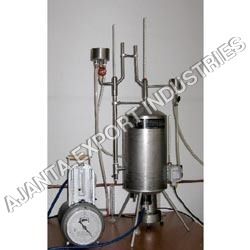
Junker Gas Calorimeter
This calorimeter is non-recording and flow type in which calorific value is ascertained from the rise of temperature imparted to a measured quality to gas.
Specifications:
Pressure Governor
Non-recording 1 liter flow meter and is supplied with 2 liters and 50 ml measuring jars
Three thermometers and flexible tubing
Range:1000-26000 k cal/m2 and 120-300 B. Thu/C.ft
Type:Pressure Governor , 0-75°c Thermometer and 0-50°c x 1°c Thermometer
Precision Calorific Value MeasurementWith an accuracy of 0.1%, the Junker Gas Calorimeter guarantees reliable calorific value readings for various gaseous fuels. Manually controlled ignition and brass burner offer fine operational control, making it suitable for detailed laboratory analyses. The system includes all necessary accessories for immediate use and easy setup.
Durable Construction for Laboratory DemandsManufactured with high-grade stainless steel, borosilicate glass, brass, and copper, this calorimeter stands up to rigorous use. The cylindrical shape, sturdy design, and water circulation cooling ensure both safety and long-term performance even at temperatures up to 150C, under atmospheric pressure.
FAQ's of Junker Gas Calorimeter:
Q: How does the manual spark or flame ignition operate in the Junker Gas Calorimeter?
A: The manual spark or flame ignition system allows users to ignite the sample fuel directly, providing flexibility and safety during calorific value determination. This type of ignition is easy to use and does not require external power, making it suitable for various laboratory settings.
Q: What is the recommended process for measuring the calorific value of a gas sample with this calorimeter?
A: Begin by filling the water jacket with 1 litre of water and ensuring proper water circulation via the inlet and outlet ports. Introduce the gas sample, ignite using manual spark or flame, and monitor the temperature change using the analog thermometer. This process follows ISI/ASTM standard methods for calibration and measurement.
Q: When should you recalibrate the Junker Gas Calorimeter?
A: Recalibration is advised periodically, based on usage frequency and laboratory protocols, or if readings become inconsistent. Since it meets ISI/ASTM standards, use certified reference gases and follow standard recalibration procedures for precision.
Q: Where should the calorimeter be installed for optimal use?
A: The device is designed for bench-top mounting in laboratory environments. Place it on a stable, level surface near a water source for the cooling system and in a well-ventilated area to safely disperse combustion gases.
Q: What materials are used in the construction of the calorimeter and why?
A: The calorimeter is made from stainless steel for durability, borosilicate glass for temperature resistance and visibility, brass for the fine control burner, and copper for efficient heat transfer. These materials ensure longevity, chemical resistance, and measurement accuracy.
Q: How is water flow managed in the cooling arrangement?
A: Water flow is regulated using adjustable inlet and outlet ports that allow precise control of the water circulating around the calorimeter body. This maintains consistent cooling and ensures the accuracy of calorific value measurements.
Q: What are the key benefits of using this gas calorimeter in laboratory applications?
A: Key benefits include highly accurate calorific value determination, manual operation (no external power needed), compliance with international standards, durable construction, and a complete accessory set for immediate laboratory use.






 English
 Spanish
 French
 German
 Italian
 Chinese (Simplified)
 Japanese
 Korean
 Arabic
 Portuguese


 Send Inquiry

