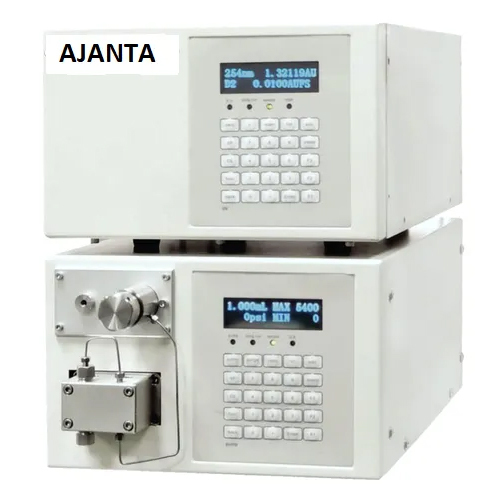
Product Description
Product Description
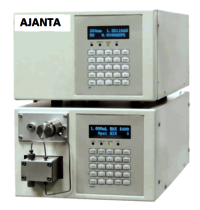
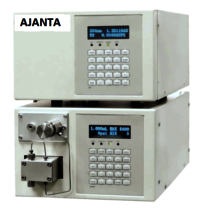
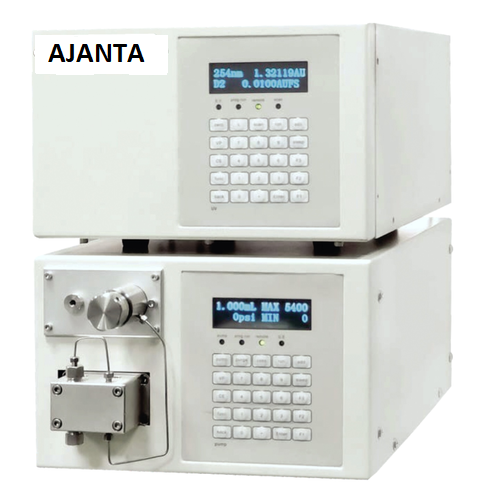
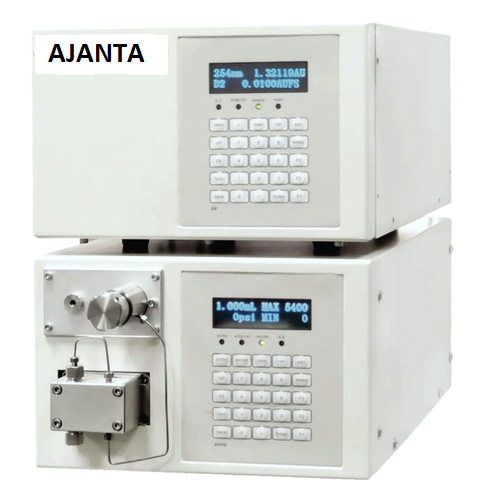
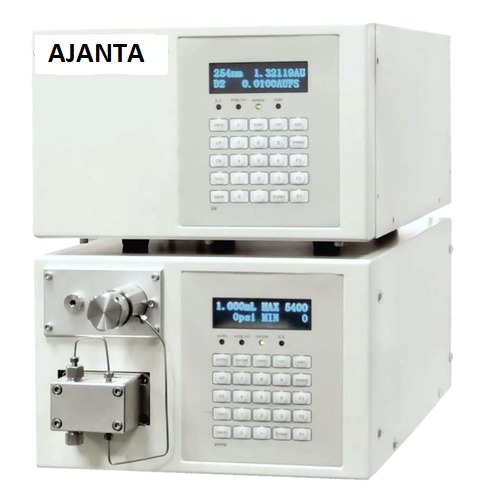
Pump Specifications:-
| Flow range | 0.001-0.999ml/min |
| Delivery method | Double piston (main & Auxillary) |
| Pump Head | 10m 1 SSt/Peek, Analytical |
| Accuracy | + 1% or + 2u/min, whichever is greater + 1% or + 1ul/min, whichever is greater (Micro) |
| Flow rate setting | 0.0. 10mL/min. 0.001inc. 0.0. 0.90mL/min.0.010inc. 1.0mL/min. +0.10inc. |
| Precision | 0.25% from 0.1 mL/min. to 10mL/min. at 20deg C 0.25% from 0.05mL/min. to 4 mL/min at 20deg C (Micro) |
| Pmax | 6000psi |
| System connections | 1/16 capilliaries |
| Dimensions | 410mm X 180mm X 270mm |
| Weight | 7.3 kgs |
| Power Input | 85 to 264 VAC, 47 to 63Hz, 60 Watts |
| Display | 320mm |
| Control | Stand alone mode using from panel |
Product Specification
| Model Number/Name | Aei-Hp-Rt108 |
| Brand | Ajanta Exports |
| Application | Industrial Use |
| Minimum Order Quantity | 1 Piece |
Advanced Analytical PrecisionEngineered for accuracy, this HPLC system provides 1% flow rate and injection volume accuracy, enabling consistent, reliable results for advanced analytical applications. The microprocessor-controlled digital interface and high-quality UV-Visible detector guarantee superior sensitivity and reproducibility in every run.
Versatile Laboratory IntegrationWith a compact footprint of 600 mm x 450 mm x 385 mm and weighing 5-10 kg, this instrument fits most laboratory benches. Stainless steel construction and non-corrosive materials ensure longevity, making it an ideal choice for high-throughput labs in various industries. The system is designed for easy maintenance and flexible operation.
User-Friendly and Safe OperationEquipped with auto sample injector, solvent selection valve, leak sensor, overpressure protection, and a digital LCD display, the HPLC system prioritizes operator convenience and safety. The RS232/USB interfaces and Windows compatibility simplify communication and data handling, enabling smooth workflow in routine and complex analyses.
FAQ's of High Performance Liquid Chromatography:
Q: How does the quaternary gradient pump benefit chromatographic separations?
A: The quaternary gradient pump allows up to four solvents to be mixed in precise ratios during an analysis. This provides extensive flexibility in developing gradients for complex separations, resulting in improved resolution and shorter analysis times.
Q: What types of samples can be analyzed with this HPLC system?
A: This HPLC is suitable for a wide range of samples, including pharmaceuticals, biotechnological products, and food components. Its high sensitivity and controlled injection volume make it ideal for both routine quantitative analysis and advanced research applications.
Q: When should the column oven temperature be controlled, and up to what temperature can it be set?
A: Temperature control is essential for achieving consistent retention times and improved peak shapes, especially when analyzing thermally-sensitive or poorly soluble compounds. This system allows the column oven to be set up to 60C as required by the method.
Q: Where can this HPLC instrument be used and who are its typical users?
A: Designed for laboratory use, this HPLC is commonly found in analytical labs within the pharmaceutical, chemical, biotechnology, and food industries. It's suited for research institutes, QA/QC labs, and contract testing facilities.
Q: What is the process for performing an analysis using the auto sample injector?
A: The analysis begins by loading the samples into the auto sample injector tray. The software then automates the injection sequence, delivering precise sample volumes into the chromatographic system for repeatable and hands-free operation.
Q: How does the system ensure reliable operation and operator safety?
A: The HPLC features built-in leak sensors and overpressure protection to detect and prevent potential hazards. The stainless steel body and high borosilicate glass flow cell contribute to operational safety and chemical resistance in the laboratory environment.
Q: What are the benefits of the Windows-based software compatibility?
A: Windows-based software allows users to efficiently acquire, analyze, and report chromatographic data. It offers an intuitive interface, supports various data formats, and integrates with laboratory information systems for streamlined workflows.








 English
 Spanish
 French
 German
 Italian
 Chinese (Simplified)
 Japanese
 Korean
 Arabic
 Portuguese



 Send Inquiry

