Product Description
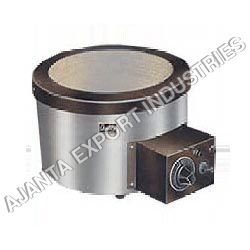
Heating Block (Dry Bath) solution offered are designed for heating flask which contains samples that are organic liquids and have possibility to burst into flames on contact with direct flames/heat. These can also release flammable vapors that are heavier than air and have possibility to explode on contact with open flames/heating coils. For smooth performance, these Heating Mantles feature enclosed heating space so as to minimize such threats. Made available in fabric/rigid construction choices, these fabric mantles are flexible enough for accommodating range of sample flasks that have different shapes and sizes. Further, the rigid mantle is designed for either specific size or size that is large enough to be filled with sand so as to accommodate flasks of various sizes. Here, the sand also provides for uniform heating to the samples. These Heating Mantles make effective use of AC voltage for meeting the heating needs of sample. Further, these can be made available in different operating configurations with their availability as a single unit comprising of mantle and integral controller device or as two separate units comprising mantle and controlling device that are sold together. Versatile Laboratory HeatingOur Heating Block (Dry Bath) provides controlled, dry heating for laboratory processes that require precise temperature management. Ideal for testing, incubating, and sample preparation, it can accommodate a wide range of laboratory requirements, enhancing both workflow efficiency and experimental reliability.
High-Quality Steel ConstructionBuilt from robust steel, the dry bath ensures efficient heat conduction and longevity. It is designed to withstand repeated use and maintain consistent performance even in busy laboratory environments, making it a reliable choice for research professionals.
FAQ's of Heating Block (Dry Bath):
Q: How is the Heating Block (Dry Bath) used in laboratory environments?
A: The Heating Block is used to provide uniform and dry heat for test tubes, vials, or microplates during sample preparation, incubation, and chemical reactions. Place vessels in the designated wells, set the desired temperature up to 200C, and the device will maintain stable heating throughout the process.
Q: What are the main benefits of using a steel Heating Block in laboratory applications?
A: Using a steel Heating Block offers benefits such as superior durability, optimum heat transfer, ease of cleaning, and resistance to corrosion. These features help achieve reliable and reproducible results in various laboratory procedures.
Q: When is it appropriate to use a dry bath instead of a water bath?
A: A dry bath is suitable when experiments require precise or high temperatures without water exposure, such as enzymatic incubations, DNA denaturation, or sample drying. It is preferred when contamination from water must be avoided or specific vessel compatibility is needed.
Q: Where is the Heating Block (Dry Bath) manufactured and distributed?
A: The Heating Block is manufactured, supplied, exported, and traded by our company based in India, serving laboratories across the country and internationally.
Q: What safety measures should be followed during operation?
A: Always use laboratory gloves when handling hot components, ensure the device is on a stable surface, and monitor set temperatures closely. Allow the heating block to cool before cleaning or moving it, and avoid placing flammable materials nearby.
Q: How does the temperature control process work in the Heating Block?
A: The device utilizes an electronic thermostat to maintain accurate heating. Set the required temperature using the control panel, and the dry bath automatically regulates power to sustain stable thermal conditions up to 200C.







 English
 Spanish
 French
 German
 Italian
 Chinese (Simplified)
 Japanese
 Korean
 Arabic
 Portuguese


 Send Inquiry

