Product Description
AJANTA EXPORT INDUSTRIES are manufacturer, supplier and Exporter of Formaldehyde Neutralizing Pads.
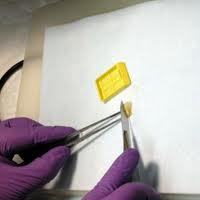
The Formaldehyde Neutralizing Pads (with Non-Skid Backing) available with us are used for absorbing, containing and neutralizing formalin spills and waste. These have come forward as a feasible means for Formalin spill containment and disposal. The fluids present within these pads are used for chemically neutralizing and retaining the formaldehyde.
The details of the innovative, three layer construction of this product are as follows:
Porous outer fabric allows Formalin spill to pass through to absorbent layer below
Treated soaker fabric absorbs the Formalin and chemically neutralizes the Formaldehyde
Impervious, non-skid backing contains and prevents strike through of fluids to the surface below. It also gives the pad stability and resistance to sliding on surfaces
The safety benefits of the Formaldehyde Neutralizing Pads offered by us are given below:
Significantly reduces risk of employee exposure to formaldehyde
Formaldehyde is a toxin and a known carcinogen
Minimize contact with spill and vapors which can cause skin, eye and respiratory irritation
Listed below are the chief applications of this product:
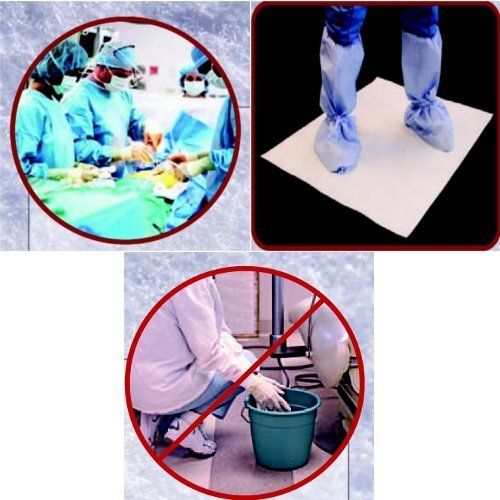
Anywhere leaks or drips may occur
Storage areas
Grossing stations
Transportation tray liners
Bench tops
Under formalin jars
Clean up of small spills
The notable features of this product are as follows:
Three layer construction, chemically neutralizes
Absorbs and contains formalin spills and waste within the pad
Clients can avail this product from us in the following sizes:
8 x 10
10 x 24
16 x 20.
Efficient Formaldehyde NeutralizationOur Formaldehyde Neutralizing Pads provide an effective and effortless way to manage formaldehyde spills and vapors in clinical and hospital settings. By absorbing and neutralizing the chemical, they help ensure compliance with safety standards and protect both staff and patients. Simply place the cotton pad in the affected area to initiate the neutralization process.
Manual and Hassle-Free OperationThese pads require no electricity or complex setup. Their manual design makes them easy to deploy at a moment's notice. Healthcare professionals can use them immediately whenever formaldehyde is present, offering quick and reliable action in critical situations.
FAQ's of Formaldehyde Neutralizing Pads:
Q: How do Formaldehyde Neutralizing Pads work in hospital and clinic environments?
A: The pads contain neutralizing agents embedded in cotton material. When placed near a formaldehyde spill or vapor source, they absorb and chemically neutralize formaldehyde, reducing exposure risks and helping maintain a safer atmosphere.
Q: What is the recommended process for using these neutralizing pads manually?
A: To use, simply lay the pad directly on or near the area where formaldehyde is present. Allow it to remain in place for the recommended duration as specified by the manufacturer, enabling the pad to fully neutralize the chemical.
Q: When should I deploy these pads during clinical operations?
A: Deploy the pads immediately after any spill or whenever formaldehyde solutions are used, such as during specimen storage or handling, to promptly neutralize vapors and limit staff exposure.
Q: Where can these pads be sourced in India?
A: They are available through trusted distributors, exporters, manufacturers, suppliers, and traders across India, ensuring broad accessibility within the country's healthcare sector.
Q: What benefits do manual, cotton-based neutralizing pads offer over electronic systems?
A: Manual pads do not require a power source, making them portable and reliable during emergencies. Their cotton composition ensures excellent absorption and chemical compatibility without the complexity of electronic maintenance.
Q: What materials are used in these pads, and are they safe for hospital use?
A: These pads are constructed from medical-grade cotton infused with safe, effective neutralizing agents. They are specifically designed for clinical environments, adhering to safety and efficacy standards.







 English
 Spanish
 French
 German
 Italian
 Chinese (Simplified)
 Japanese
 Korean
 Arabic
 Portuguese


 Send Inquiry

