Product Description
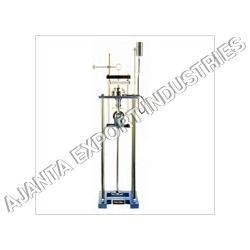
Flakiness Test Gauges
Specification :
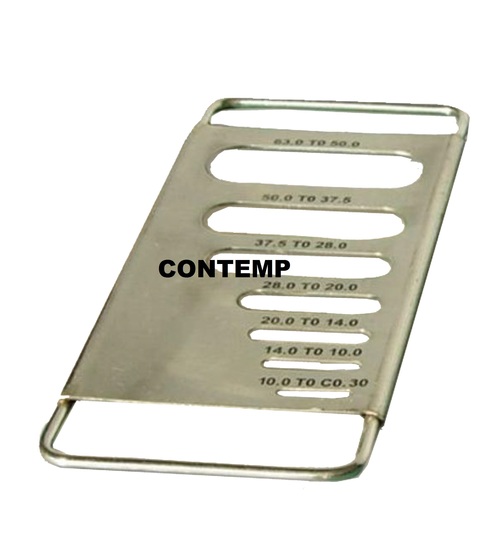
Flakiness Test Gauges Aggregates which are flaky and/or elongated will often lower the work ability of a concrete mix and may also affect long term durability. In bituminous mixtures, flaky aggregates make for a harsh mix and may also crack and break up during compacting by rolling. Flakiness Test Gauges flakiness of aggregate is determined by measuring the thickness of individual particles. Hence we offer thickness gauge and length gauge to check flakiness and elongation index of the aggregate respectively.
Robust Stainless Steel ConstructionManufactured from premium stainless steel, these Flakiness Test Gauges provide exceptional resistance to corrosion, ensuring lasting durability for frequent laboratory use. The polished finish enhances the lifespan and facilitates easy cleaning after each test, maintaining precision and reliability over time.
User-Friendly and Accurate MeasurementsEngineered for manual operation, the gauge features a knurled grip handle that offers secure, comfortable handling during consistent aggregate assessment. Each slot is distinctly marked and engraved, allowing for quick, accurate identification of size ranges between 6.3 mm and 50 mm in compliance with industry standards.
Essential for Aggregate Quality AssessmentFlakiness Test Gauges play a critical role in determining aggregate shape, which impacts the strength and durability of construction materials. Laboratories, suppliers, traders, and exporters across India rely on these gauges to ensure aggregates meet IS:2386 standards for superior structural performance.
FAQ's of Flakiness Test Gauges:
Q: How are Flakiness Test Gauges used in the laboratory?
A: Flakiness Test Gauges are used manually by passing aggregate particles through the specified slots. If an aggregate passes through the designated slot, it is classified as flaky. This method helps determine the flakiness index of the sample, a key factor in aggregate quality.
Q: What benefits does the knurled grip provide during usage?
A: The knurled grip handle ensures a firm, non-slip hold for the user, making repeated measurements in laboratory settings easier and reducing user fatigue during manual operations.
Q: When should I use a Flakiness Test Gauge in aggregate testing?
A: This gauge is typically used when assessing the shape characteristics of aggregate samples for construction projects, especially when adherence to IS:2386 (Part I) - 1963 is required for quality assurance.
Q: Where are Flakiness Test Gauges commonly utilized?
A: Flakiness Test Gauges are widely used in materials testing laboratories, construction companies, research institutes, and quality control departments to evaluate aggregate shape for various civil engineering projects.
Q: What is the process for determining the flakiness index using this gauge?
A: The process involves sieving aggregates, then manually passing particles through each of the seven precision slots by hand. Those that pass represent flaky particles; the proportion of minor particles is calculated as the flakiness index.
Q: How do precise slot markings enhance aggregate testing accuracy?
A: Each slot is engraved with clear and accurate size markings, ensuring that aggregates are accurately classified according to their dimensions, which contributes to precise and standardized test results.







 English
 Spanish
 French
 German
 Italian
 Chinese (Simplified)
 Japanese
 Korean
 Arabic
 Portuguese


 Send Inquiry

