Product Description
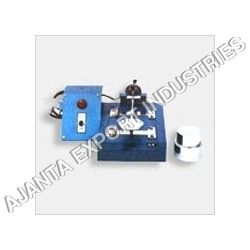
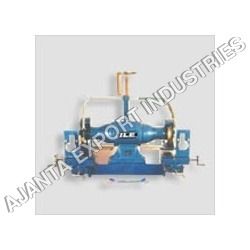
We are one of the well-known names in the industry engaged in manufacturing and exporting a wide range of Scratch Hardness Tester. These are developed in strict tandem with the latest technological advancements, these testers are useful to determine the scratch hardness of ready mix of paint and enamels. Our range is delivered at clients premises on time with the help of wide distribution network.
Features:
Technical Specification:
Reliable Scratch Resistance MeasurementThis tester determines a material's scratch resistance by moving a stylus under a fixed load across the test surface. Its manual operation offers precise control, making it suitable for a broad spectrum of coatings and substrates.
Versatile and Compliant DesignWith variable test panel sizes and optional stylus materials like diamond or hardened steel, the tester adapts to user requirements. Designed to conform to IS and ASTM standards, it ensures trustworthy evaluation for material hardness.
User-Friendly and Durable ConstructionManufactured with a powder coated or painted finish for longevity, the device operates manually and does not require an external power source, making it ideal for field use or laboratories with limited power access.
FAQ's of Scratch Hardness Tester:
Q: How does the Scratch Hardness Tester operate to measure scratch resistance?
A: The tester evaluates scratch resistance by a manual process where a fixed load moves a stylus (diamond or hardened steel) across a sample surface, and the resulting scratch is assessed either visually or under a microscope.
Q: What types of samples and holder sizes can the tester accommodate?
A: The tester is designed for versatility, supporting variable and customizable sample holder sizes, making it suitable for a wide range of materials and test panel dimensions.
Q: When should I use a diamond stylus versus a hardened steel stylus?
A: A diamond stylus is recommended for harder or more abrasive-resistant coatings, while a hardened steel stylus is suitable for softer substrates or where less aggressive testing is appropriate.
Q: Where can this tester be used and who typically uses it?
A: The Scratch Hardness Tester is widely employed in laboratories, manufacturing facilities, and quality control departments. It is essential for distributors, exporters, manufacturers, suppliers, and traders involved in material testing and coating evaluation.
Q: What is the process for measuring scratch width on tested samples?
A: Scratch width can be measured either manually and visually, or, for greater accuracy, by using microscope attachments to determine the precise dimensions of the scratch created during testing.
Q: What are the key benefits of using this Scratch Hardness Tester?
A: Key benefits include compliant testing as per IS and ASTM standards, the convenience of manual operation without power needs, flexibility in sample sizes, and suitability for both in-field and laboratory environments.







 English
 Spanish
 French
 German
 Italian
 Chinese (Simplified)
 Japanese
 Korean
 Arabic
 Portuguese


 Send Inquiry

