Product Description
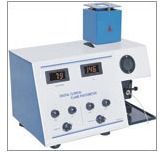
| FEATURES OF DIGITAL FLAME PHOTOMETER |
· Digital Flamephotometer is Simple & Easy to Operate
· Digital Flamephotometer is Narrow Band Interference Filters
· Digital Flamephotometer is Accurate Na, K, Ca, & Li Determination
· Digital Flamephotometer Dual Channel For Simultaneous Observation of Na & K with Single Aspiration (Model - 391)
· Digital Flamephotometer Mixing Chamber Designed For Stable Flame
· Digital Flamephotometer Concentric Non-Corrosive Nebulizer
· Digital Flamephotometer Auto Ignition |
Digital Flame Photometer - 101 is a simple & easy to operate instrument for determination of Sodium, Potassium, Calcium & Lithium. It is an ideal instrument for soil testing labs. Digital Clinical Flame Photometer Model - 102 is a dual channel flame photometer used for simultaneous observation of Sodium, Potassium in blood serum (plasma), Urine & other type of biological fluids.
The instruments are supplied in two units viz. Main Unit and Compressor Unit. The Main Unit comprises of digital displays, detector, filters and nebulizer. The compressor unit supplies the compressed air to the main unit
Air at a given pressure is passed into the atomiser. The suction produced by it, draws the sample solution into the nebulizer and is sprayed as fine mist into the flame. The light emitted by the element at the characteristic wavelength is isolated by the narrow band interference filters, which then falls on to the silicon photodiode. After signal conditioning of the photodiode output, it is sent to digital converter and the results are displayed directly in ppm/meq units. The narrow band interference filters are mounted on a rotating disc fitted within the Main Unit. Appropriate filter can be selected by rotating this disc with the thumb. The oil free compressor with regulator maintains a stable airflow.
SPECIFICATIONS
| Model | 101 | 102 |
| | | Serum | Urine |
| Range | Na: 0 - 100 Ppm
K : 0 - 100 Ppm
Ca: 15 - 100 Ppm
(Optional)
Li: 10 - 100 Ppm (Optional) | Na: 0 - 200 Meq/L
K : 0 - 10 Meq/L
-
Li: 0 - 2 Meq/L (Optional) | Na: 0 - 200 Meq/L
K : 0 - 100 Meq/L (Optional)
Ca: 0 - 10 Meq/L
- |
| Sensitivity | Na: 5 Ppm
K : 5 Ppm
Ca: 10 Ppm
(Optional)
Li: 10 Ppm
(Optional) | - |
| Accuracy | + 2% Upto 40 Ppm,
+ 5% Above 40 Ppm | + 2% Upto 100 Meq
+ 5% Above 100 Meq |
| Measurement
System | One Element
At A Time | Two Elements At A Time |
| Readout | 2½ Digit
7-Segment Led | Dual 2½ Digit, 7-Segment Led |
| Ignition System | In-Built Electronic Ignition By Press Of Switch |
| Repeatability | + 2 Counts |
| Detector | Silicon Photodiode |
| Filters | Narrow Band Interference Glass Filters |
| Nebulizer | Black Backelite, Axial Flow Type |
| Flame System | Lpg & Dry Oil Free Air |
| Warm-Up Time | 10 Minutes |
| Power | 230 V + 10% Ac, 50 Hz |
| Dimensions | 375 X 245 X 220 Mm (L X B X H) (Approx.) |
| Weight | 7.5 Kg (Approx.) |
| Compressor Unit |
| Air Supply | By Oil Free Mini Compressor Unit With Pressure Regulator |
| Combustion Gas | Lpg Controlled By Precision Regulator |
| Power | 230 V + 10% Ac, 50 Hz |
| Dimensions | 290 X 255 X 210 Mm (L X B X H) (Approx.) |
| Weight | 8 Kg (Approx.)
|
Advanced Multi-Element AnalysisCapable of simultaneously measuring up to four elements-Sodium, Potassium, Calcium, and Lithium-the Digital Flame Photometer streamlines element detection in serum, water, and other samples. This versatile system is engineered for precision and efficiency in clinical, environmental, and industrial laboratories.
Precision Engineered for ReliabilityWith sensitivity thresholds as low as 2 ppm for Sodium and 1 ppm for Potassium, and reproducibility within 2% CV, this flame photometer guarantees consistent accuracy. Built from corrosion-resistant stainless steel and borosilicate glass, the unit stands up to rigorous laboratory use.
User-Friendly Design and ControlsThe device features both automatic and manual calibration, digital controls, and a bright LED display, making operation intuitive and straightforward. With a sample volume requirement of only 2-3 ml and a direct digital readout in ppm, data acquisition is swift and reliable.
FAQ's of Digital Flame Photometer :
Q: How does the Digital Flame Photometer ensure accurate measurement of sodium, potassium, calcium, and lithium?
A: The photometer employs advanced digital technology with built-in automatic and manual calibration options. Its sensitive detectors and reproducibility of 2% CV for 20 consecutive samples enable consistent and precise elemental analysis, while a bright LED digital display provides accurate readings.
Q: What types of samples can be analyzed using this flame photometer?
A: This instrument is suitable for quantitative analysis of a variety of sample types, including clinical (serum, plasma), industrial, agricultural, and environmental samples where sodium, potassium, calcium, and lithium concentrations need to be determined.
Q: When should the calibration be performed during usage?
A: Calibration should be carried out prior to sample testing and after every series of analyses or when changing elements. The flame photometer supports both automatic and manual calibration, ensuring accuracy for every set of measurements.
Q: Where is this flame photometer typically used?
A: The Digital Flame Photometer is primarily used in laboratories, including clinical, research, industrial, and educational institutions, for routine or specialized quantitative ion analysis.
Q: What is the process for preparing and analyzing a sample with this instrument?
A: To analyze a sample, prepare a 2-3 ml aliquot, introduce it into the photometer via the aspiration system (5-6 ml/min), and select the corresponding element using the digital controls. The device provides a direct digital readout in ppm after proper calibration.
Q: How does the built-in air compressor benefit the user?
A: The integrated oil-free, noiseless air compressor eliminates the need for external compressed air, ensuring continuous, maintenance-free, and safe operation in any laboratory environment.
Q: What are the primary benefits of using this model for laboratory analysis?
A: Key benefits include compact and robust construction, high sensitivity and reproducibility, user-friendly digital interface, automated calibration, and direct readouts, making elemental analysis both efficient and reliable.







 English
 Spanish
 French
 German
 Italian
 Chinese (Simplified)
 Japanese
 Korean
 Arabic
 Portuguese


 Send Inquiry

