Product Description
Salient Features
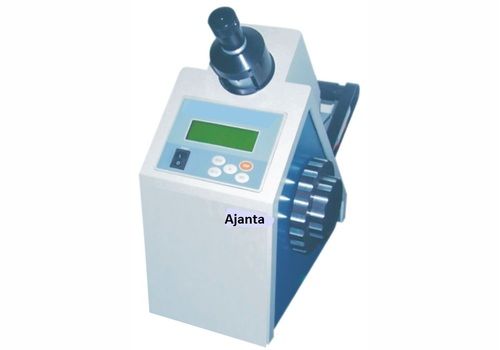
| Measurement of Refreractive index nD of transparent or transculents liquid and solid substance. |
| Measurement of brix of sugar solution |
| Prism made of hard glass |
| Visual aim and LCD Display |
| Automatic correction of the effect of temperature on the Brix |
| Printer Interface for direct data print-out. |
Precision and Accuracy for Laboratory MeasurementsThis digital ABBE refractometer is engineered with a high-quality hard glass prism and robust aluminum alloy housing, providing reliable and repeatable measurements for both liquids and solids. Its high resolution and automatic temperature compensation function ensure data integrity across a wide operational temperature range.
User-Friendly Operation and Versatile ApplicationsEquipped with an intuitive touch keypad and a large digital LCD display, this refractometer streamlines sample analysis for laboratories, research institutions, and industrial use. Its easy calibration process and durable build make it suitable for routine quality control as well as advanced research tasks.
FAQ's of Digital ABBE Refractrometer:
Q: How does the Digital ABBE Refractometer ensure accurate measurements?
A: The instrument utilizes a high-precision optical glass prism and automatic temperature compensation (up to 70C) to deliver accurate refractive index readings with a resolution of 0.0001 nD and an accuracy of 0.0002 nD.
Q: What types of samples can be analyzed using this refractometer?
A: It is suitable for measuring the refractive index and sugar content (Brix) of both liquid and solid samples, making it versatile for laboratory, industrial, and research applications.
Q: Where is this instrument typically used?
A: This refractometer is commonly used in laboratories, food and beverage quality control, pharmaceutical analysis, and research institutes for precise chemical and material analysis.
Q: What is the process for calibrating the refractometer?
A: Calibration is user-programmable and performed using standard reference liquids. The process is straightforward, enabling users to maintain measurement accuracy over time.
Q: When should the digital refractometer be recalibrated?
A: Recalibration should be performed regularly, especially after extended use, major temperature shifts, or whenever accuracy verification is required as per laboratory protocols.
Q: What are the main benefits of using this digital refractometer?
A: Users benefit from high measurement accuracy, durable construction, easy operation with touch keypad, automatic temperature compensation, and flexible data output through RS232C or USB interfaces.







 English
 Spanish
 French
 German
 Italian
 Chinese (Simplified)
 Japanese
 Korean
 Arabic
 Portuguese


 Send Inquiry

